Tom's Guide Verdict
The Acer Predator Atlas 7 sticks a middle finger up to RAMageddon and strikes the right balance of price, raw performance and efficient software — overcoming a few ergonomic quirks and a smaller battery to become my favorite handheld of 2026.
Reasons to buy
- +
Exceptional Intel Arc G3 performance
- +
Smooth, reliable TMR joysticks
- +
Significantly cheaper than Z2 Extreme competition
- +
Included matte screen protector fixes glossy display reflections
Reasons to avoid
- -
Display’s not the brightest or most colorful
- -
60Wh battery limits stamina
- -
Dual-fan cooling system gets loud under load
- -
Shallow grips have never been my cup of tea
Why you can trust Tom's Guide Our writers and editors spend hours analyzing and reviewing products, services, and apps to help find what's best for you. Find out more about how we test, analyze, and rate.
Handheld gaming has become one of the most exciting, yet terrifying, categories in tech. It feels great to have your PC library with you everywhere, but to get there, you either grab something that’s underpowered and overpriced, or you skip rent for a month to get something actually good.
The Acer Predator Atlas 7 is the rare exception to that rule.
At £900 in the U.K. (not available in the U.S. in this base configuration yet), it is a rather unassuming slab of a handheld that hides a monster inside: an Intel Arc G3 chip paired with 16GB of LPDDR5X memory.
It easily outmuscles more expensive AMD Ryzen Z2 Extreme competitors while dodging massive component price hikes. And while you will have to manage that smaller 60Wh battery and some loud fans, the sheer gaming grunt for that price makes it my undeniable handheld of the year.
Acer Predator Atlas 7: Cheat Sheet
- What is it? A Windows 11 gaming handheld powered by Intel's Arc G3 chip and 16GB of RAM.
- Who is it for? Gamers who want top-tier portable performance without paying the exorbitant "RAMageddon" memory tax associated with premium gaming right now.
- What does it cost? £900.
- What do we like? The raw graphical grunt of the Arc G3, the buttery smooth TMR joysticks, the well-designed PredatorSense software, and the excellent price-to-performance ratio.
- What don’t we like? The grips are a little shallow for mid-air suspending, the cooling fans get loud under load, and the 60Wh battery means you'll need to tweak settings or carry a power bank for long trips.
Acer Predator Atlas 7: Specs
Dimensions |
11.5 x 4.4 x 1.1 inches |
Weight |
1.5 pounds |
CPU |
Intel Arc G3 |
RAM |
16GB LPDDR5x |
Storage |
512GB PCIe Gen 4 |
Display |
7-inch HD (1920 x 1080) LCD 120Hz refresh rate |
Ports |
1x Micro SD, 2x Thunderbolt 4, 1x 3.5mm audio jack |
Wireless connectivity |
WiFi, Bluetooth |
Price |
£899 |
Acer Predator Atlas 7: The Ups
So as I started taking this on solo trips to the pub (yep, I’m that guy) and on my travels all over the place, I started to really see the strengths in the Atlas 7.
The Arc G3 advantage
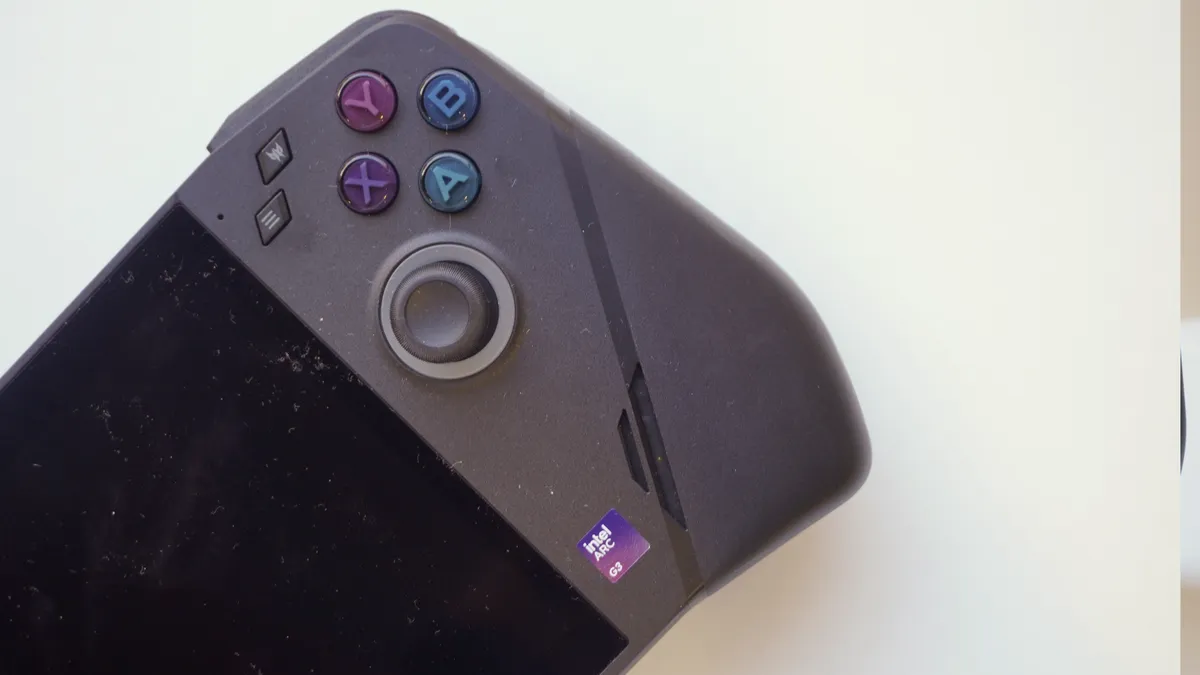
The real superpower is what’s inside: the highly efficient Intel Arc G3 equipped with a B370 GPU and 16GB of LPDDR5X memory. Up until this point, I’d only tested the Arc G3 Extreme, so I was a little nervous heading into its smaller, weaker sibling.
Turns out, those nerves were unfounded.
Benchmark |
Acer Predator Atlas 8 (Intel Arc G3) |
Asus ROG Xbox Ally X20 (AMD Ryzen Z2 AI Extreme) |
MSI Claw 8 EX AI+ (Intel Arc G3 Extreme) |
|---|---|---|---|
3DMark Fire Strike |
11,922 |
9,120 |
12,358 |
3DMark Time Spy |
5,985 |
4,073 |
6,534 |
3DMark Steel Nomad |
712 |
612 |
1,425 |
3DMark Port Royal (ray tracing test) |
3,023 |
2,020 |
3,544 |
The Arc G3 gives you enough breathing room to push your 1080p settings, and sits comfortably above the capabilities of the Ryzen Z2 Extreme in the ROG Xbox Ally X20 — a handheld that’s a third more expensive.
Plus, when you slap Intel’s XeSS and multi-frame generation on top of a solid baseline frame rate, it feels properly zippy and responsive.
On a compact 7-inch screen, you don’t see the ghosting or sizzling artifacts that you would on a bigger desktop monitor with the Arc B580 GPU.
Game/settings |
Acer Predator Atlas 8 (Intel Arc G3) |
Asus ROG Xbox Ally X (AMD Ryzen Z2 AI Extreme) |
MSI Claw 8 EX AI+ (Intel Arc G3 Extreme) |
|---|---|---|---|
Cyberpunk 2077 (1080p RT High) |
14.79 fps |
5.8 fps |
27.01 fps |
Black Myth: Wukong (1080p Medium) |
30 fps |
41 fps |
34 fps |
Forza Horizon 6 (1080p High) |
45 fps |
40 fps |
62 fps |
There is an anomaly in the Black Myth: Wukong benchmark, but for every other game it was all Intel domination. I think that may be down to optimization for particular silicon.
On top of that, it is also an extremely capable docked system; Star Wars Galactic Racer ran incredibly smooth at 1440p on medium settings with XeSS set to Performance mode.
And don’t get me wrong. You’ll get much more from the Extreme variant, but you’re paying much more to take it up a notch. With the Arc, this much power at this price is right on the money.
Nice, drift-free controls
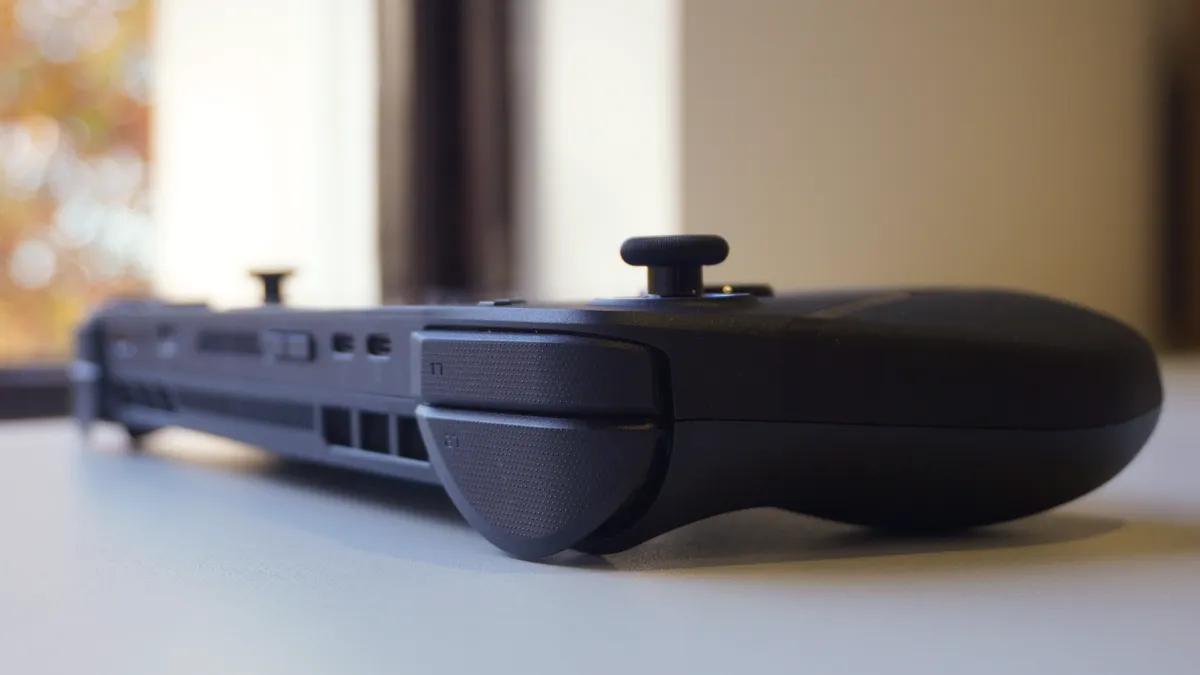
Acer nailed the inputs here. They opted for TMR joysticks, which are incredibly smooth and highly reliable since there are no internal gears grinding away. The face buttons offer a satisfying, tactile clickiness, and while the triggers have a decent amount of depth, I do wish they had a slightly more defined flick to catch my fingers.
That being said though, this is a nice lightweight system that sees its mass evenly distributed for level playing.
BS-free software
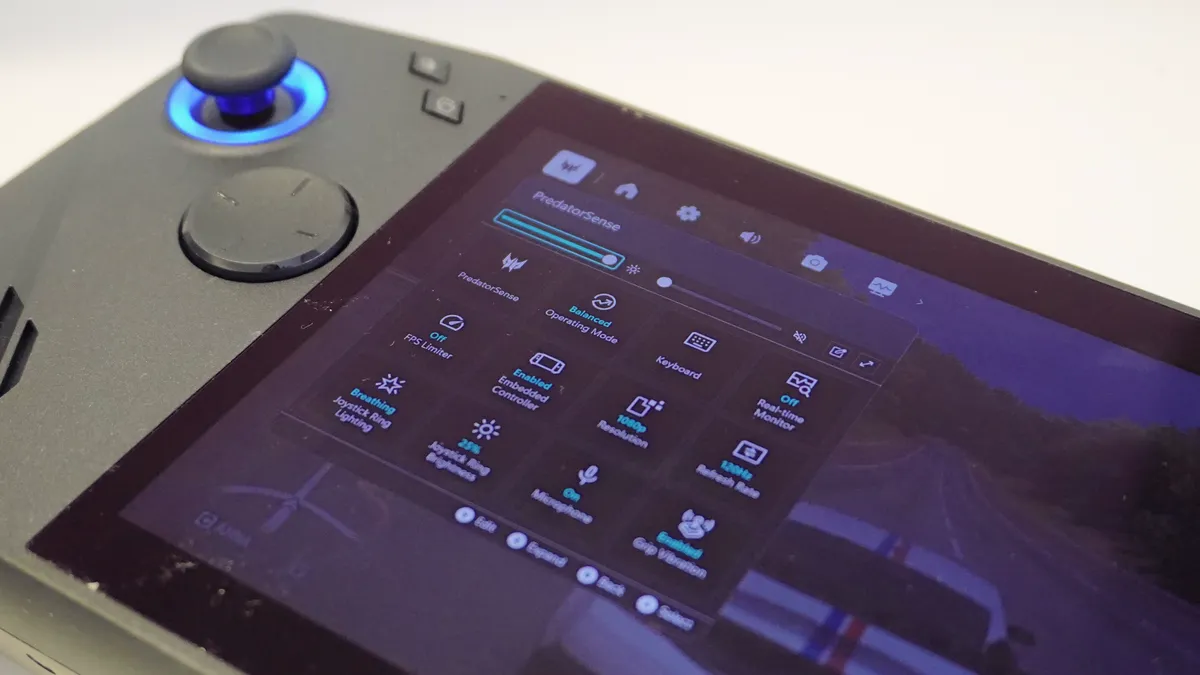
Windows 11 has finally improved significantly for handhelds. This has been the result of months of work sharpening up the setup process — no more nagging screens asking if you want an Office 365 subscription, just a quick login, some updates and you are ready to play.
For hardware tweaking, that’s where Acer’s PredatorSense overlay comes in. Pressing the top left button triggers it, and while I’d say Asus’ ROG overlay has a slightly nicer UI, PredatorSense puts all the essential customization settings right within a thumb’s reach without overcomplicating things.
Acer Predator Atlas 7: The Downs
But to get something together as a value for money proposition, you have to make some compromises.
The 60Wh battery
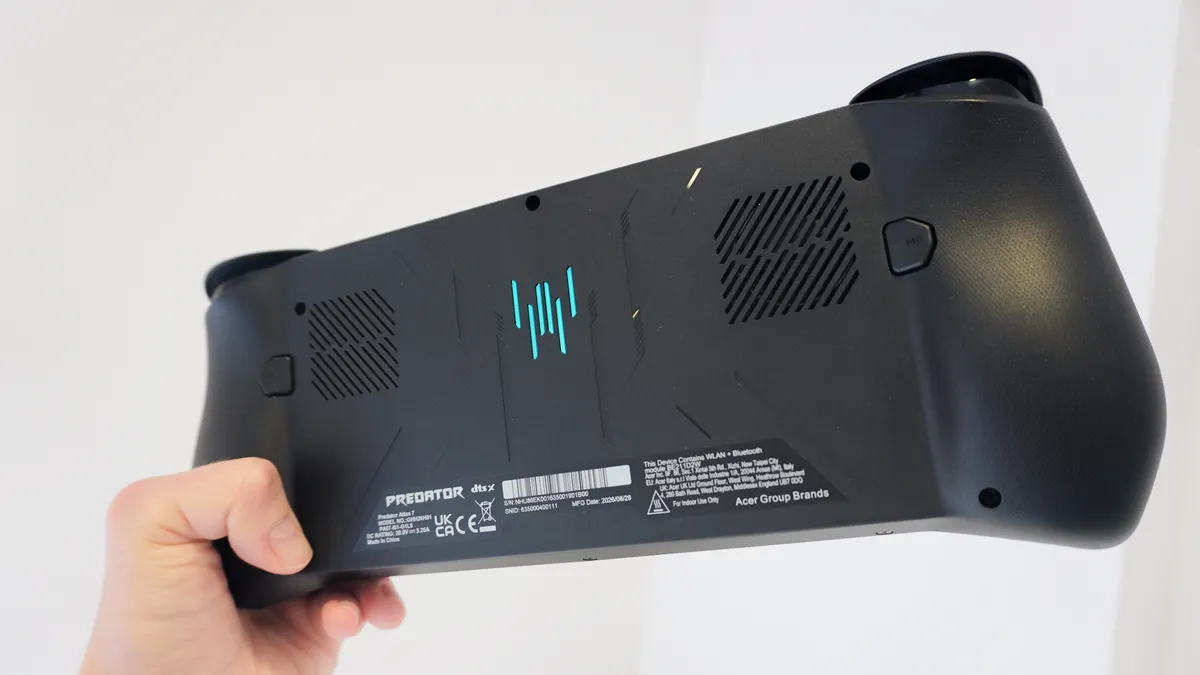
The most obvious one is the battery. It’s still sort of decent longevity wise, especially if you get into dropping the TDP to its lowest possible setting and cranking out some indie games. But in our lab test, it’s not great.
Handheld |
Gaming battery life test result (hh:mm) |
|---|---|
Acer Predator Atlas 7 |
02:16 |
Asus ROG Xbox Ally X20 |
02:47 |
MSI Claw 8 EX AI+ |
04:10 |
This surprised me given the effectiveness of those efficiency cores on the MSI Claw 8 EX AI+ and its Arc G3 Extreme. But no amount of efficient silicon can overcome a smaller cell.
Some other quirks
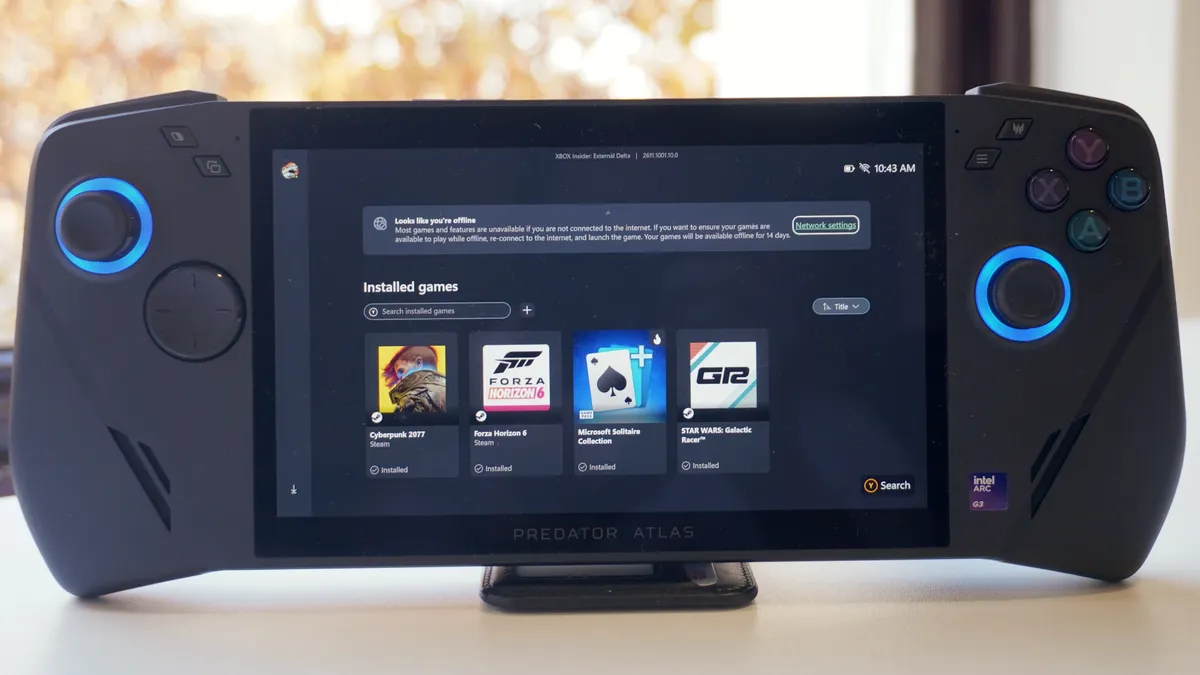
Out of the box, the Atlas 7 shares similar ergonomics with the old ROG Ally and Steam Deck, featuring shallower grips that aren’t as ergonomically sound as the chunkier grips on the Ally X20. The end result is a system you’d lean on a table more than comfortably suspended in the air.
Thermally, the dual-fan cooling system delivers impressive sustained performance, keeping the back of the device nice and cool even at peak output. But the trade-off is noise; those fans do get loud when the system is fully unleashed.
And finally, the 120Hz display has color and is visible indoors, but the brightness isn’t quite there for playing by a window/strong light source. Plus the glossy finish turns that screen into a mirror, though Acer thankfully includes a matte screen protector in the box.
Acer Predator Atlas 7: Verdict
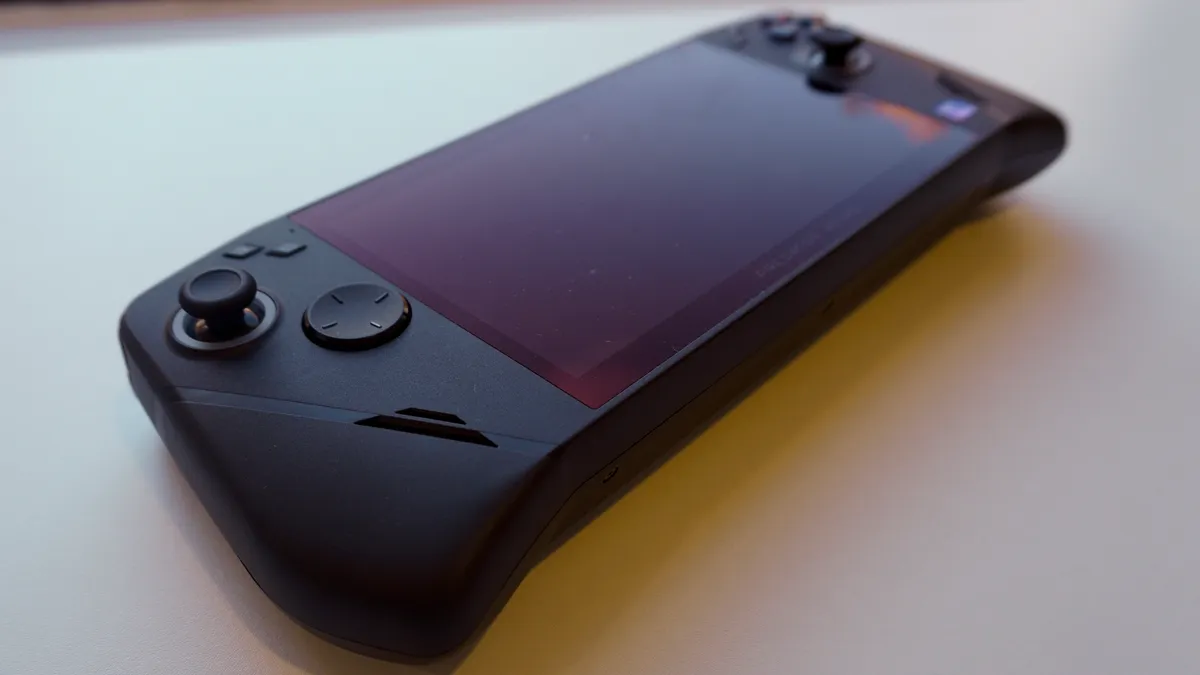
The Acer Predator Atlas 7 leaves me conflicted, but in the best way possible.
For all intents and purposes, this is the best handheld of the year. Yes, there are devices with better displays, chunkier ergonomics and better battery life. But in terms of striking a strong enough mix across all metrics, Acer’s nailed it.
At £900, it is significantly cheaper than the competition it beats, but I also admit that it's hard to call almost a grand “cheap.” That being said, in the midst of a component crisis where competing devices approach the £2,000 mark with worse performance, the Atlas 7 actually makes you feel like you’re getting your money’s worth.

Follow Tom's Guide on Google News and add us as a preferred source to get our up-to-date news, analysis, and reviews in your feeds. Alternatively, you can read our content on the Tom's Guide app available now for iOS and Android. Subscribe to Tom's Guide on YouTube and follow us on TikTok. Finally, you can visit our dedicated Tom's Guide Savings Squad hub for expert help on getting the best products for less.