Type: Smart alarm clock with sun simulation and audio library
Dimensions: 7.24" x 2.43" x 5.31"
Warranty: 1 year
Price: $169.99 at Hatch

Type: Smart alarm clock with sleep tracking, audio, and sunrise simulation
Dimensions: 7.23" x 2.40" x 5.7"
Warranty: 1 year
Price: $249.99 at Hatch
Hatch is the arguably the most recognizable brand name attached to sunrise alarm clocks. The Restore 3 sits at the top of our best sunrise alarm clock guide, but there's now a new version: the Hatch Sleep Clock, which offers contactless sleep tracking in addition to Hatch's usual smart alarm features.
Outwardly, the Hatch Restore 3 and the Hatch Sleep Clock are virtually identical clocks, and their light and audio settings almost match, too. Both have sunrise and sundown simulations and a jam-packed audio library. But for the extra $80 you spend on the new Sleep Clock, Hatch promises 97% accurate sleep tracking.
I've tested both clocks and I'm here to tell you the differences, similarities, pros and cons between the Hatch Restore 3 and new Hatch Sleep Clock. Let's get into it...
Hatch Restore 3 vs Hatch Sleep Clock: Price
- The Restore 3 retails at $169.99 while the Sleep Clock sits at $249.99
- Discounts on both can be found during major sales, like Black Friday and Cyber Monday
- Both come with a monthly subscription fee to access all features, starting at $4.99 per month
Hatch's pricing has always remained pretty stable without any price hikes between new generations. But with the additional sleep tracking functionality, it was inevitable there would be a price increase between the Restore 3 and the Sleep Clock.
The Restore 3 sits at $169.99, while the Sleep Clock is $80 more expensive, at $249.99 — though discounts can be found during major sales, such as Amazon Prime Day. The Restore 3 was also reduced by $30 at Hatch for Black Friday in 2025 (the Sleep Clock was only released in August 2026), so it's likely both devices will be discounted for Black Friday in 2026.
For comparison, the Withings Sleep Analyzer, a similar contactless sleep tracker (a mat that slides under your mattress) sits at $199. However, the Hatch sleep-tracking alarm clock is also going to help you wake up in the mornings too, which will make it worth the extra $50 for some people.
Important to note: No matter which Hatch clock you go for, be prepared to pay a monthly subscription fee starting from $4.99 per month to access Hatch's full range of light and audio programmes.
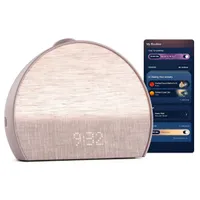
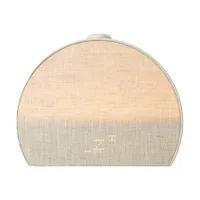
Hatch Restore 3 vs Hatch Sleep Clock: Design & Set Up
- Practically identical designs and color options
- The Hatch Restore 3 is marginally taller
- Setting up the Sleep Clock requires more thought for the sleep tracking to work
In terms of design, there's not a lot that sets the Restore 3 and Sleep Clock apart. They are perhaps best described as non-identical twins, considering the Restore 3 is marginally (a mere centimeter) taller than the new Sleep Clock, while the Sleep Clock is a touch wider; though these differences are hardly noticeable.
Both are built with a plastic back and chic cloth front, and are available in three neutral colorways (putty, cocoa, greige) that are sure to fit into any modern bedroom aesthetic.


On to set-up: if you possess a reasonable digital IQ, setting up either device should pose no trouble.
Yes, you need to connect them to the compatible Hatch app (what device doesn't come with an app these days?) to pre-set your routine and choose your alarm audio and sunrise color tone. But once that's done, you can leave your phone out of the bedroom night to night thanks to the on-device buttons.
Where the set up process differs with the Sleep Clock is in the positioning of your clock. For the new Sleep Clock to be able to accurately read your sleep metrics, it must be placed level to your bed approximately at chest height. This is because it determines your sleep metrics from your movement and breathing patterns.
This does mean I've had to balance the Sleep Clock on a stack of books while I've been using it as my bedside unit is too high – fine as a temporary measure, but something to think about if you're planning to use the Sleep Clock long-term (I'm already browsing new bedside tables, as I have been loving the wearable-free sleep tracking).
Hatch Restore 3 vs Hatch Sleep Clock: Features
- Sunrise and sunset programmes are the same quality on both clocks
- You can operate both clocks phone-free after set up
- The Sleep Clock tracks your sleep routine too, but can't gauge in-depth biometrics like other sleep trackers
Sunrise simulation
As sunrise alarm clocks go, Hatch undoubtedly does it best. Sure, you can get dupes like the Dreamegg Sunrise Alarm Clock, which I must admit impressed me in testing considering its $59 price tag, but for variety and and quality Hatch is the top dog.
So how does the functionality of the Restore 3 and Sleep Clock compare?
Honestly, if you narrow it down to a sunrise alarm clock's main purpose: to make waking up in the morning easier, the two clocks are on par. It's the additional sleep tracking functionality brought by the Sleep Clock that sets them apart.
I spent last winter with the Restore 3 and this autumn with the Sleep Clock and, sleep tracking aside, I've not noticed a massive difference in features. Both do a great job of simulating a sunrise, gradually flooding my room with light at 5:30am when natural light is absent. I find this helps wake me up more gently so by the time my alarm rings I am not so startled, or indeed frustrated that my night's sleep is over.

The variety of alarm sounds in the Hatch audio library help, too. Waking up to soundtracks like 'Icelandic Valley Morning' and 'Bird Sanctuary' is far more relaxing than the incessant beep of an iPhone alarm.
Sound and light quality of both clocks is strong, and consistent across the wake up features and night time features. Remember, you can play sleep sounds and switch on a sunset simulation on both the Restore 3 and Sleep Clock in the evenings as well.
Sleep tracking
Time to discuss sleep tracking: While the Sleep Clock doesn't go as in-depth as the best sleep trackers on the market (no heart rate, HRV, or blood oxygen readings here), it does track your movement and breathing patterns to deliver your sleep timings and sleep stages.
During testing, I've compared the data the Sleep Clock has given me with that from my Oura Ring 5 (the gold standard in commercial sleep tracking, according to our reviewers) and I'm pleased to report that the data largely matches up, suggesting the Hatch sleep insights are accurate.
Here's a snapshot of said data, and I actually think Oura overestimated my time awake on this particular night.

Hatch's software highlights your sleep patterns across the week to help you identify trends and lifestyle habits that may be hindering (or improving) your rest.
It also plots your intended sleep times against your actual rest, helping you stay accountable to a consistent sleep schedule, and gives you sleep tips too based on your personal data. "When a small adjustment could support your sleep, we'll suggest where to start," states Hatch.
One noticeable difference from other sleep trackers is the lack of sleep score, an intentional move on the part of Hatch ("there are no sleep scores that will cause you to stress rather than rest" they say), but some people may find they prefer having a specific data point to refer to.
Sleep tracking is, of course, absent with the Restore 3, hence it is this feature that could really sway your buying decision here.

Even as a sleep tech reviewer, I do think the less gadgets in the bedroom the better, especially when each one has its own app to connect to, which can become distracting around bedtime and first thing in the morning.
This is the beauty of the Hatch Sleep Clock: it is a screen-free device that wakes you up, monitors your sleep quality, and keeps all your sleep data in one app on your phone.
While the Restore 3 is a brilliant sunrise alarm clock, which will excel at waking you up and sending you to sleep peacefully, I have enjoyed the additional sleep tracking functionality offered by the Sleep Clock. As much as I love my Oura Ring, going to bed completely wearable-free has been liberating.
Hatch Restore 3 vs Hatch Sleep Clock: Which should you buy?
Buy the Hatch Restore 3 if...
✅ You want to spend less: $80 cheaper than the Sleep Clock, the Restore 3 isn't cheap, but it is the more affordable option of the two.
✅ You're not interested in sleep tracking: If you think the sleep tracking functionality would be wasted on you, and you just want help waking up in the mornings, you might as well opt for the cheaper sunrise alarm clock.
✅ You want to quit morning phone use: Once your Restore 3 is set up, you don't really need to use your phone to operate it; whereas with the Sleep Clock you could be tempted to check sleep data first thing in the morning, potentially leading to aimless scrolling.
Buy the Hatch Sleep Clock if...
✅ You want contact-free sleep tracking: Don't like wearing your smartwatch to bed? The Sleep Clock is one of the best value bedside sleep trackers you can buy, and it has the bonus of being a wake-up light, alarm clock, sleep sound machine, and night light, too.
✅ You want to invest in a sleep gadget that does it all: A wake-up light, alarm clock, sleep sound machine, night light, and sleep tracker, the Hatch Sleep Clock is your one-stop purchase to a better sleep routine – and limiting gadgets in the bedroom is always a great shout.
✅ You want to make the most of your Hatch+ subscription: Monthly membership fees are the same for both clocks, so getting core sleep data included in that price, alongside light and audio programmes, seems better value.