Tom's Guide Verdict
It's hard to know where to start with the Sleepal AI Lamp. The contactless sleep tracking that monitors your rest from your nightstand? The sunrise alarm that wakes you up gently? The soothing wind-down routine? The accurate snore tracking? The $399 price tag? This is a sophisticated piece of tech, and while it doesn't knock every one of its numerous features out the park, it's a good all-rounder for anyone looking to understand and improve their sleep.
Reasons to buy
- +
Contactless sleep tracking
- +
Gentle sunrise alarm
- +
Soothing sunset feature
- +
Library of sleep sounds
- +
Sleek, smart design
Reasons to avoid
- -
Tracking data can be too general
Why you can trust Tom's Guide Our writers and editors spend hours analyzing and reviewing products, services, and apps to help find what's best for you. Find out more about how we test, analyze, and rate.
Sleepal AI Lamp: Review in brief
The Sleepal AI Lamp is a subtly stylish contactless sleep tracker. It's also a sunrise alarm clock, white noise machine, bedside lamp, temperature tracker, and snore detector. So, it does a lot. My question is, can this innovative piece of sleep tech do it well?
After three weeks of testing the Sleepal AI Lamp, I've found it delivers an all-round solid package. It's comparable to some of the best sleep trackers we've tested when it comes to detecting sleep duration, positioning, snoring and regularity. Some of the finer sleep stage details aren't quite perfect but for a sleep overview, it's both accurate and convenient. And you never have to charge it.

It's not just your sleep the AI Lamp detects. With temperature, sound and light tracking, the Sleepal can help you pinpoint environmental factors that might be ruining your rest.
As a sunrise alarm clock, the Sleepal AI Lamp is excellent. It lacks the variety of light shows that you'll get from a dedicated sunrise lamp but its warming glow is natural and, combined with the gentle alarms, gives you a comfortable start to the day.
At $399 from Sleepal, the AI Lamp is a pricey bit of sleep tech. However, if you want a variety of sleep-friendly features tucked in one neat package, you're unlikely to get a better deal. But if you're after dedicated health tracking and don't mind a wearable, try the Oura Ring 5 or Muse S Athena.
Sleepal AI Lamp: Price
The Sleepal AI Lamp is $399 from Sleepal. Each purchase comes with a free month of Sleepal AI+, a premium AI service which includes a more detailed sleep report, AI coaching and more wind-down content. After the first month, Sleepal AI+ is $5.99 per month (or $69.99 for a year.)
Sleepal also ships around the world and, as of writing, orders outside the US include the necessary power adapter. (I can confirm mine came with a UK outlet.)
For a contactless sleep tracker, $399 is on the pricey side. The Withings Sleep Mat is just $199.95 from Withings, although it lacks the sunrise and wind-down features of the Sleepal. But even the Hatch Sleep Clock, a sunrise alarm clock and sleep tracker, is cheaper at $249.99 from Hatch.
Sleepal does pack a lot into the lamp, however, which I'll get into below. And the price is comparable to many wearable trackers, like the Oura RIng 5 (from $399 at Oura) or the Apple Watch 11 (from $399 at Apple.)
And while you can pay for a subscription, you don't actually need it to use the Sleepal. The basic tracking is all free to access.
Sleepal also offers a 30-day money back guarantee and a 1-year warranty. This is on the low side for sleep tech but not unusual from a startup.
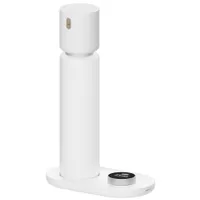
Sleepal AI Lamp: Design
Slim and stark white, the Sleepal AI looks like a stylish bit of smart tech. The modern design has a touch of IKEA to it and I mean that as a compliment — it won't stand out on the nightstand as anything other than a lamp.

At the base is a flat, protruding area, where the control button sits. The lamp itself rises at the back, like a short tube. (The whole thing measures 8.3 x 4.6 x 12.6 in.)
The sunrise light is found in this main tube, with the sleep tracking tech located in the head.
Sleepal AI Lamp: Features
One of the big features of the Sleepal Lamp is its sunrise light. This is located in the bulk of the lamp design and, like all the best sunrise alarm clocks, it gradually fills the room with light in the time before you wake up.
Alongside light you can add sound to wake you up, as a one-two kickstart for your circadian rhythm. I opted for bird song at a mid-level volume and found it woke me up efficiently. But you can play around with sounds and volumes.


You can also experiment with wake up windows. This means the alarm will start when your body is most primed to wake up (during a lighter sleep stage), to help you avoid the groggy feeling of sleep inertia. Or, if you need to be out of bed by a strict time, you can set that as well.
Overall, I found these features effective. During my testing phase I found myself gradually roused by the lamp, rather than shocked awake by my phone alarm. It's just a more pleasant way to start the day.

And you can flip the whole set up around. Sleepal also offers wind-down routines. These are sounds and lights that gradually dim as you climb into bed. Again, you can set a hard off time, or simply allow the lamp to detect when you're asleep and switch off.
I found this feature less beneficial but that's a personal preference — I don't like feeling that I'm counting down to sleep. But I can see why others would find it soothing and it's expands the functionality of the lamp.
Sleepal AI Lamp: Sleep tracking
The Sleepal Lamp uses a 60GHz mmWave radar, a high-frequency sensor, to detect your chest breathing pattern. This forms the bulk of its sleep tracking tech, primarily its sleep stage detection.
This data is then fed into the AI, which has been trained on "2,000+ nights of clinical polysomnography (PSG) from leading hospitals", according to Sleepal.
In addition, the Sleepal can track sound (snoring) and body position (movement and restlessness), which helps feed your daily sleep analysis.


I've compared the data captured by the Sleepal Lamp to other trackers (Withings and Oura.) Overall, the results are decent. The Sleepal is excellent at capturing when I've fall asleep and when I've woken up in the morning. It also doesn't confuse 'reading in bed' with 'sleeping', a problem I've had with many trackers (including wearables.)
My biggest issue is deep sleep tracking. There have been a few nights when Sleepal has captured significantly more deep sleep than my Oura Ring. Based on my energy levels the next morning and my recollection of the night, I'm inclined to go with Oura's interpretation.
But there are a few other tracking features I'd like to draw attention to. These aren't strictly sleep tracking but they help build the overall picture of your night's rest: temperature, humidity, sound and lux (light.)


With these, you can compare how outside elements are disrupting your sleep. For example, some night I've matched a sudden noise to a brief wake up. I can also see how the hot summer lead to some disrupted nights. So if you're struggling to find the cause behind your 3 a.m. wake ups, these features can help.
Based on this, I recommend the Sleepal AI to anyone interested in learning more about their sleep, without wanting to dive into the finer details of each stage. It's a great overview of your sleep schedule and disruptors, even if it's not quite nailed the fine details.
Sleep tracking: 3.5 out of 5
Sleepal AI Lamp: Performance
I used the Sleepal AI Lamp for three weeks to determine just how well it performs as a sleep tracker and sunrise alarm clock. Here are the things worth knowing.
Set up
Setting up the Sleepal AI Lamp is incredibly easy. Plug it in, scan the QR code that appears on the display, download the app, and place it in the correct position.
Positioning is the hardest part. You have to swivel the head just right to get it aimed at your chest, which takes a minute or two (the app guides you).


But the tall design cuts down on one positioning frustration. Contactless trackers often need to sit above the mattress, to ensure they're detecting you and not your bed. My Hatch Sleep Clock and most smartphone sleep trackers needs to balance on several thick books to peek over my mattress. The Sleepal is already at the right height.
And as a contactless tracker, the Sleepal AI is always plugged in. So there's no need to charge.
Set up: 4.5 out of 5
App
The app has two key functions: accessing your tracking and setting up your alarms.
Overall, I found the design clean and easy to use. As it's only used as a sleep tracker, you don't have to wade through a ton of data. I'm testing the FitBit Air right now and even after a week, finding my sleep results still doesn't come naturally.
I also appreciate the 'Trend' tab. Here you can see your data for the month and it's at-a-glance readable. If, say, you've noticed a bout of fatigue, the trends function can help you quickly identify if your sleep has been going downhill.


It's also on the app that you can access the AI features. These expand if you pay for premium and are helpful if you want an in-depth analysis of your sleep, using data collected from your tracker. I've found the AI offers useful advice but if you're experiencing long-term sleep deprivation, I recommend the personalized advice of a healthcare professional.
App score: 4.5 out of 5
Sleepal AI Lamp: User reviews
There are limited reviews for the Sleepal AI Lamp so far. And as most reviews come from beta testers and influencers, there's not much real-world experience. However, the positive reviews so far typically focus on the accuracy of the sleep tracking and the convenience of the design.
I'll be keeping a close eye on feedback as the Sleepal AI Lamp rolls out to a wider market.
Sleepal AI Lamp: Should you buy?

Buy the Sleepal AI Lamp if...
✅ You want easy, convenient sleep tracking: Once the Sleepal AI Lamp has been set up, all you need to do is fall asleep. You don't have to turn it on, put it on, or remember to charge it. It's a low effort way to learn about your sleep.
✅ You dislike wearables: Even the subtlest wearable isn't as convenient as no wearable at all. If you're tired of watches, rings and headbands, the Sleepal is the more comfortable choice.
✅ You want a sleep tracker that does more: It's not just about sleep tracking. The sunrise alarm clock and wind-down routines are just as appealing as the tracking function, as is the environmental monitoring.
Don't buy the Sleepal AI Lamp if...
❌ You want sleep tracking on a budget: At $399, the Sleepal AI Lamp is not cheap. The Withings Sleep Mat is a more affordable contactless tracker and if you don't mind wearables, the FitBit Air is cheaper again.
❌ You have limited space on your nightstand: While the Sleepal doesn't take up space on your wrist, it does need valuable real estate on what might be an already crowded nightstand.
❌ You want detail and accuracy for every moment of sleep: I won't say the Sleepal isn't an accurate sleep tracker but I don't think it nails the finer details. When it comes to sleep tracking, nothing has impressed me as much as the Muse S Athena.
Sleepal AI Lamp: Alternatives

Like the Sleepal, the Hatch Sleep Clock is a sunrise alarm clock-slash-sleep tracker. The Sleepal has more tracking data (Hatch doesn't note environmental factors) but the Hatch comes with a bigger variety of light and sound options. It's also cheaper, at $249.99 from Hatch.

For affordable, contactless sleep tracking it's hard to beat the Withings Sleep Mat. For $199.95 from Withings you get a slim mat that slips beneath your mattress and quietly observes your sleep. Of course, you won't get the sunrise alarm clock features, but it's ideal for anyone who just wants the data.
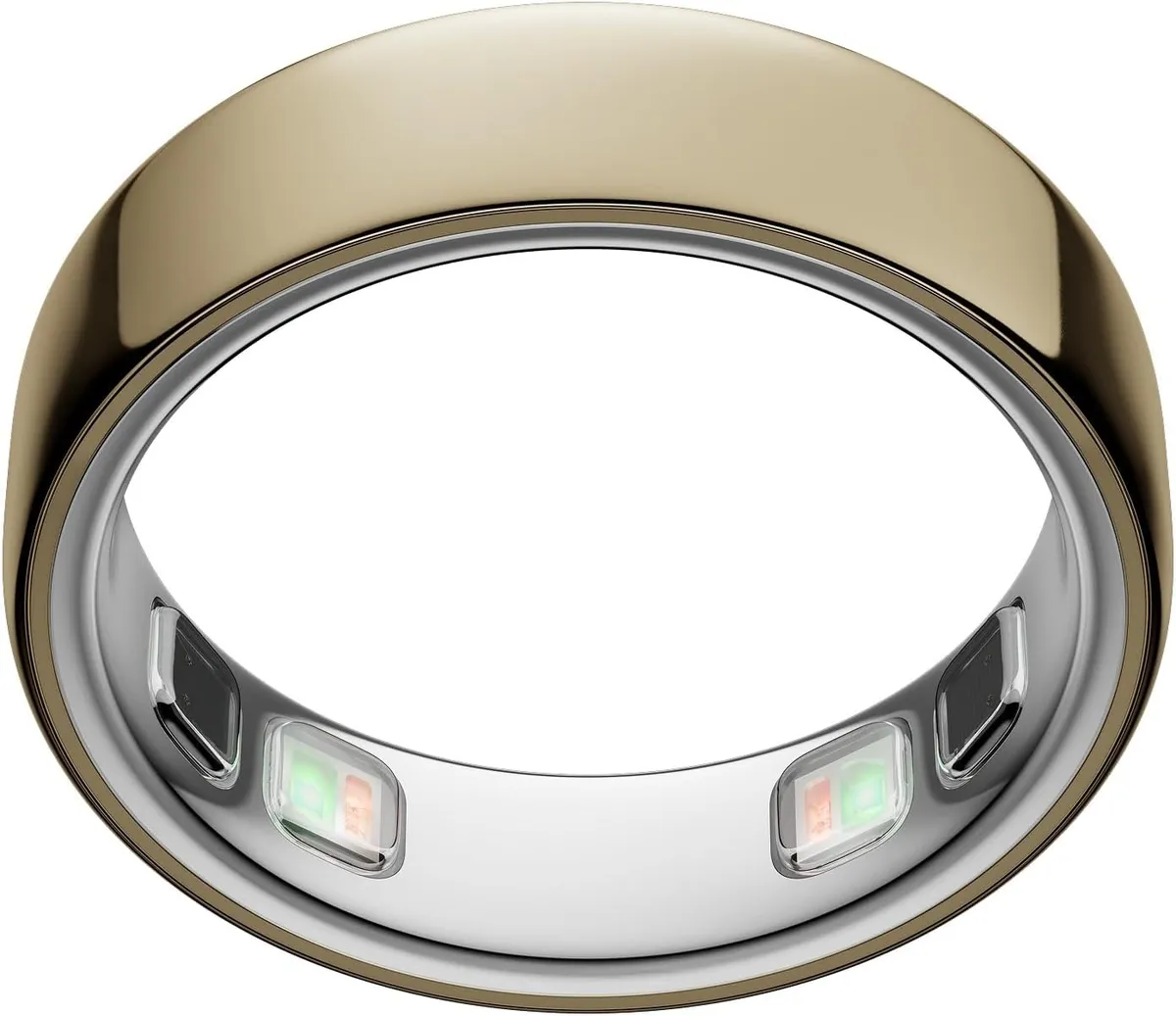
The Oura Ring 5 is a health tracking wearable that lacks the bulk that plagues most of its competitors. At $399 from Oura it's priced comparably to the Sleepal AI Lamp but it's a trade off: you'll miss out on the sunrise alarm features but you do get a health device that tracks your every move.