
 Club Benefits





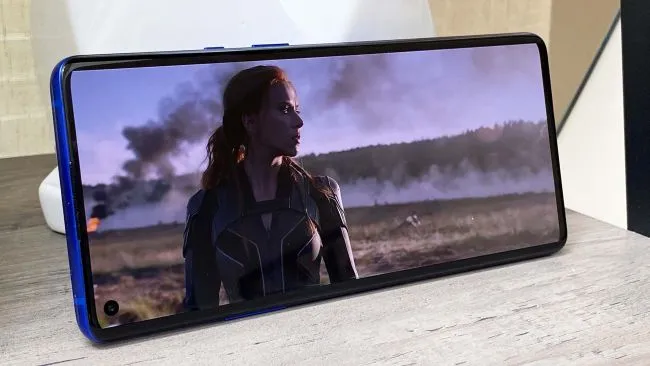
The OnePlus 8 Pro is currently suffering from an unusual display problem. OnePlus is working on an update to solve it, but for now, dark images will look oddly green on at least some handsets.
As reported on the OnePlus forums (via TechRadar), owners of the company's latest flagship have noticed a green tint when in low-light settings. Given how new the handset is, and OnePlus's heavy marketing on how good the OnePlus 8 Pro's display was, this could be a major issue.
- OnePlus 8 Pro review
- OnePlus 8 Pro vs. iPhone 11 Pro: Which flagship phone wins?
- Plus: Apple iPhone SE review (2020): An amazing $399 value

Despite manufacturers' best efforts, smartphones are not always the same. It's possible that this issue is simply a result of a batch of lower-quality display components, rather than something all OnePlus owners will eventually face. Equally, all OLED displays perform their worst at low brightness, struggling with producing large uniform blocks of color. However, this seems to be a more acute problem than normal.
Article continues belowIn Tom's Guide's OnePlus 8 Pro review, there was no evidence of these problems. TG global editor-in-chief Mark Spoonauer was full of praise for the panel's colors, brightness and smooth 120Hz refresh rate.

I tried to replicate this issue on my own OnePlus 8 Pro review unit, and found similar results to the ones users were reporting (see above image).
Although by itself the display of the 8 Pro looked fine, comparing it to my Huawei P40 Pro (with Chrome installed via an APK file), you can see that the display shows a very different kind of "black" on Chrome's No Internet error page. I took screenshots on both phones and compared them on a third display, and confirmed that the two browser pages were producing the same color, meaning that it is the phones' displays causing the difference in these images.

You may remember from earlier this month that Samsung's Galaxy S20 Ultra was suffering a similar problem (via AndroidCentral), specifically on international models using the Exynos 990 CPU, rather than the US-only Snapdragon 865 version. While all OnePlus 8 Pro models use the same Snapdragon chip as the S20 Ultra, this doesn't help us fully diagnose the problem.
Samsung Display makes the screens for both Samsung's own smartphones and other companies, including OnePlus, and both run on Android 10, albeit via different launchers - One UI and OxygenOS. Because of these similarities, it means that it's hard to figure out if it's a software or hardware issue without further investigation.
What may help (or possibly make worse) is the "DC Dimming" option that can be found in the OnePlus Laboratory section of the Settings menu. This is an experimental feature that alters the electrical current in the display to change the brightness. While some users report it helps minimize the tint, the setting contains a warning that using this feature could cause color aberrations, which can be tied to the loss of detail in black colors (known as "black crush") reported by forum users.
OnePlus is on the case though. It said in a statement that "OnePlus values user feedback and is committed to delivering the best smartphone experience".
"Our team is currently investigating these reports to identify the best solutions for our users, and we will issue updates as soon as they are ready. Regarding the green tint, we are working to resolve this in our next OTA," OnePlus added.
Let's hope that this update is all that's needed. If there's a hardware issue in the phone that hasn't even been on sale for a month yet, this could be hugely damaging to OnePlus' mostly stellar reputation.

