Gardeners urged not to make this mistake with their grass clippings: Here’s why you shouldn’t throw them away

As summer arrives, there’s something satisfying about getting the lawnmower out for a weekly cut. I find the familiar hum of the mowers across my neighborhood almost comforting and a signal that summer gardening season is in full swing.
The smell of freshly mown grass is a scent we associate with summer, but the question for gardeners is, do you leave your clippings on your lawn or remove them after each cut?
With the help of a lawn care expert, I look at what you should do with your lawn clippings and why.
The lawn clipping debate: Ditch or leave?
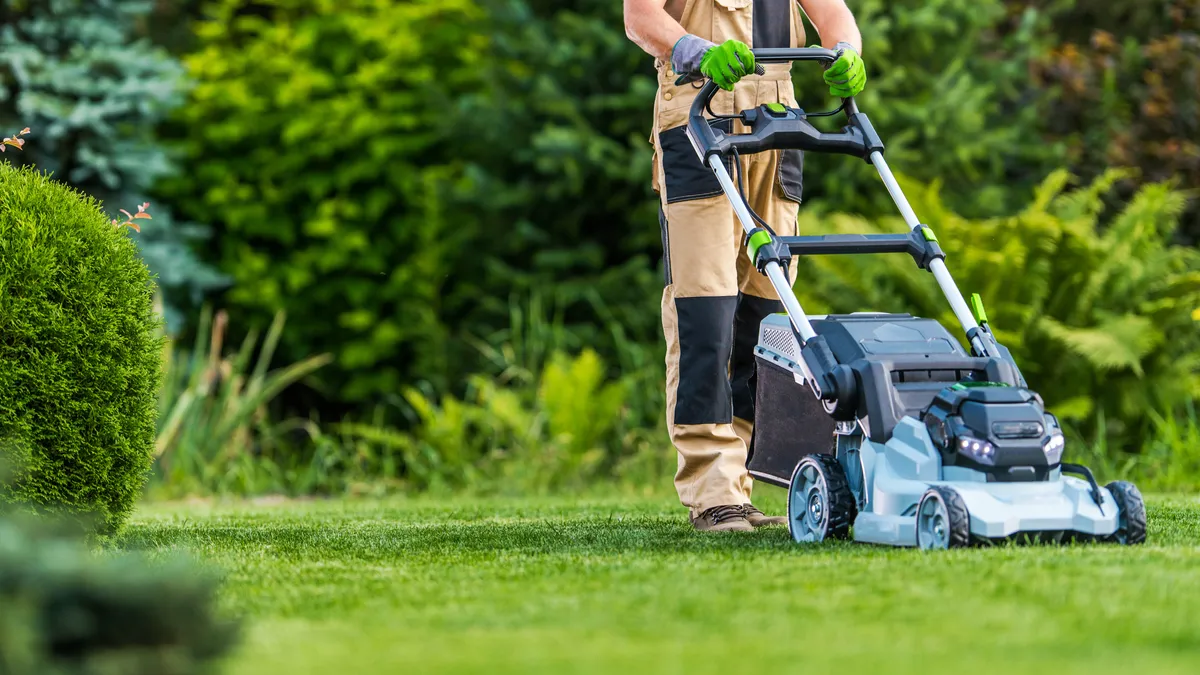
I remember my dad painfully raking up every last lawn clipping each time his mower made an appearance, but he could have saved himself the time and effort by leaving the clippings where they lay. Because left in situ, they become the ultimate fertilizer.
If your lawn is small, removing the clippings doesn’t require much effort, but for those with a large lawn, it’s more exhausting, especially in the summer heat. Luckily, the good news is you don’t need to rake up your clippings to have the perfect lawn, because there’s a benefit to leaving them be.
Why you shouldn't ditch your lawn clippings
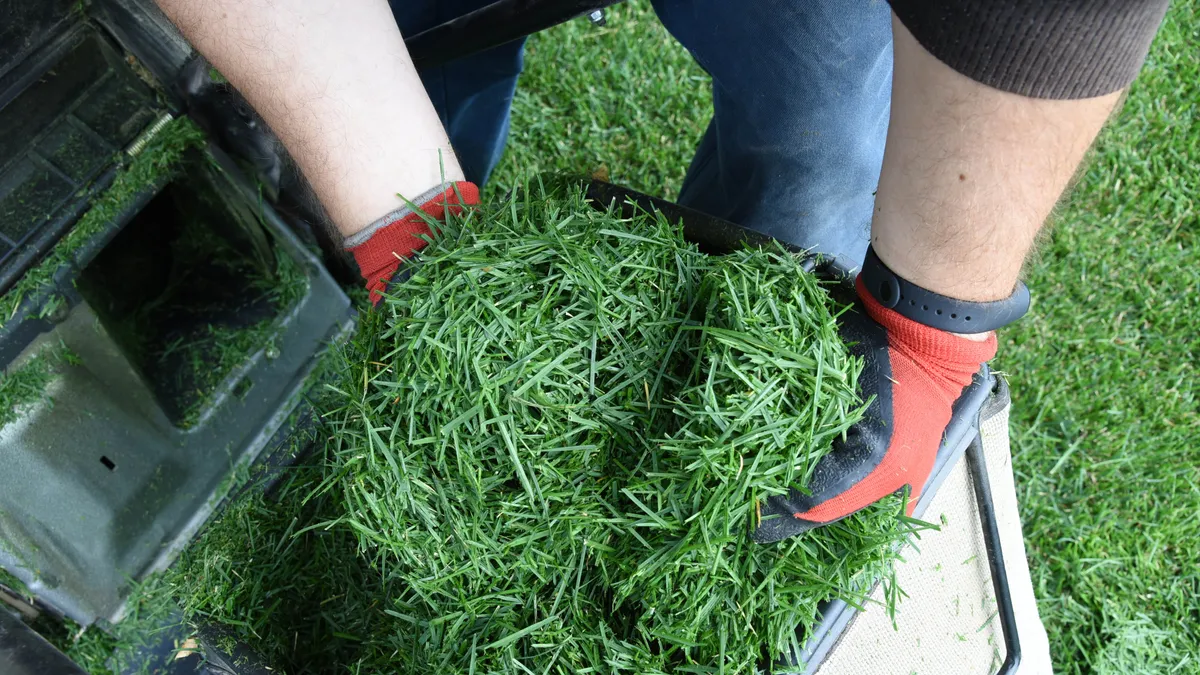
If your lawn clippings are short and dry, there’s an advantage to leaving them on your lawn, as they act as a mulch. Marc Kerr, co-founder with Luke Taylor, at So & Mo, explains, “Mulching involves leaving finely chopped clippings on the lawn to decompose naturally. This acts as a natural fertilizer, returning essential nutrients like nitrogen to the soil and helping to retain moisture.”
Apart from helping your lawn, it has other benefits too. “Mulching saves time and effort, as you won’t need to stop mowing to empty a bag or worry about disposal. It’s also eco-friendly, keeping organic material on site and reducing waste,” Kerr adds.
It won’t look so neat
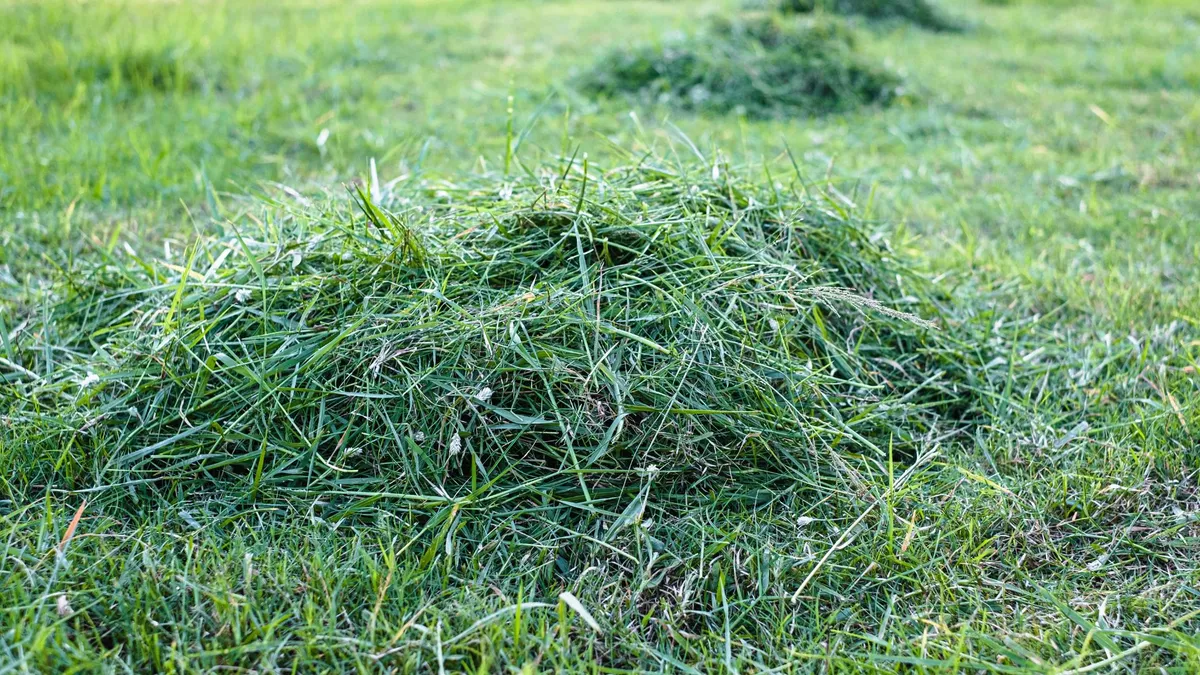
The only downside is that the clippings won’t create a perfectly manicured lawn, and, under certain conditions, they can harm your lawn. “Mulching may not provide the pristine look collecting clippings does, and if the grass is wet or too long, clippings can clump together, potentially smothering the grass beneath,” says Kerr.
Just as there’s a perfect time to water your lawn, Kerr has clear guidance on how to use clippings. “Mulching is most effective when mowing is done regularly and you keep the grass at an ideal length, so when you mow, there isn’t much waste.”
How to decide which path to take?
Whether you leave your grass clippings or clear them up depends on your priorities. Kerr explains, “If you’re seeking a tidy, weed-free appearance or have a composting system in place, collecting clippings might be your best bet. If you prefer a low-maintenance, sustainable approach that boosts your lawn’s health, mulch is the better option.”
When to remove grass clippings from your lawn

Weeds are common in all gardens, especially dandelions, crabgrass and bindweed. However, using the clippings as a mulch where weeds are prominent will spread the seeds and make the situation worse.
In this scenario, Kerr says boxing and disposing of the clippings is best. The same applies if your lawn is long, as you may not be able to see the hidden weeds beneath the tall grass.
The low-maintenance alternative

Of course, you don’t have to spend your weekends pushing a heavy mower to keep your lawn tidy. A robot lawnmower will take over the chore, giving you time to sit back and enjoy your yard. Although if you’re like me, you’ll find another job to do!
The benefits go beyond just saving effort. Instead of going for a weekly chop, a robot lawnmower will cut your lawn between 3 and 4 times a week. And rather than removing long blades, a robot mower will cut a fraction during each sweep, leaving the minute clippings behind to act as a fertilizer for a healthy lawn.
Lawncare essentials we love

Follow Tom's Guide on Google News and add us as a preferred source to get our up-to-date news, analysis, and reviews in your feeds. Alternatively, you can read our content on the Tom's Guide app available now for iOS and Android. Subscribe to Tom's Guide on YouTube and follow us on TikTok. Finally, you can visit our dedicated Tom's Guide Savings Squad hub for expert help on getting the best products for less.
More from Tom's Guide
- The secret to a lush green lawn is this $3 bathroom item — and you might already own it
- 7 expert tips to make your lawn look amazing this summer
- Don't make a costly mistake: 7 signs your yard isn’t suitable for a robot lawnmower