Until now, AI has mostly lived on screens — inside chatbots, apps and cloud tools. But that's no longer the case.
AI was a central theme at CES, as it saw representation throughout a collection of upcoming products that aren’t just relegated to a computer screen. AI devices tailored for avid block builders, gamers and even homeowners who want to tidy up their spaces are on the horizon. What stood out most wasn’t smarter software — it was how quickly AI is becoming embedded into everyday life.
Here’s how AI is moving off screens and into the products people actually use.
Razer wants to put AI coaching directly into your games — here’s how it works

Time to learn something about me: I’m addicted to gaming. While I can usually breeze through cannon fodder enemies, brain teasers and tough bosses still trip me up.
That’s why two new AI-powered devices from Razer immediately caught my attention. They point to a future where getting stuck mid-game might be a lot less frustrating.
Razer’s Project Motoko is a gaming headset that doubles as an AI-powered wearable. Built-in cameras can recognize objects and text in real time, while integrated chatbots — including OpenAI, Grok, and Gemini — can offer live tips as you play.
For gamers who don’t want to wear a headset for hours, Project Ava offers a different approach. It’s a physical AI companion housed in a small tube, presenting your chatbot of choice as a digital avatar that can coach you with real-time commentary. Think of it as backseat gaming — but in a way you might actually welcome.
Together, Motoko and Ava feel like a Trojan Horse for gamers who’ve long ignored AI, attaching it to tools that feel fun, helpful, and familiar.
Robot vacuums are getting legs — and that changes everything

Robot vacuums have gone from novelty to necessity, and the next step may be giving them legs.
Roborock’s new Saros Rover uses AI, motion sensors, and 3D spatial awareness to climb stairs, jump over obstacles, and navigate homes more like a human would. If devices like this become mainstream, we may be entering an era where AI-powered cleaning robots with limbs are the norm — not the exception.
LEGO is turning AI into something kids can actually play with

LEGO fans are also getting a glimpse of what physical AI can look like through the new Smart Brick system — a LEGO stud with a tiny embedded chip that reacts to how it’s used.
Equipped with a microspeaker, LEDs, and an accelerometer, Smart Bricks light up and play sounds in response to movement and interaction. Combined with Smart Minifigures and Smart Tags, LEGO’s approach introduces AI in a playful, kid-safe way that feels more like magic than technology.
A trio of Smart Play Star Wars sets is planned for pre-order on January 9 and launch on March 1, which includes:
- Darth Vader’s TIE Fighter Set
- Luke Skywalker’s Red Five X-Wing Set
- A Throne Room Lightsaber Duel and A-Wing Combo Set
AI is quietly moving into pet care — starting with your cat’s food bowl
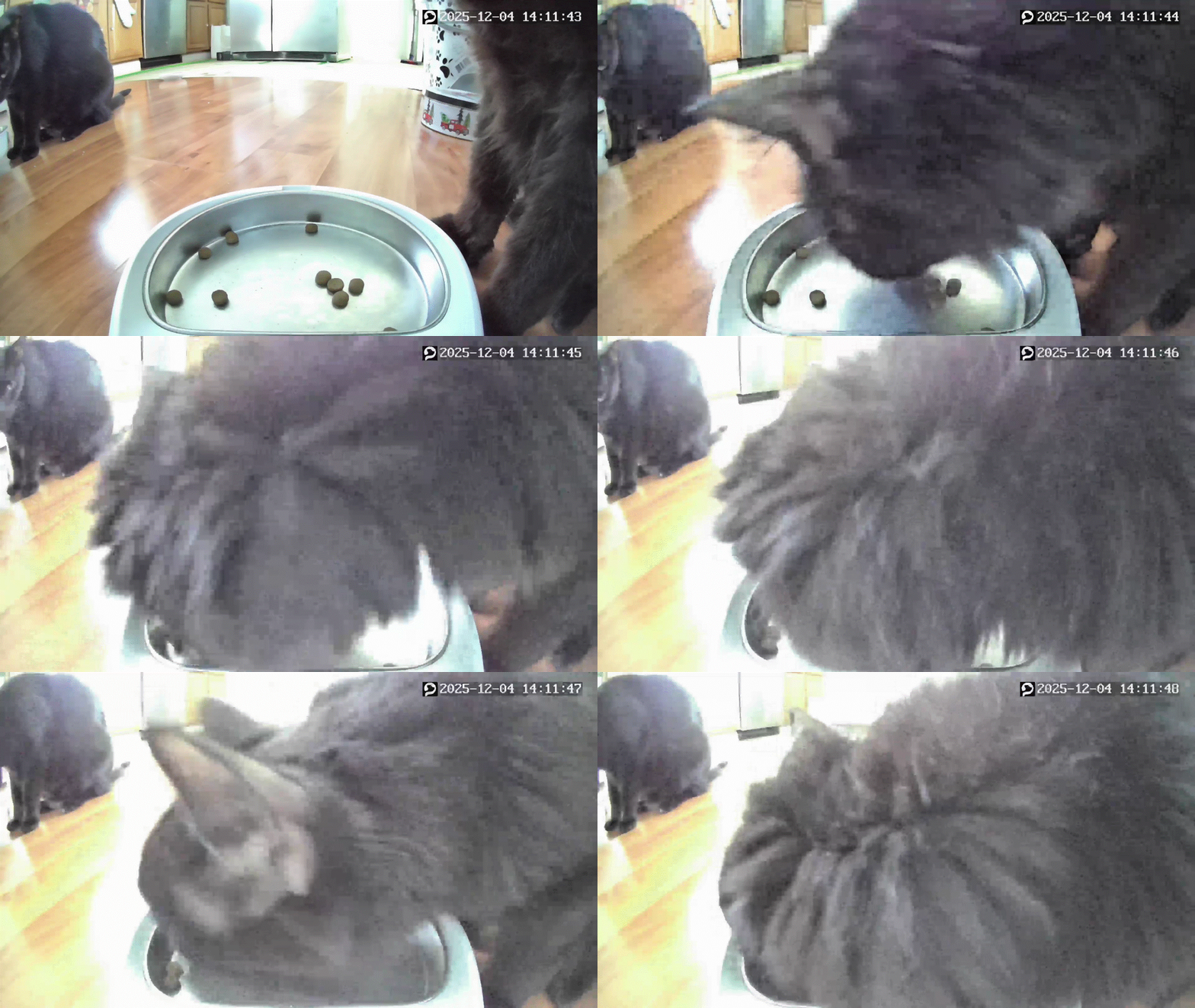
AI is even finding its way into pet care. Having to worry about your own well-being is an everyday occurrence. Combine that with constantly thinking about your cherished feline companion’s health, and your stress meter is probably at its max.
AI Tails is looking to make that second scenario less of a bother through its smart feeding and drinking station. A combination of AI, cameras and pattern recognition technology that keeps close tabs on your cat’s body movements and facial expressions works in unison to make you aware of your tabby’s health.
For pet owners, that kind of ambient AI assistance feels less like science fiction and more like peace of mind.
The takeaway
The big takeaway isn’t any single gadget — it’s the shift itself. CES 2026 painted a compelling picture of a future where more physical products powered by AI will play a larger part in everyone’s lives. Gamers, everyday folks who get giddy at the sight of a spotless floor, LEGO-building masters and even highly dedicated pet owners are among the groups of people who’ll get new AI-powered devices to embrace in the near future.
AI is moving away from just being a chatbot that lives in computer screens — it’s becoming embedded in wearable gear and assorted products that make everyday living that much simpler.

Follow Tom's Guide on Google News and add us as a preferred source to get our up-to-date news, analysis, and reviews in your feeds.
More from Tom's Guide
- I invented a fake idiom to test AI chatbots — only one called my bluff
- Is your job AI-proof? 10 skills becoming more valuable in 2026
- I used ChatGPT Voice to prep for a job interview — and it helped me land the job