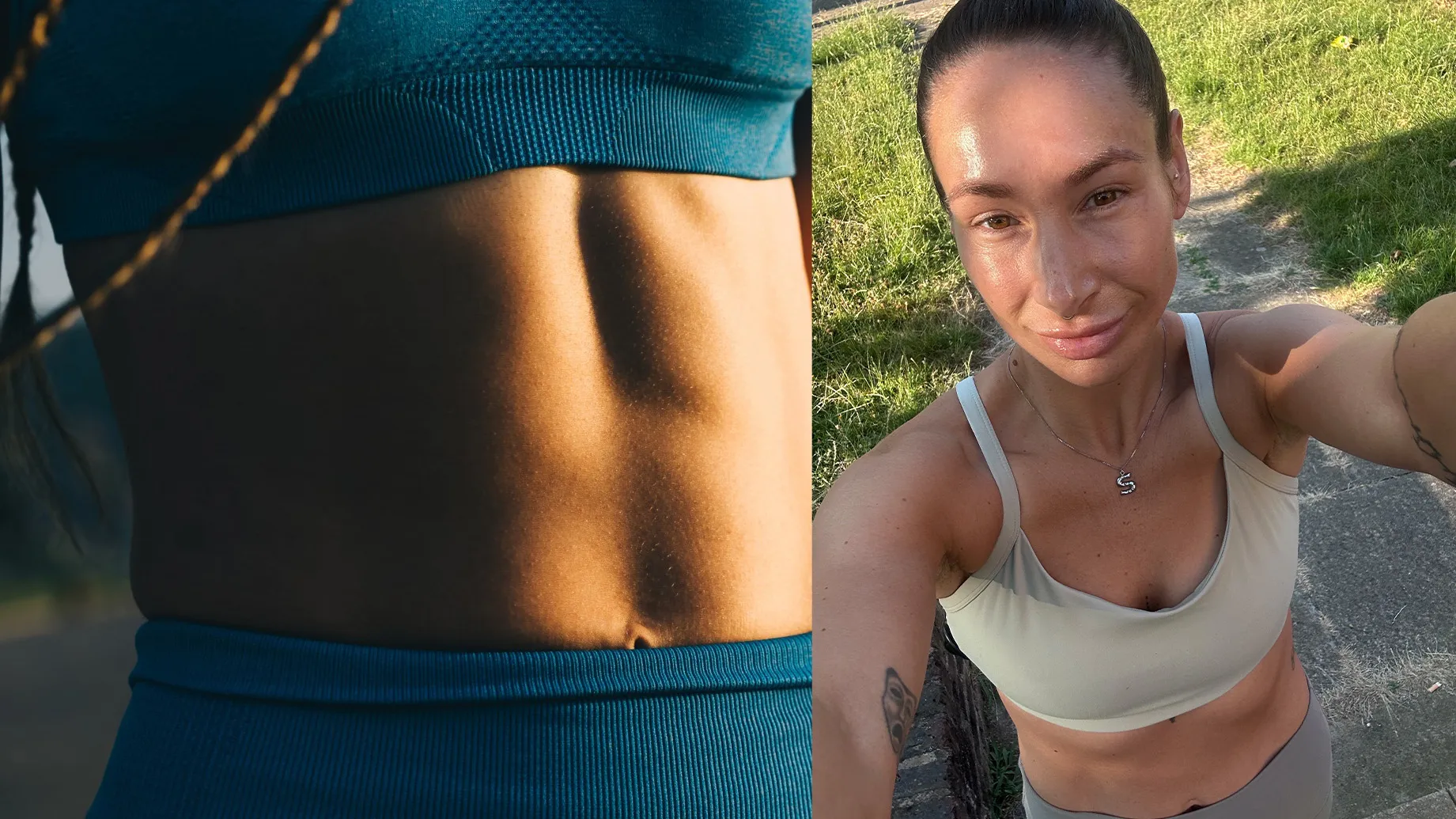
Since taking up Pilates, I've seen an enormous difference in my core muscles, and, combined with my 80/20 approach to a balanced diet, have been noticing better definition in my midsection, too.
My stomach has always been a problem area for me, and I maintain that your diet will move the needle most when it comes to how much muscle definition you show there, as well as other (quite annoying) factors like health conditions, sleep, stress, muscle-building workouts and genetics.
That said, I've been really enjoying programming core workouts recently, and I've been following this five-minute "abs blast" on lunch breaks when I get a spare second from work. It's been helping me maintain core strength outside of the Pilates studio, and it's a must-try if you have back pain or tight hips, as it helps target the muscles responsible for protecting you.
Here it is!
Watch: 5-minute 'abs blast' workout
Who doesn't love a short workout? You can make this five or 10 minutes, or even longer, if you prefer. I've been mostly sticking to one round four to five times per week, but I have also been switching it up with two rounds here and there if I have the time.
I recommend one of the best adjustable dumbbells or just a regular hex dumbbell (pictured below) if you want to stick with one weight.

Hex dumbbells are extremely versatile and allow you to switch between standing, kneeling, or floor work with unparalleled grip.
- Arm raise x kneeling twist: Obliques
- Leg liftovers: Hips and glutes
- Crunch x toe taps: Deep core
- Boat pose x arm raise: Deep core, stabilizers
- Supported side crunches: Obliques
- Routine: 50 seconds on / 10 seconds off. 1+ round
Try to keep the reps similar for each move each round, and work both sides of the body. You have 50 seconds of work and 10 seconds to transition, and you can perform with your bodyweight or using any weight. If you choose more than one round, you could complete the reps on one side only, then change to your other side on the next round.
Each move brings something slightly different to the table.
Arm raises work the fronts of the shoulders, while the rotation of the kneeling twist hits the obliques, which are the muscles located along your waist active during side motions or twisting. This should be a gentle twist, but if you find that the movement still hurts your back, skip it or try reducing the weight first. Most importantly, listen to your body. I find a bend to the elbows helpful, too.
Leg liftovers need core engagement to stabilize your body as you lift your leg up and over the weight, while also strengthening your hips and glutes. For an extra challenge, see if you can take your supporting hand away from the mat and bring both hands to your hips or overhead. Note: this will work your core harder, but might not suit your lower back, so only try this progression if you don't have injuries or concerns.
Follow Tom's Guide fitness on Instagram for more workouts, routines, tips, and tricks.
Crunches and toe taps are supportive as your lower back rests against the mat throughout. Remember to keep your navel drawn in and breathe expansively against your ribcage to help engage your diaphragm and TVA muscles, or the "deep core" responsible for stability. Keep your gaze soft as you peel your shoulders away from the mat, then lower one or both feet; you'll feel this in your lower abs.
Boat pose is a brilliant isometric exercise for building a strong core, combined with the arm raise to test balance, stability and control while also strengthening your shoulders. I recommend either removing the arm raise or placing one or both feet on the ground for extra support.
Supported side crunches strengthen the obliques as you draw your elbow and knee to touch in the supported side plank position. You could try it from a forearm side plank with both legs away from the mat for an extra challenge. The slower you move with this exercise, the more you'll feel it, so take your time to build control into each rep.
Why it works

This isn't just about hitting your abs, although the rectus abdominis muscles along the front of your stomach are being targeted, but about building deep core strength and working the muscles responsible for protecting your spine, like your hips, glutes and stabilizing muscles.
If you suffer from tight hips or back pain, some (or all) of these moves might be useful for you to try, but if they don't feel good for you, that's okay; stop and rest. As a trainer, I like to work on strengthening the weaker or tighter muscle groups that contribute to injury or pain, so that we can be preventative for the future.
Exercises like sit-ups or seated twists can make pain worse, as the spine is less supported while performing repetitive movements, especially with sit-ups. These create lumbar flexion and extension over and over again.
If you're unsure how to engage your core properly, this short "bracing" routine might be helpful for you before you start the workout. Remember to breathe properly, exhaling when your muscles meet the most resistance and not restricting it to your chest.
I've been hitting this routine weekly, and I'm noticing such a difference in control and endurance. It's supporting me for other workouts and tacks on nicely as a starter or finisher, depending on my mood.
Also remember that training should make you feel good, so if ripped abs isn't the goal, that's great; just focus on what you enjoy about the workout and let us know how you get on below!

Follow Tom's Guide on Google News and add us as a preferred source to get our up-to-date news, analysis, and reviews in your feeds. Alternatively, you can read our content on the Tom's Guide app available now for iOS and Android.
More from Tom's Guide
- I teach people to be more mobile in their 60s and 70s: 3 low-impact exercises you should start with
- Forget burpees —the 'Pilates burpee' is beginner-friendly and low-impact (and you’ll love it)
- A yoga instructor says this is the 5-minute yoga routine you need for strong and mobile hips and core muscles