




Squats are one of the best-known exercises for building stronger legs, but that doesn’t mean they’re suitable for everyone. If you find squatting difficult because of stiff knees, limited mobility, or balance concerns, there are some great alternatives you can try — so you don’t have to miss out on building that all-important lower-body strength.
As we age, strong legs help us manage everyday activities like climbing stairs, getting up from a chair, and walking independently. And while squats are an effective way to train several lower-body muscles at once, they’re not the only option. Other exercises can also strengthen your thighs, hips and calves, without requiring you to lower your body into a deep squat.
Below, we’ve rounded up five alternative moves to help you build stronger legs. They can be adapted to different fitness levels, with options to use a sturdy chair or wall for extra support where needed.
The goal is to find exercises that feel comfortable for your body, while helping you maintain the strength and stability you rely on every day. Give the exercises below a try and you should start to notice a difference.
1. Seated leg extensions
If bending your knees deeply feels uncomfortable, seated leg extensions are a useful alternative for strengthening your quadriceps — the muscles at the front of your thighs. These muscles help straighten your knees and play an important role in everyday activities like walking and climbing the stairs. Best of all, you can practice them without having to support your full body weight.

How to do it:
- Sit towards the front of a sturdy chair, with your back straight and both feet flat on the floor.
- Slowly straighten one knee, lifting your foot until your leg is almost fully extended.
- Pause for a second, keeping your thigh on the chair.
- Lower your foot back to the floor with control.
Make it easier: Straighten your knee through a smaller range of motion, working only as far as feels comfortable.
Make it harder: Hold your leg straight for three to five seconds before lowering it, or add a light ankle weight if you can do the movement comfortably and with control.
2. Standing hamstring curls
Your hamstrings — the muscles at the backs of your thighs — help bend your knees and contribute to stability while walking. Standing hamstring curls strengthen these muscles without the effort of lowering your body into a squat. You can hold onto a sturdy chair or countertop if you struggle to balance on one leg.

How to do it
- Stand tall behind a sturdy chair or countertop, holding on for support.
- Keeping your thighs roughly in line with each other, bend one knee to bring your heel towards your buttocks.
- Avoid leaning forward or arching your back as you lift your foot.
- Slowly lower your foot back to the floor.
Make it easier: Bend your knee only a small amount, gradually increasing the range as your strength improves. Keep both hands on your support.
Make it harder: Add a light ankle weight or resistance band, provided you can maintain good form and balance.
3. Standing hip extensions
Our glutes are the primary engine for balance, posture, and independence as we age. Standing hip extensions target these muscles without the deep knee bend involved in squats, making them a useful alternative.
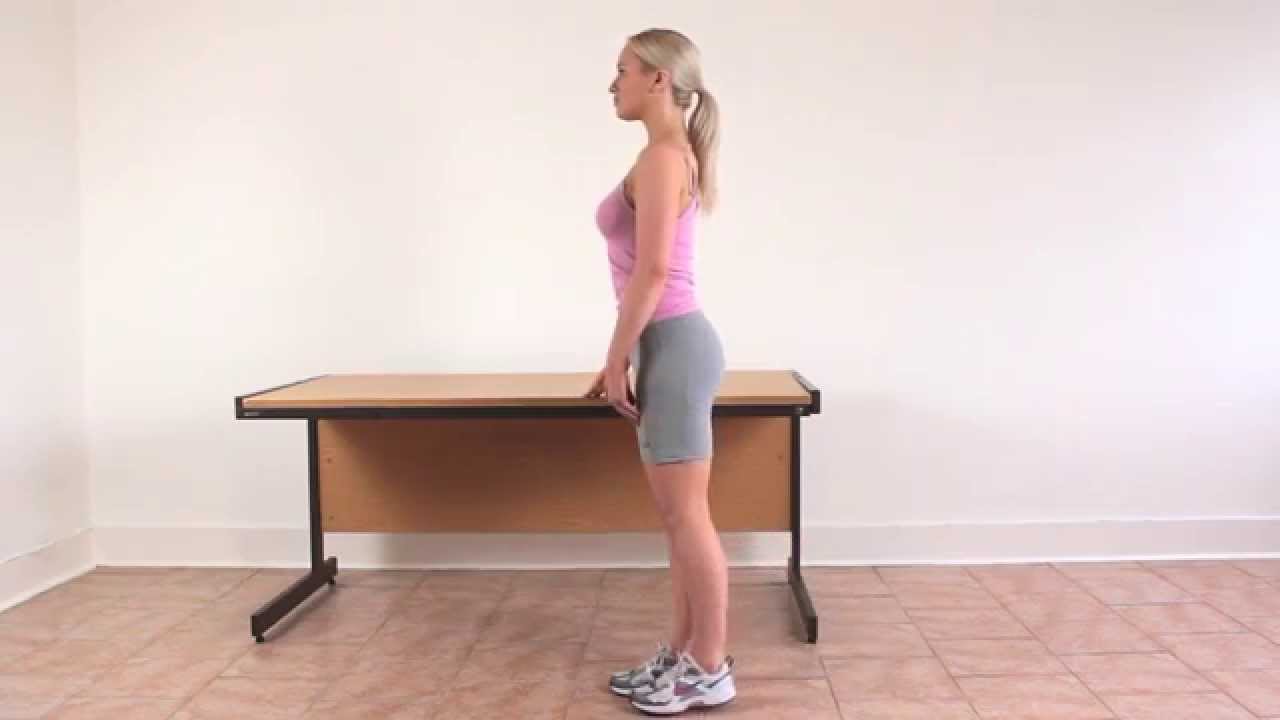
How to do it
- Stand behind a sturdy chair or countertop for support.
- Keep your back straight and your weight evenly distributed between your feet.
- Slowly raise one leg backwards, keeping your knee mostly straight and your toes pointing forwards.
- Stop before you feel the need to arch your lower back or lean forwards.
- Bring your leg back to the starting position with control.
Make it easier: Move your leg backwards through a smaller range, keeping both hands on the support.
Make it harder: Place a resistance band around your ankles, if you're comfortable using one.
4. Standing side leg raises
Standing side leg raises work the muscles around the outside of your hips, including the gluteus medius. These muscles help stabilize your pelvis when you stand on one leg during walking. It’s a particularly useful exercise for building hip strength without requiring a deep bend in the knees.
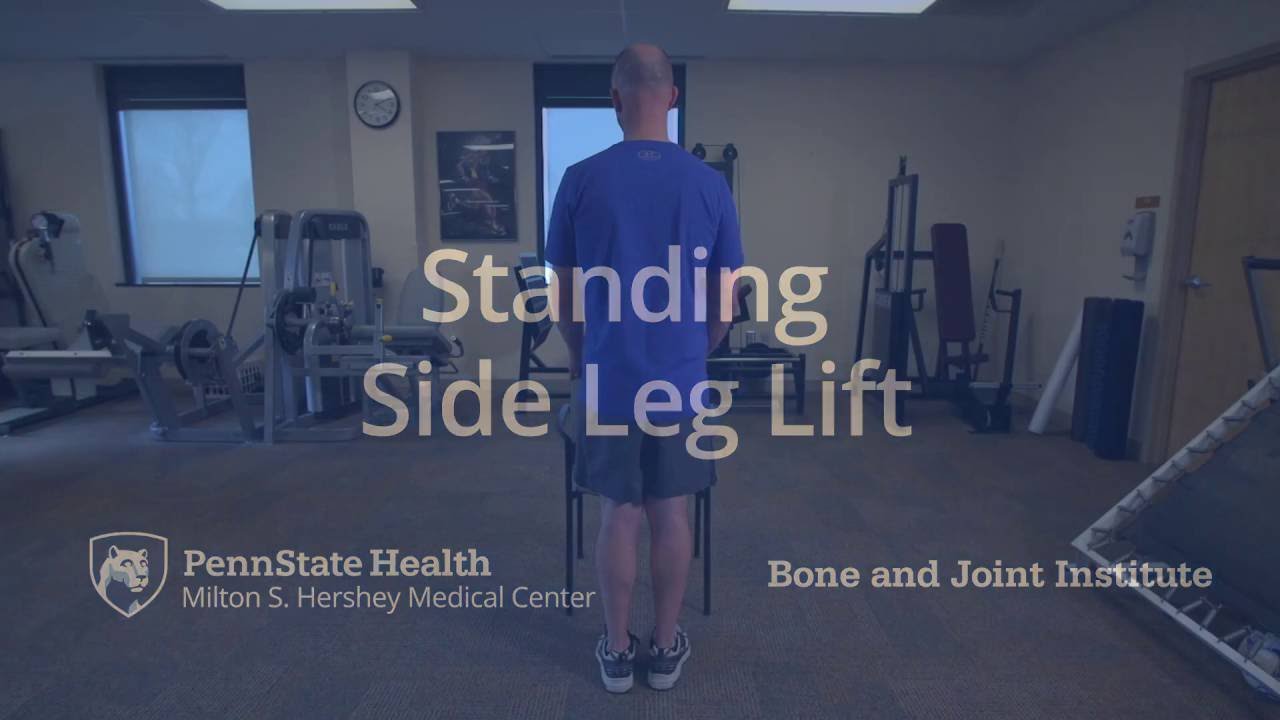
How to do it
- Stand tall beside a sturdy chair or countertop, holding on for support.
- Keep your feet pointing forwards and your torso upright.
- Slowly lift one leg out to the side, keeping your knee straight but not locked.
- Avoid leaning your upper body in the opposite direction or turning your toes towards the ceiling.
- Pause briefly, then lower your leg with control.
Make it easier: Lift your leg only a few inches, prioritising control over height. Use both hands on the support.
Make it harder: Add a resistance band around your thighs, just above your knees.
5. Standing calf raises
Your calf muscles help propel you forwards as you walk and contribute to ankle stability, so it’s important we keep them in check. Calf raises are a tried and tested exercise for strengthening the calves without bending your knees into a squat.
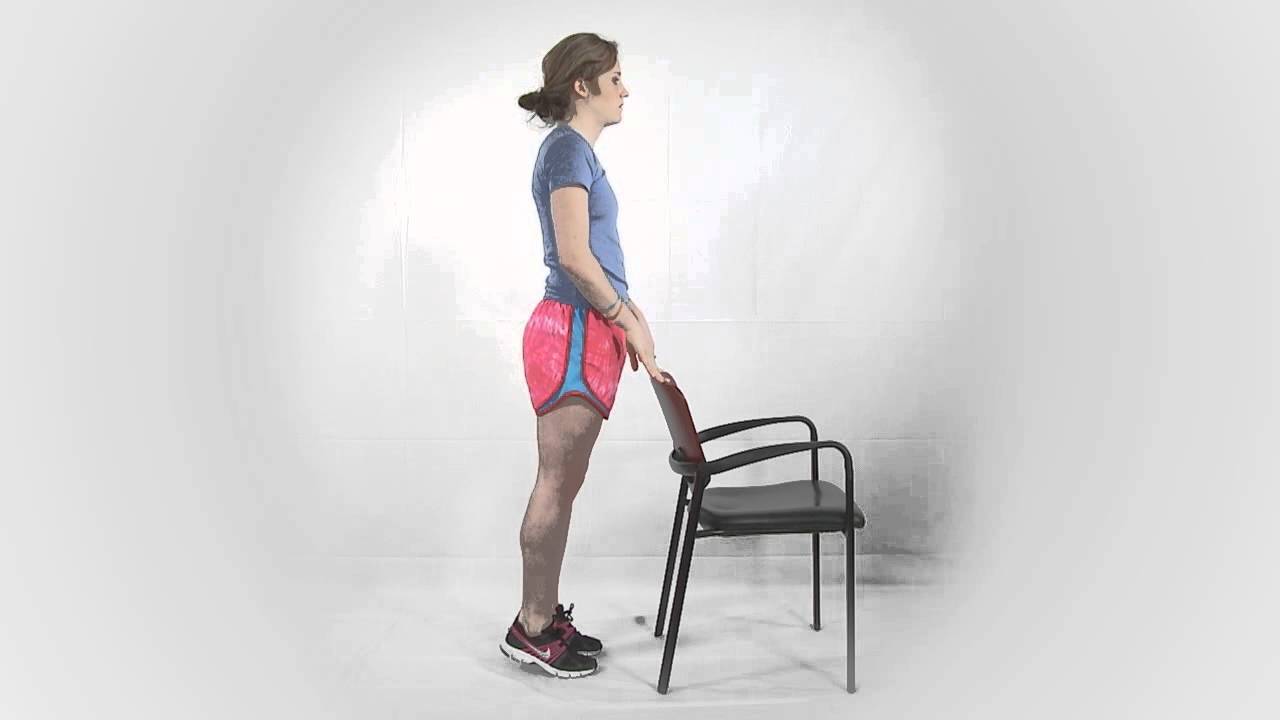
How to do it
- Stand behind a sturdy chair or countertop, with your feet hip-width apart.
- Hold on for support and keep your torso upright.
- Slowly lift your heels off the floor, rising onto the balls of your feet.
- Pause at the top, then lower your heels slowly back to the floor.
Make it easier: Try seated calf raises instead. Sit in a sturdy chair with your feet flat on the floor, then lift your heels while keeping the balls of your feet grounded.
Make it harder: Try raising one heel at a time or slowing down the lowering phase to make your calves work harder.
These exercises are proof that you don’t have to squat to build lower-body strength. Together, they target key lower-body muscles that support walking, balance and everyday movement as we age.
Start with one set of controlled repetitions for each exercise, and aim to practice them twice a week. Over time, your legs should start to feel stronger and more capable.

Follow Tom's Guide on Google News and add us as a preferred source to get our up-to-date news, analysis, and reviews in your feeds. Alternatively, you can read our content on the Tom's Guide app available now for iOS and Android. Subscribe to Tom's Guide on YouTube and follow us on TikTok.
More from Tom's Guide
- I teach people how to be more mobile: 3 low-impact back and shoulder moves that build stability and strength after 40
- I teach people how to be strong and mobile: this is the one exercise I regret ignoring for years
- I teach people over 50 to be mobile: 3 low-impact moves that build more stability than a 30-minute walk

