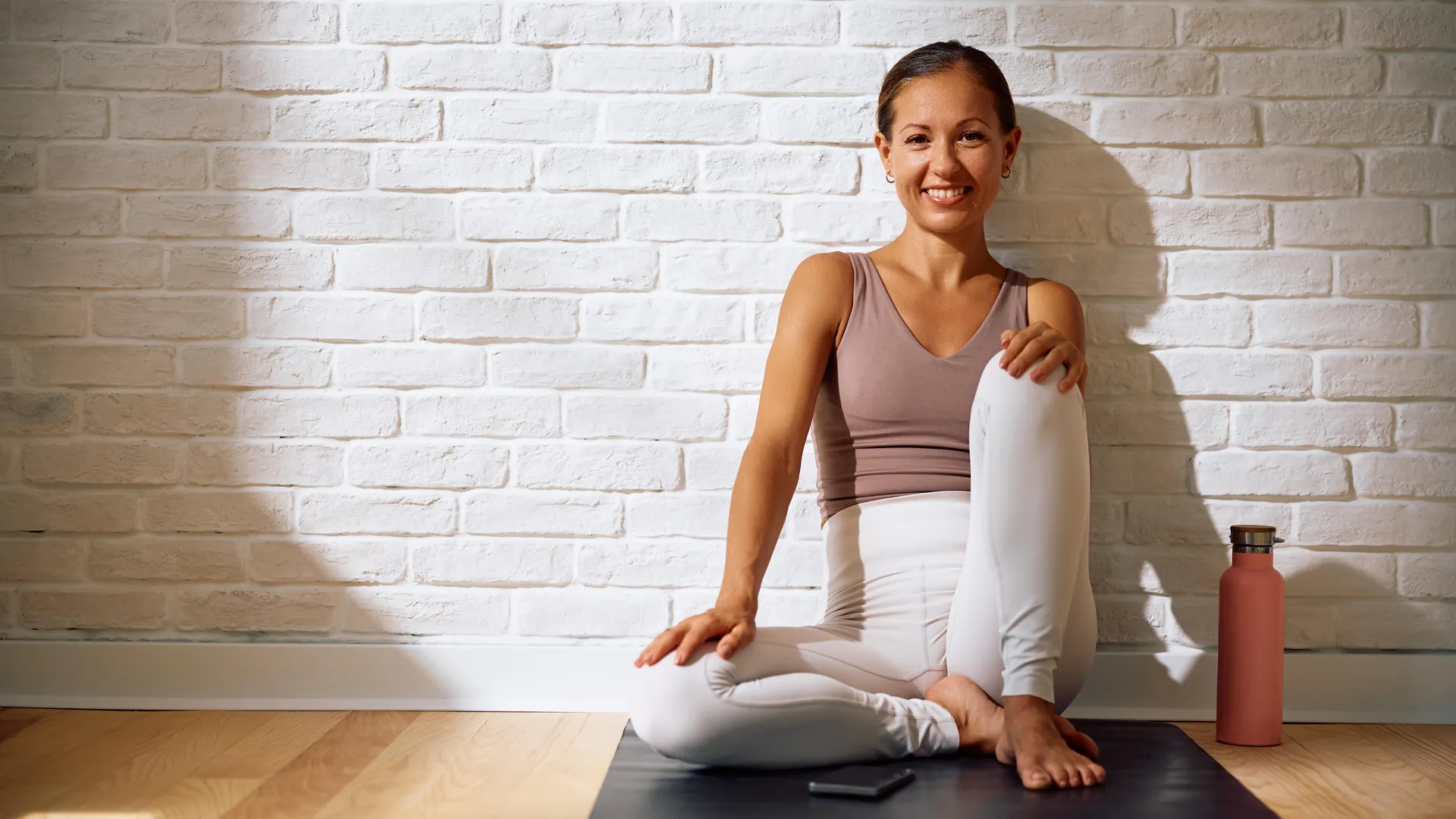
If you sit at a computer or spend lots of time commuting, chances are you have tight shoulders, a tight chest, and less-than-optimal posture. You can do various upper body stretches to improve the issue, but I actually recommend one exercise more than stretching: wall angels.
The wall angel is a mobility drill that opens up the pecs, promotes healthy shoulder range of motion, strengthens the upper back, and contributes to better overall posture. Doing wall angels regularly can help protect you from pain, injury, and muscle imbalances, and best of all, you won’t need any equipment to do them – just a section of bare wall.
After you start doing wall angels for a while, you may start to notice that you sit taller, carry groceries more easily, and reach for heavier dumbbells on your upper body workout days. Read on to learn how to do the exercise.
How to do wall angels
Wall angels are appropriate for beginners and advanced athletes alike, but you should always check in with your doctor before trying anything new. They may recommend avoiding the move depending on your specific circumstances.
This exercise is relatively easy to do, but a few common form errors can reduce its effectiveness. If you’re unsure that you’re doing wall angels correctly, I suggest working with a certified personal trainer.
The only thing you’ll need for wall angels is a section of bare wall. You should be able to place your hips, back, shoulders, and head against the wall without any obstructions.
Start by doing one set of 8-10 reps, 2-3 times a week. Once your range of motion improves, you can try doing 12-15 reps.
Wall angels can be done on their own or as a part of your workout warm-ups. They’re a great way to prime your shoulders, chest, and back muscles for upper body exercises like bench presses, overhead presses, pull-ups, or rows.

Here’s how to do them:
- Stand about six inches away from the wall, and rest your head, shoulders, back, and hips resting against the wall.
- Maintain a neutral spine and tall posture.
- Lift your arms to a right angle against the wall, aligning your elbows with your shoulders.
- Slide your arms up the wall, keeping your hands, wrists, forearms, and elbows in contact with the wall.
- Bring your arms back down to the starting position.
- Continue for 8-15 reps.
What are the benefits of wall angels?
Since so much of our daily life is “forward,” like looking at computer screens or texting on cell phones, the muscles in the back of our bodies can get weak while the muscles in the front of our bodies get tight.
Wall angels counteract this in multiple ways: they activate important postural muscles like your rotator cuff and rhomboids, stretch commonly tight areas like your pectorals, and promote external rotation of the shoulder, which improves overall shoulder mobility and range of motion.
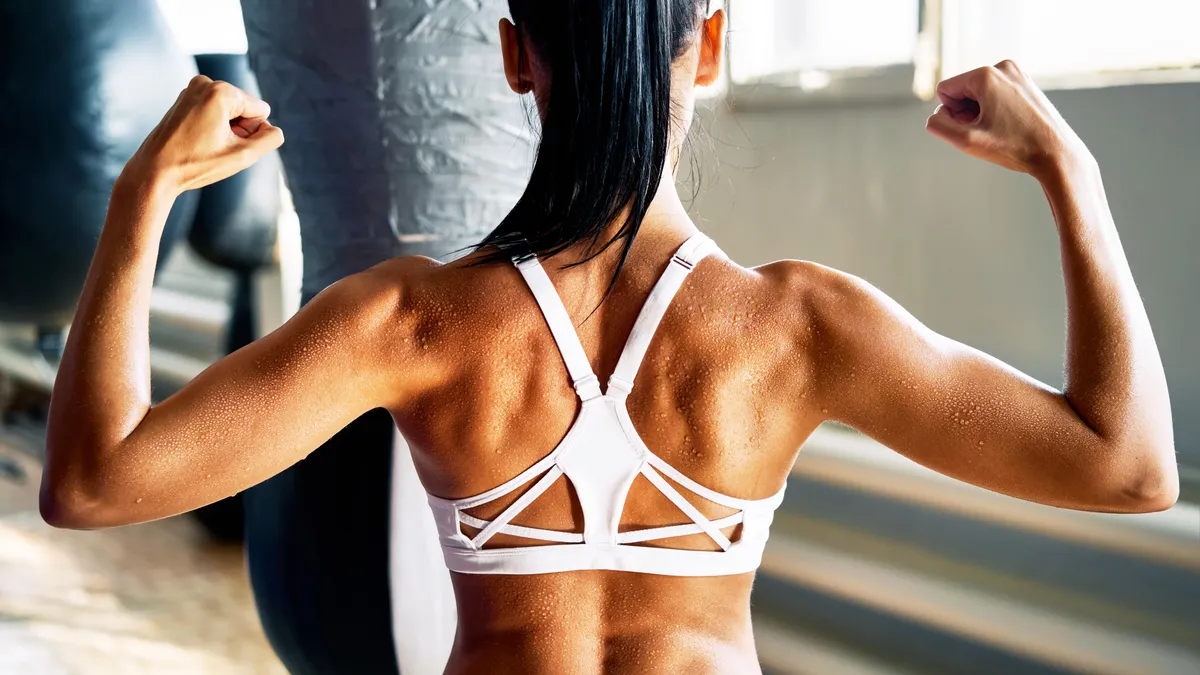
Why I prefer wall angels over stretching
Popular upper body stretches like the doorframe stretch and thread the needle are great for lengthening tight muscle fibers. However, what these stretches don’t do is strengthen weaker muscle groups that can contribute to poor upper body mobility and posture.
Unlike passive stretching, the wall angel is a mobility exercise that trains the body to move more efficiently with the correct muscular support. This movement stretches and strengthens simultaneously, using the wall as a guidepost for optimal range.
Common wall angel form errors
Anyone can do wall angels, but if you’re especially tight, you may struggle with proper form. Here are some common errors to look out for and ways to correct them.
Lower back arches away from the wall
If you lack the necessary deep core strength, you may find it difficult to keep your lower back in a neutral alignment and in contact with the wall.
Try gently tucking your pelvis and engaging your core muscles while performing the movement. If you’re still having difficulty, strengthen your deep core muscles with exercises like planks and alternating heel taps.
Forearms and wrists lift off the wall
Those with especially tight chests and shoulders may not be able to keep their wrists or forearms against the wall.
Focus on stretching the chest and shoulders with moves like the standing pec stretch. Instead of sliding your arms to an extended overhead position, work in a smaller range of motion. Once you start to feel your arms or wrists lifting, slowly return to the starting position. Gradually increase your range over time as your mobility improves.

Hips and buttocks lift off the wall
Excessive tightness in the chest, shoulders, and hip flexors can cause the hips and buttocks to lift off the wall during the movement.
Again, focus on lengthening tight areas with stretches like the hip flexor stretch and thread the needle. Perform the exercise with a smaller range of motion so that the hips and buttocks stay in contact with the wall, then slowly increase your range as you’re able.

Follow Tom's Guide on Google News and add us as a preferred source to get our up-to-date news, analysis, and reviews in your feeds.
More from Tom's Guide
- SWEAT app review: I've been using this app for the past decade, and here's why I think it's the best workout app for women
- I’m a registered dietitian and here are the 9 healthy foods I actually eat to keep my heart strong
- 'I’m a Pilates instructor, and I recommend these 5 core exercises to help older clients build strength and improve posture'