Rebuilding my core after pregnancy and childbirth was a tall order, but there was one exercise that had a major impact on my strength and stability: alternating heel taps.
I’ve been a big fan of this exercise for years, and use it frequently with nearly all of my personal training clients. It effectively targets deep core muscles like your transverse abdominis and internal obliques, it’s easy to modify or progress depending on your fitness level, and you’ll only need a yoga mat to get started.
What are alternating heel taps?
While alternating heel taps are an appropriate exercise for most, you’ll want to get clearance from a doctor before starting any new activity — especially if you’re a beginner, you’re recently postpartum, or you’re dealing with any chronic or acute injuries. Performing this move with proper form is crucial. If you’re unsure of how to do alternating heel taps correctly, consider meeting with a certified personal trainer for guidance.
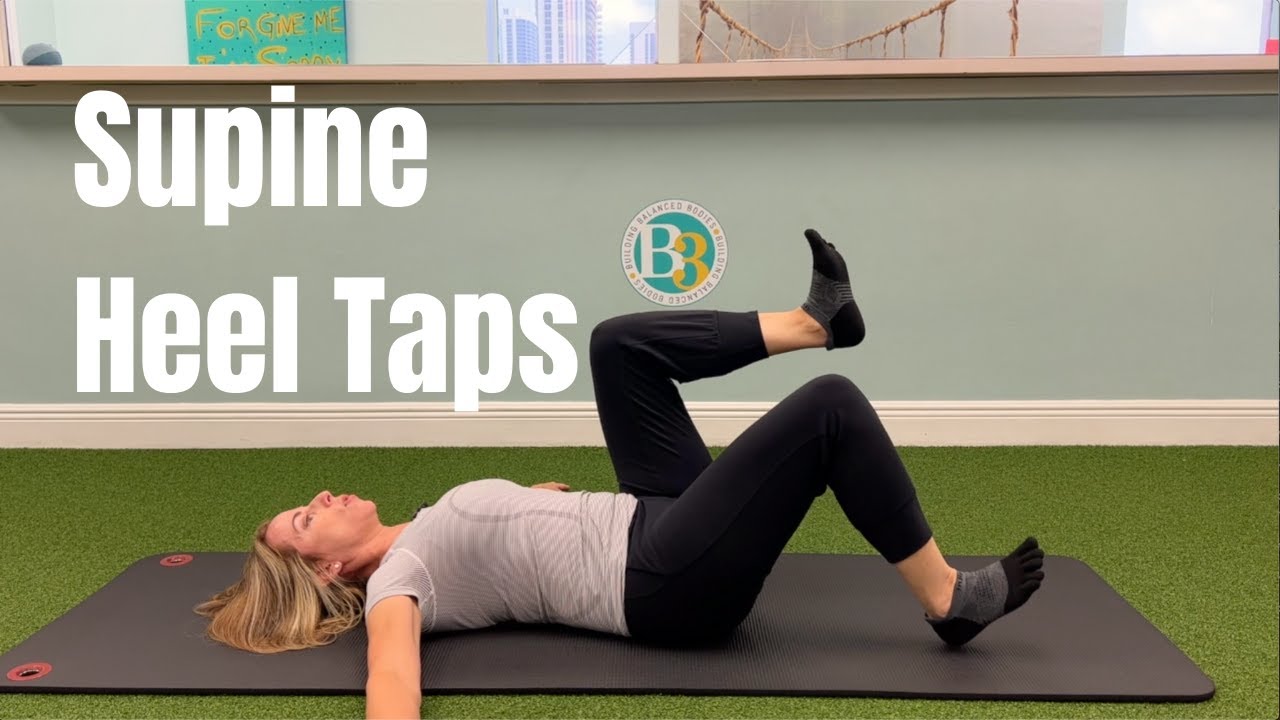
Here’s how to do the exercise:
- Lie on your back with your knees bent and feet flat on the floor.
- Inhale, then exhale, drawing your belly button to your spine.
- Lift both knees to a tabletop position, with your shins parallel to the floor.
- Lower your left heel to the ground, keeping your left knee bent at a 90-degree angle.
- Lift your left leg back to the starting position.
- Lower your right heel to the ground, keeping your right knee bent at a 90-degree angle.
- Lift your right leg back to the starting position.
- Continue alternating for 10-20 reps on each side.
What are the benefits?
During alternating heel taps, the muscles in your deep core (like the transverse abdominis and internal obliques), along with your pelvic floor muscles, activate to keep the spinal column in a neutral position as your legs lower and lift. This trains these muscles to stabilize your pelvis and spine as the body is in motion.
Additionally, the more surface-level muscles of your core (like the rectus abdominis and external obliques) work with the hip flexors to move the leg towards the floor and back to a tabletop position. The stronger these muscles are, the more efficiently you can walk, run, climb, and move.

Unlike some core exercises that can put strain on the neck, lower back, or other sensitive areas, alternating heel taps are done in a supine position using the floor for support. Since there is no spinal flexion (or “crunching”) involved, it’s generally considered a safer core exercise for those with lower back issues or diastasis recti (a separation of the abdominal muscles, common in postpartum individuals).
What are the modifications?
If you notice your lower back arching excessively while lowering and lifting the heel, or you feel your quadriceps working more than your core, you may need to modify alternating heel taps in order to build the necessary abdominal strength.
Instead of starting in a tabletop position, keep both of your feet on the floor. Inhale, then exhale, drawing the belly button to the spine. As you exhale, lift your right knee to a tabletop position and pause briefly. Lower the right foot back down onto the floor, then repeat with the left side, exhaling as you lift the left leg to a table top position.
You can also choose to do this exercise one side at a time instead of alternating. This allows you to slowly strengthen the area before progressing to an alternating movement pattern.

What are the progressions?
Once alternating heel taps start to feel easy, you can challenge yourself with several different progression options.
First, you can do this exercise by lowering both heels to the ground at the same time. All of the muscles in your core have to work harder to keep the back neutral, both legs moving, and the pelvis and spine stabilized.
Next, you can add weight to the movement. Try performing alternating heel taps while holding two light dumbbells (2-3 pounds) or one moderately-heavy dumbbell (5-8 pounds) above your chest. Adding a weight to the exercise increases the resistance that your deep core muscles have to work against, forcing them to adapt and grow stronger.
Finally, you can convert the movement from an alternating heel tap to a more advanced weighted deadbug. In this exercise, you’ll hold light dumbbells and lower your opposite arm towards the floor as you lower each heel. This not only challenges your deep core to a greater degree, but also improves your coordination and proprioception.
Follow Tom's Guide on Google News and add us as a preferred source to get our up-to-date news, analysis, and reviews in your feeds.

More from Tom's Guide
- Not sit-ups, planks, or crunches: I do this simple Pilates exercise every single day to build a strong and stable core and work on my hip flexor mobility
- Not sit-ups or lunges — I use this simple Pilates exercise to sculpt strong obliques, inner thighs and hip stabilizers
- 'I’m a Pilates instructor, and I recommend these 5 core exercises to help older clients build strength and improve posture'