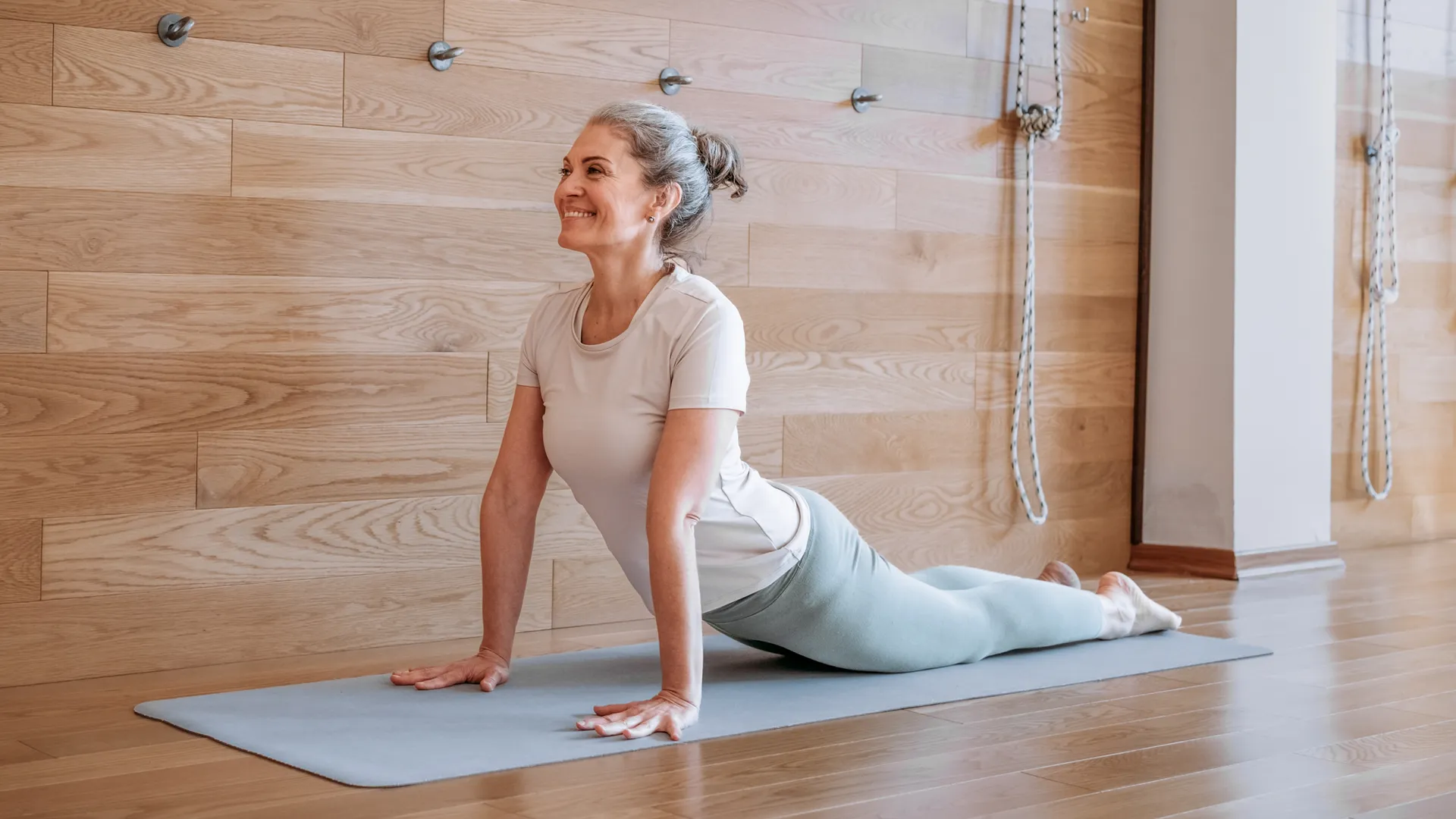
I've seen firsthand the potential of strength and mobility for bulletproofing your body as you age. I've been training my dad since 2020, and over the years, I've seen his body transform as he has built strength, mobility, stability and space in his joints and muscles. I have a 15-minute routine you can do to achieve the same.
Some strengthening exercises I’ve implemented more recently focus on building a strong core and improving balance and joint stability. The primary goal is to keep the body flowing, unlock liquid movement and avoid injuries by targeting muscles responsible for posture.
We’ve had some fun — and wobbles — along the way, but it's transformative to see those changes in motion. Give this short five-move routine a try, and let me know your thoughts.
Watch: 5-move full-body mobility routine
Check out the routine below to see each exercise in action. Once you feel ready to try it, complete the routine as a continuous flow, performing each exercise three times, then moving straight to the next without resting. Once you've completed one round, take a quick reset, then repeat, moving for 15 minutes in total.
The only exercise you'll complete six reps for is the squat rotation, but more on that below.
I recommend performing this routine on one of the best yoga mats to support your body. I've included some benefits and tips below.
The routine starts with a deep squat to a forward fold. You don't need to sit too deeply if you have limited mobility or flexibility in your lower body; for the forward fold, bring as much bend into your knees as you need to keep your fingertips on the ground while still stretching your hamstrings. Try to release your neck by looking between your legs.
This combo set targets your hips, groin, hamstrings, glutes and lower back, making it perfect for releasing tension in muscles that support posture. Perform this three times, then step back into a plank.
The plank is an isometric hold, so spend a breath here to focus on engaging your core by zipping your stomach in and creating tension. Ensure your hips align with your shoulders, and consciously contract as many muscles as possible. You can always bring your knees down for more support.
Next, lift your hips up and back into a downward dog. This stretches the upper body, including your arms, upper back, shoulders and along the back of the body. You can pedal out your heels for a moment to reach into the backs of the legs and mobilize the ankles.
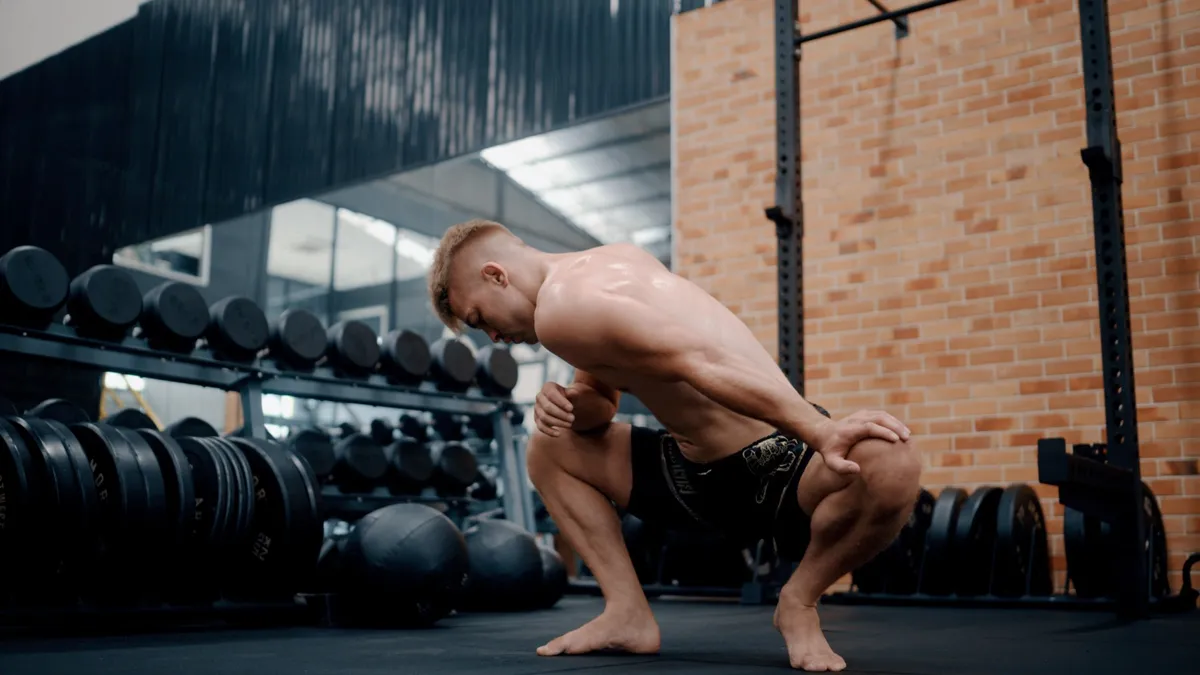
Move between the downward dog and plank three times, then, from your plank, begin walking your hands toward your feet to meet in a forward fold once again.
An optional extra is to gently roll up through your spine to stand, with your shoulders and head the last to extend, then from standing, roll back down the spine slowly and walk your hands forward to meet in your plank. This is called an inchworm, and it's great for posterior chain flexibility, upper-body engagement and core work.
Move into your next move: squat rotations. If this feels too intense, perform this exercise on a chair or place a block (or similar) beneath your sitting bones for extra height and support. Keep the fingertips of one hand down, then reach and rotate with the opposite arm for a deep twist through the torso and spine. Repeat two to three times per side, depending on how you feel.
Finally, stand on your mat with your feet roughly shoulder-width apart. As you sit your hips back into a squat, raise your arms into the air for an overhead squat. At the bottom of your squat, think about drawing your arms back as far as possible and reaching tall with your fingertips; avoid letting your chest fall forward.
Drive up through your feet, legs and core to a half-stand, which will test lower-body strength. Repeat for three rounds.
- Follow Tom's Guide fitness on Instagram for more workouts, routines, tips, and tricks.
The idea for this routine is to create space in your body and help you feel more open with less tension. Move slowly and mindfully, breathing long and slow without holding your breath when it feels challenging.
Feel free to skip exercises, add rounds or reps, or stay for a few more breaths in each pose; this is your routine to play with, I'm just here to give you guidelines. Let me know how you get on in the comments.

Follow Tom's Guide on Google News to get our up-to-date news, how-tos, and reviews in your feeds. Make sure to click the Follow button.
More from Tom's Guide