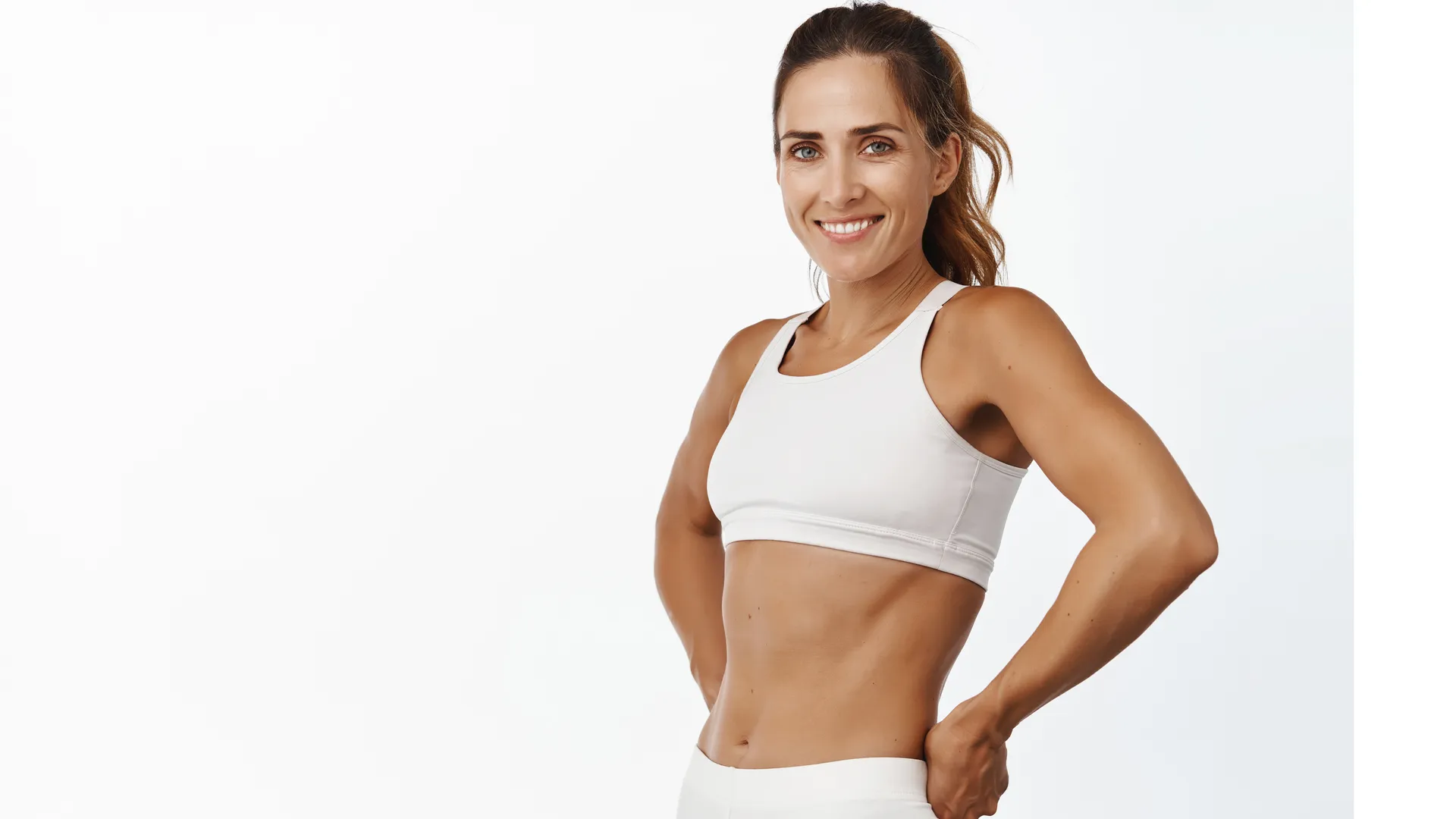
My core strength has improved a lot this year, thanks to a mix of weightlifting, Pilates and yoga. Keeping consistent with a variety of core-strengthening exercises has been crucial for improving stability and balance over time, but there are some moves that work better than others.
I've always struggled to feel the dead bug properly, even when trying weighted dead bugs instead. For some reason, even after speaking with a variety of instructors about my form and engagement, one of the best exercises for deep core strength just doesn't do it for me.
Recently, I swapped dead bugs out for knee tucks, which are supportive on your lower back and still target the deep stabilizing muscles in your core. Here's what I've noticed so far, and some of the benefits of this exercise.
As a reminder, just because this move works for me, it doesn't mean your body will respond the same way. If you're unsure, speak with a qualified instructor, and remember to check in with a physician if you are working with a specific health condition, injury, or similar.
How to do knee tucks
I know that slowing exercises to focus on time under tension (how long muscles hold tension during a muscular contraction) has been pivotal in improving core strength, control and stability. It's also had a positive impact on my posture by targeting the deeper muscles that support the pelvis and spine, like the erector spinae and transverse abdominis.
That's the first reason why supine knee tucks work, because your spine is supported on one of the best yoga mats, and you can focus on slowly working your core with control rather than rushing through the reps.
Here's how to do it:
- Lie on your back on an exercise mat with your arms extended into the air. You can hold a set of light dumbbells if you'd like
- Place your feet on the mat hip-width apart with your knees bent
- Lift your upper back away from the mat and send your gaze forward. Engage your core by drawing your stomach in and bracing
- Using your core, pull your knees toward your chest with control, keeping them bent
- Extend your legs away from you, touching your toes to the mat. For a more challenging variation, fully extend your legs to hover an inch or two away from the mat, pressing both legs together
- Pause, then reverse the movement to bring your knees back in
- Continue for 3 sets of 15-20 reps, depending on your experience.
Why it works
Knee tucks work the deep stabilizing muscles in your core and the lower abs without putting too much pressure on your spine.
Knee tucks work the deep stabilizing muscles in your core and the lower abs without putting too much pressure on your spine. This makes them more approachable for those looking for low-impact core exercises that don't involve sit-ups, crunches, or planks.
There are many muscles at work, including the abs (particularly the lower abs), obliques, transverse abdominis, hips, and, to a lesser degree, the legs. Focusing on lifting your upper back and sending your gaze forward will increase core activation, but if this hurts your neck, keep your head supported on the mat.
To engage the legs more, focus on shooting them straight in front of you, but this will test your core more to keep your lower back pressed into the mat without arching, so I recommend getting familiar with the move using bent knees first.
Follow Tom's Guide fitness on Instagram for more workouts, routines, tips, and tricks.
By strengthening the abdominals and protecting your back, you can improve spinal alignment and control and coordination of your muscles. Think better posture, less chance of injuries and improved movement quality.
However, when trying knee tucks, you'll need to focus on a few things at once. For example, your lower back should be gently pressed into the mat, and your torso must stay stable as your core holds tension and your lower body moves. Your hips have a role to play to ensure your pelvis remains stable, so slightly tuck your hip bones toward you throughout.
I've opted for high volume and light weights for knee tucks, aiming for 15-20 reps and a brief 30-second rest, totaling 3 sets. You can adapt this to suit your routine, but whatever you do, don't lose the quality of your reps just to hit the target number.
As you breathe, try to expand your breath outward and sideways, helping to engage your core and diaphragm as you move.
Since focusing on higher reps, slower motion and better control, I've noticed a huge impact on overall core strength and endurance. I look forward to a stronger and more stable core, but let me know how you get on below!

Follow Tom's Guide on Google News and add us as a preferred source to get our up-to-date news, analysis, and reviews in your feeds.
More from Tom’s Guide