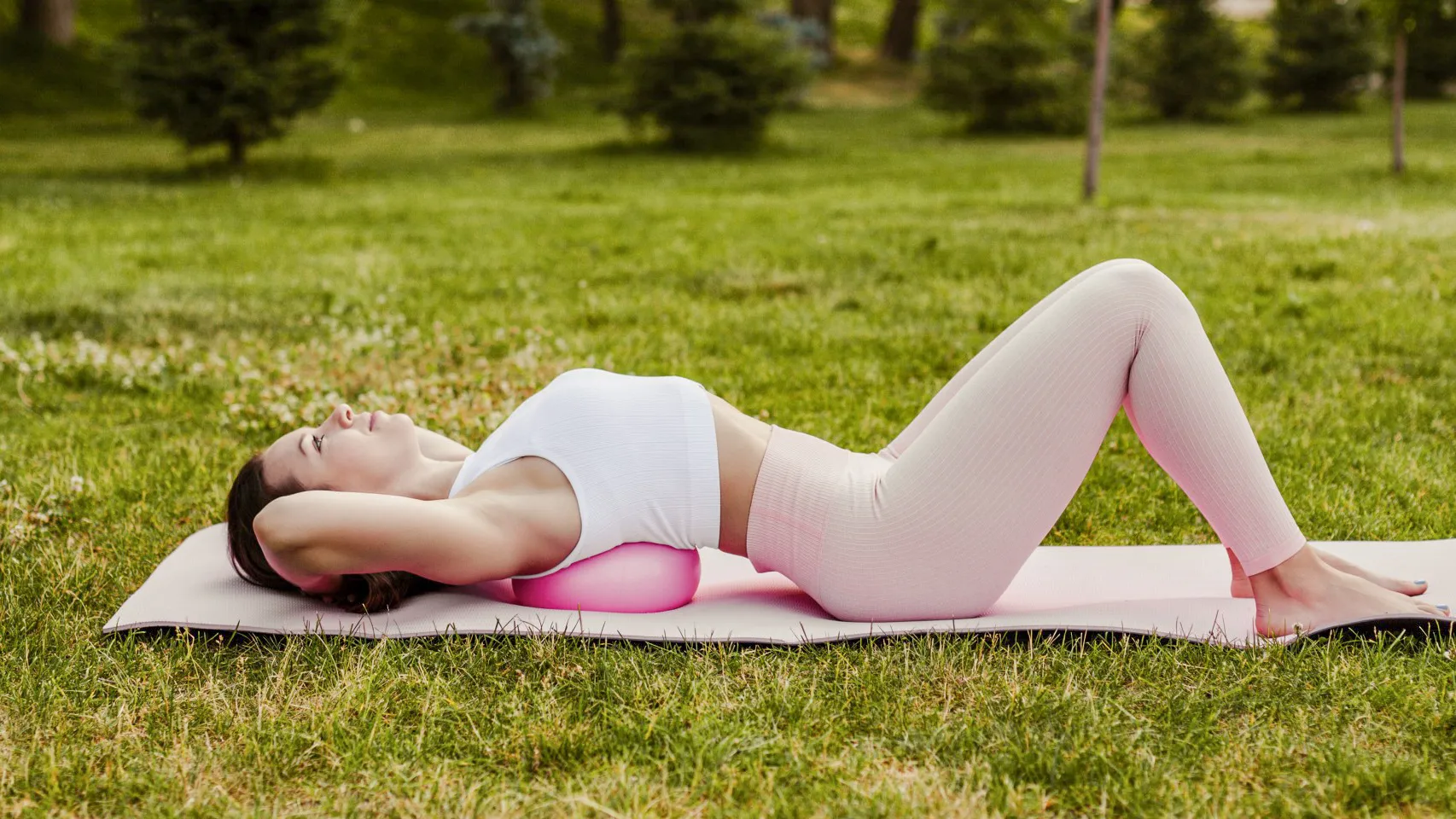
When I go to a yoga class (which is roughly four times a week), I always show up 10 minutes early so that I can have a quick stretch on my mat. The first stretch I turn to every single time to open my upper body is my take on a restorative pose called supported fish, but I like to add a little extra for my shoulders and lats.
I have very tight chest and shoulder muscles, alongside a past rotator cuff injury and some work-related hunching over the years, which have all played a role in creating lots of upper-body tension.
For that reason, I try to release my upper back, shoulders and chest before any type of yoga or weightlifting to help improve my form, posture and alignment. Here's how to do my variation on supported fish pose, and the benefits of trying it for yourself. I also recommend one of the best yoga mats to help support your body.
How do you do it?
Aim to hold the stretch for at least 30 to 60 seconds, if not longer. As you hold the stretch, allow gravity to relax your shoulders and elbows and try to breathe in and out deeply. Don't force anything, but do gently draw your elbows down toward the mat.
Don't force anything, but do gently draw your elbows down.
Be careful to support your spine properly using a yoga block or similar, positioning it between your shoulder blades, no lower than where a sports bra strap would sit (mid-back along the spine). Height and orientation are personal choices; the higher the block, the stronger the pose.
Your neck is part of your spine, known as the cervical spine, so try to ensure the crown of your head makes contact with the mat so that your neck gets some support and isn't hanging mid-air.
Here's how to do it:
- Place a yoga block (on your choice of height setting) vertically on your mat for your mid/upper back. You can add one to support your head if you want to or use a bolster along the whole of your head and back
- Lower yourself on to the block (or alternative) and relax your arms by your sides. If you can and want to, lower the crown of your head to the mat and close your eyes
- You can extend your legs away from you or bring the soles of your feet to touch and open your knees to the sides for a gentle groin and hip stretch. Alternatively, bend your knees and place your feet on the mat
- Try to relax your body and focus on your breathing for at least 30 seconds
- From supported fish pose, bring your hands behind your head, lightly squeeze the shoulder blades together and pull your elbows back to open your chest and stretch the lats. Hold the position.
What are the benefits?
Supported fish pose is known as a heart-opening pose in yoga, offering a supported backbend using props like blocks or bolsters to support the spine, and sometimes, the head.
By lifting the chest above the hips and relaxing your head back, you're broadening through the fronts of your shoulders and chest while creating a soft arch in the spine. This is great for posture as it gently (and passively) helps extend the spine and relieve tension along your back.
I like to add on the extra posture of placing your hands behind your head and bending your elbows, like you're sunbathing. This helps me to open my chest and shoulders more and deepens the stretch in my very tight lats along the outer back.
For this variation, as long as your neck is supported, you shouldn't feel any tension in your head. You can adjust the block accordingly, depending on how intense the stretch feels for you. If you choose to lower the crown of your head to the mat, you might notice a stretch in your throat, which is normal; continue to breathe in and out through your nose.
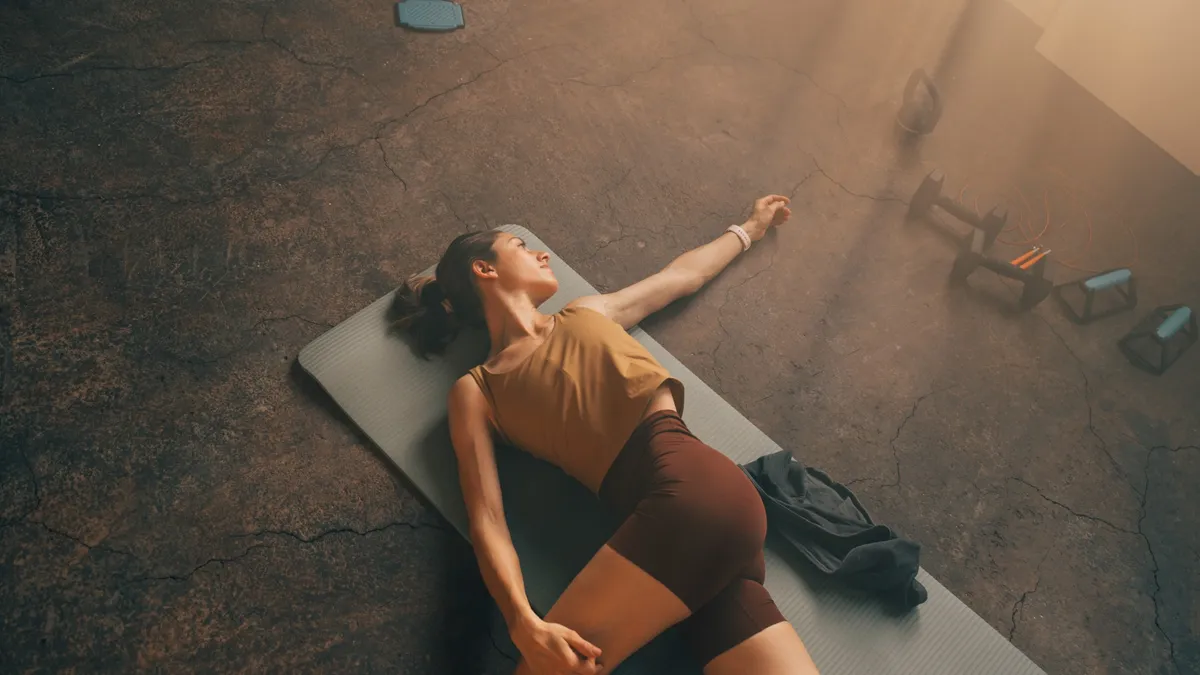
Perhaps lesser talked about is how to safely exit the pose. Ensure your core is engaged to protect your back, then draw your head up and tuck your chin toward your chest so that you don't get dizzy. From here, you can roll to the side while removing the block. If the block is on the highest height setting, lean forward first.
Your upper body should feel more open and relaxed after performing this stretch, and you might also notice you feel calmer. This is a great pose to try if you have tension in your back and spine and if you'd like to open your chest, shoulders and hips.
However, if you're currently dealing with a health condition, illness, or injury, or you are pregnant or postpartum, I strongly advise seeking medical advice first before trying this exercise for the first time.
Follow Tom's Guide fitness on Instagram for more workouts, routines, tips, and tricks.

Follow Tom's Guide on Google News and add us as a preferred source to get our up-to-date news, analysis, and reviews in your feeds.
More from Tom's Guide
- The caterpillar walk is considered the 'gold standard' for lower body mobility and flexibility — here's how to do it
- Forget sit-ups and planks — this 10-minute standing Pilates workout strengthens your core and lower body
- 5 chair exercises that build functional strength after 50 — and they're beginner-friendly