There are more exercises named after animals than you might imagine. A quick online search turned up the likes of the frog stretch, the inchworm, the bear crawl, and the duck walk. I’ve tested the first two for Tom’s Guide, but I’ve never heard of the second, and the only duck walk I’m familiar with is Chuck Berry’s (though I have to assume ducks are pretty good at it, too).
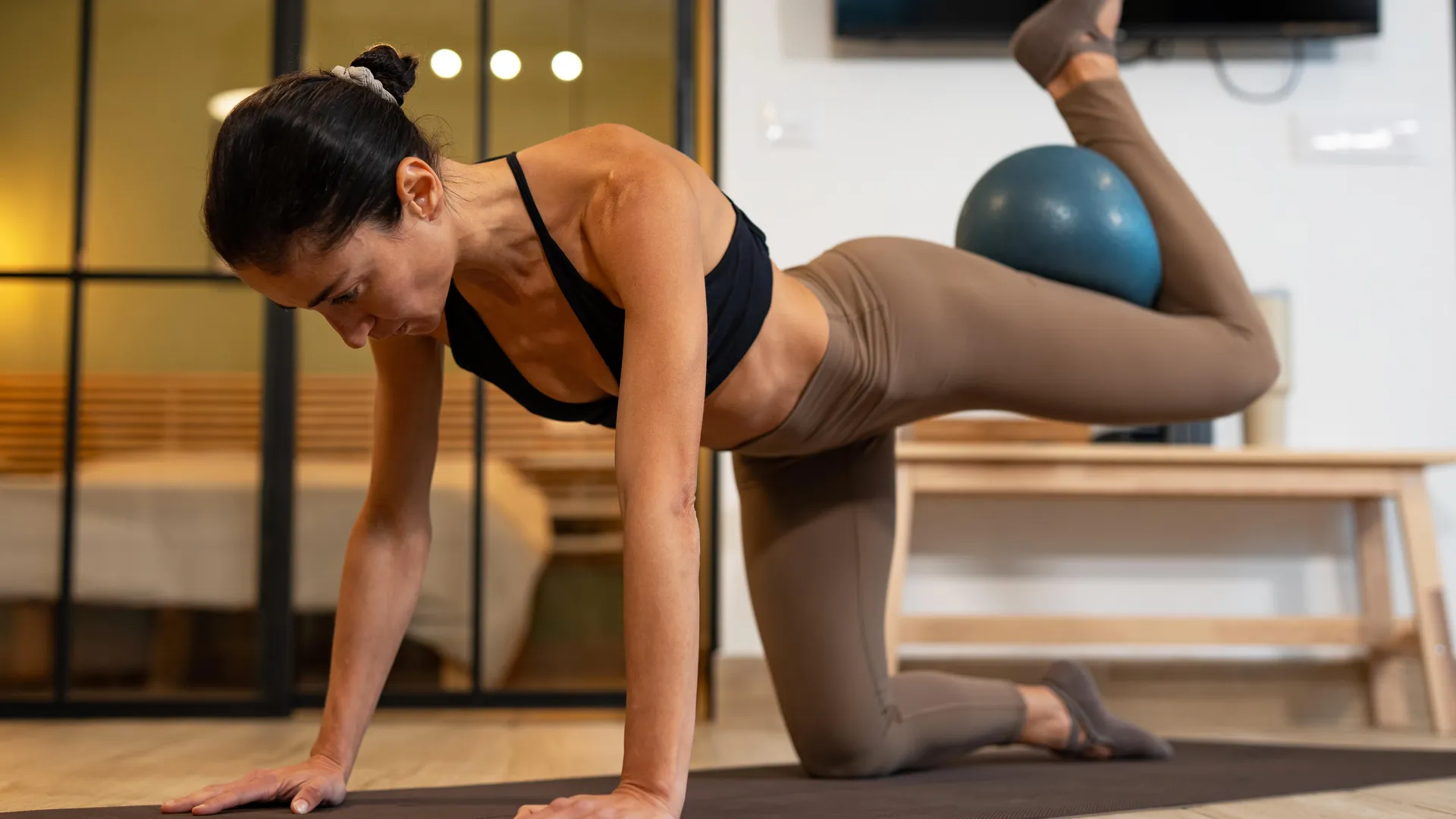
All the moves look faintly ridiculous and, so, I suppose, does the donkey kick, which is the animal-inspired exercise most people will be familiar with. But while it’s not the most elegant-looking move, it’s a powerhouse glute exercise. It is also known as the quadruped bent-knee hip extension, which explains why people prefer to call it ‘the donkey kick.’
What does it do?
It primarily targets the gluteus maximus, the largest of the gluteal muscles and the body's single biggest muscle. The move also works the gluteus medius and, to a lesser extent, the hip flexors. Strong glutes are vital for good posture, balance, stability, and basic things like standing up without having to push off with your hands as little booster rockets. They will also improve performance in just about any sport you can think of, and can help prevent or ease lower back injury. Plus, they play a crucial role in knee stability. In short, they do a lot of work, so look after them.
How do I do the donkey kick?
If you played Buckaroo as a kid (or even now — who am I to judge?), you might think you have a pretty good idea how the move should look. But it’s not an aggressive move, and you should not do it while someone weighs you down with buckets and pickaxes. By the by, I’m aware that Buckaraoo is a mule, but let’s not get bogged down in equine detail.
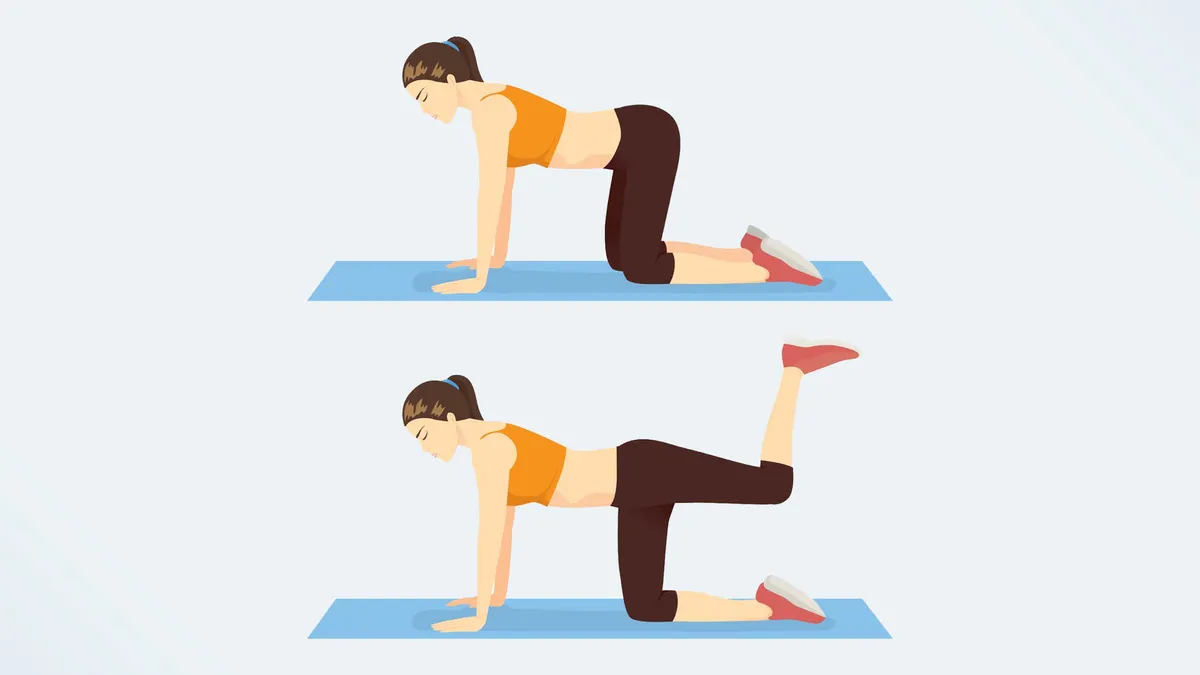
- Begin on all fours (tabletop position), with your hands directly under your shoulders and your knees directly under your hips.
- Make sure your back is straight — engage your core and tuck your chin slightly.
- Maintaining a 90-degree bend, raise one leg towards the ceiling, with your foot in dorsiflexion (pulled towards your shin — imagine the sole of your foot is parallel to the ceiling).
- Do not lift your leg too high — your back should not arch, and your hips should not rotate. You are trying to create a straight line from head to knee.
- Squeeze your glute at the top of the move, then return with control to the start position, but don’t let your knee touch the floor. That’s one rep. Begin with 10-20 reps on each leg and aim for three sets.
I did the donkey kick every day for a week, and here’s what I learned
This is an isolation exercise that’s focused on the glutes. As such, it is not too challenging, but it is still vital that you remain engaged as you perform the move. It’s easy to mentally drift and just swing your leg up and down with no consideration of form. If this happens, you will get less benefit from the move and will probably raise your leg too high, which puts pressure on the lower back. I recommend using a yoga mat for this exercise, as it can be tough on the knees. If you can, perform the move side-on to a mirror, so you can be sure you’re not arching your back.
Good move for beginners
The donkey kick is not technically difficult and puts little strain on the body, which means it’s ideal for those new to exercise. That doesn’t mean it has no benefits for experienced exercisers or athletes — just do as many as your fitness level allows or try a variation. I started the week with three sets of 15 on each leg, but found this was not enough of a challenge. On day two, I went for three sets of 20 on each leg, after which I went for a short run. It’s an excellent warm-up move for the glutes, which are crucial for good running form and avoiding injury.
A change is as good as more reps
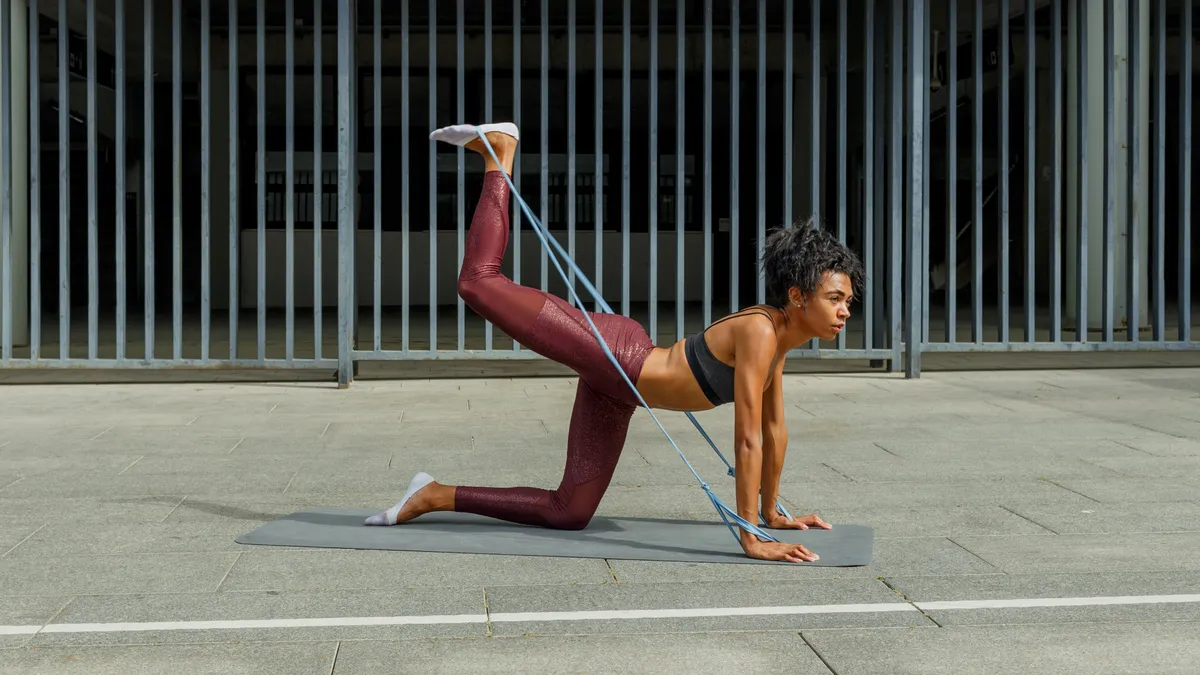
On day three, I added some weight to the move, placing an 11lb dumbbell at the back of each knee before beginning the move. It was, of course, more challenging, but mostly because I was concentrating on keeping the weight in place. Ankle weights will make this variation easier to perform, but I reckon people are far more likely to have a set of dumbbells than a pair of ankle weights. The following day (three sets of 20), I paused for a second at the top of each rep, which also added to the intensity. On day four, I opted for the straight-leg donkey kick with a half circle. For this, you stretch the raised leg straight out, toes pointed, then swing the leg out to the side before returning to the start position. It’s not a natural motion, and this variation requires a little more space, but the extra intensity was immediately noticeable, and I liked the hip-mobility work, too. Another variation is to use a long resistance band looped around your foot and held in place with your hand.
On the final day, I pulsed the raised leg a few times at the top of each rep, which was notably harder at the end of the final set. Again, I welcomed the extra effort involved.
No excuses
The donkey kick is an excellent move for working your glutes. It’s not complicated, it can be done anywhere (though you might prefer the privacy of your home, as the degree of dignity is low), and there are plenty of variations once you master the basic exercise. The glutes are big muscles, and it takes time to strengthen and build them, but persevere, and you’ll get the improvement you are after, functional and aesthetic.
Follow Tom's Guide fitness on Instagram for more workouts, routines, tips, and tricks.

More from Tom's Guide