As a personal trainer, I'm always finding ways to adapt exercise routines for clients who might need alternatives for core workouts. I know many people prefer to avoid sit-ups when they work on core strength, so it's my job to find moves that work for their individual needs.
One that I like to use is the halfway sit, which involves leaning back into a V-position with your torso upright and stomach braced; it taps into isometric contraction, meaning you'll hold tension in your working muscles without them moving through a range of motion, but you can add movement to it to make it more dynamic (which my clients prefer, as it helps them build control and stability).
Let me show you how to do the halfway sit in more detail, plus I'll explain the benefits.
How to do a halfway sit
If you’re a complete beginner, pregnant or postpartum, or dealing with a specific injury or health condition, it’s best to seek personalized advice from a qualified professional.
- Sit on one of the best yoga mats
- Bend your knees and place both feet. Keep your thighs parallel without allowing your knees to turn outward
- Sit upright, shoulders drawn back and down, and gaze forward
- Brace your stomach as if preparing for an impact or to sneeze; lightly draw your navel in and scoop your stomach up
- Keeping your back straight, as if being pulled upward by a string, begin to lean back with your arms extended in front of you as if reclining in a seat very slowly on your exhale breath
- Focus on pressing through both feet and lifting your chest, keeping a slight tuck of the chin
- Pause and take a deep inhale
- As you exhale, pull yourself up to a seated position, using your core muscles to drive the movement rather than your arms or hips
- Continue for 8-12 controlled, slow, and focused reps.
Your neck and back should stay neutral, which means no hunching or shrugging your shoulders to your ears. Focus on your breathing and use it to help drive the movement, as well as breathing expansively toward your ribs and stomach rather than your chest.
Avoid letting your legs lift or momentum from taking over. If your hips or legs do try to do most of the work, I recommend a five-minute bracing routine to help you check in with your core muscles.
What are the benefits?
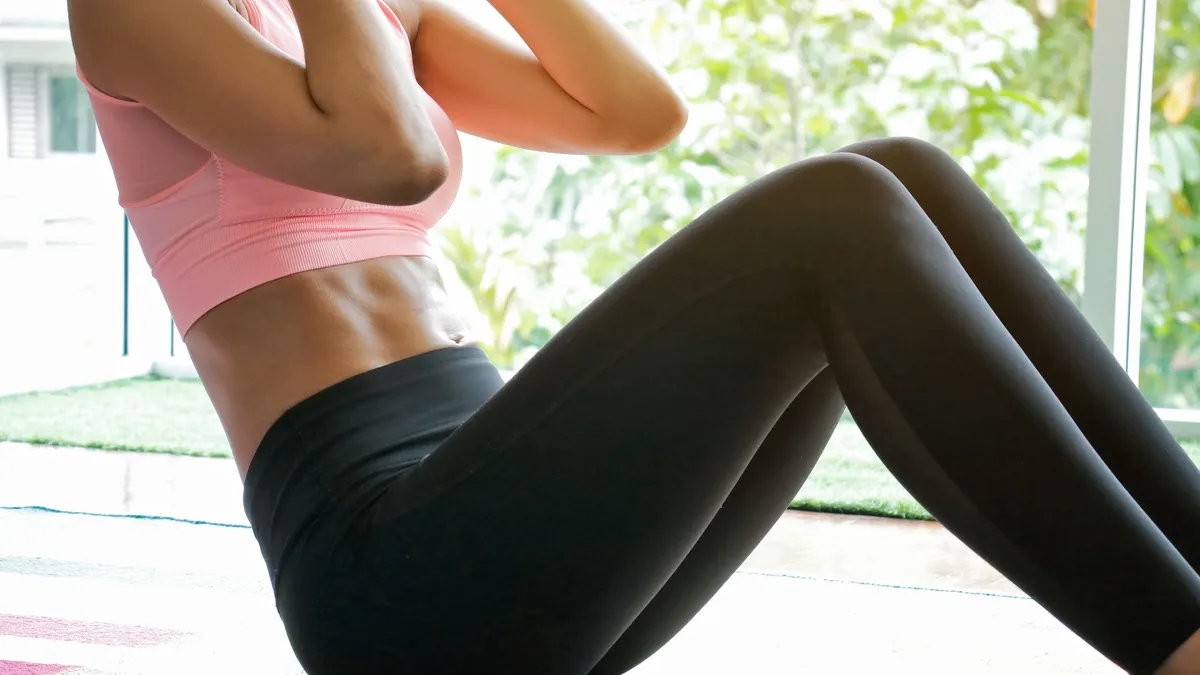
The move packs benefits for core stability and requires focus and control of the working muscles rather than repeatedly rushing through sit-up reps. Moreover, it takes pressure off your lower back as you only lower roughly halfway to the ground while keeping your back straight and spine long; this can be beneficial if you'd rather not get up and down and put your lumbar through flexion and extension.
There are quite a lot of cue points to remember, but actually, focusing on what your body is doing and being mindful of your breath, muscles, and activation points is great for improving the mind-muscle connection, making exercises more impactful.
Yes, your abs and hips along the front of your body are active, but holding the position and moving far more slowly will help you reach deeper into your core muscles and switch on the stabilizers like the transverse abdominis, which refers to a deep belt of muscle beneath the abs.
If you want to progress this exercise, lift your legs into the air in a tabletop position to further challenge core demand, balance, and stability, but also work your legs a little harder. You might also feel this more in your lower abs.
If you prefer to sit on something soft, remember that this could challenge your balance, so I do recommend a plush exercise mat or your reformer in your local studio.
Follow Tom's Guide fitness on Instagram for more workouts, routines, tips, and tricks.

Follow Tom's Guide on Google News and add us as a preferred source to get our up-to-date news, analysis, and reviews in your feeds.
More from Tom's Guide
- 'I’m a Pilates instructor, and I recommend these 5 core exercises to help older clients build strength and improve posture'
- Forget running — this 20-minute low-impact workout boosts your metabolism and builds cardio fitness
- Forget burpees —the 'Pilates burpee' is beginner-friendly and low-impact (and you’ll love it)