The basic proposition of an e-bike is simple: a motor assists you by complementing your pedaling power. But those motors vary not only by design, but also by location and general purpose. Before you buy an e-bike, it helps to know what the different types of motors are — and being honest about how much e-assistance you really need for your riding style and purposes.
Here’s a basic rundown of the different types of e-bike classes, motors, and drive systems that will dictate how fast you can go. Once you understand the technical aspects of these systems, and you determine what type of riding you’ll do most often, the amount of e-assistance you need will become clear, and will make buying one of the best electric bikes a lot easier.

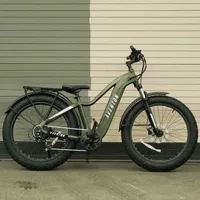
E-bike classes
Before you decide which e-bike motor and e-assistance level you need for your new bike, it’s important to understand the three classes of e-bike.
Class 1 e-bikes offer a maximum assist speed of 20mph, and they include pedal assist features only.
Class 2 e-bikes offer a maximum assist speed of 20mph too, but they include both a pedal assist option and a throttle. You can use the throttle to activate the motor without pedaling.
Class 3 e-bikes offer a maximum assist speed of 28mph, and they include pedal assist, with the option for a throttle. Most Class 3 e-bikes do come with throttles. Keep in mind that many regions have tight restrictions on Class 3 e-bikes.
You should also know that some e-bikes can be adjusted between class 1, 2, and 3 by changing settings within the computer that controls the motor. If you’re after pure speed, a class 3 e-bike may serve you well, but you’ll want to check into any regional regulations that may limit the usefulness of your e-bike.
What style of riding you’ll do most often
That, of course, begs the question of whether you really need that ‘pure speed.’ For most riders, class 1 or class 2 e-bikes offer more than sufficient speed and power. Class 3 e-bikes do have very strong use cases too, but they come with a bigger learning curve and are often overkill for most riders.
Let’s start at the top: Class 3 e-bikes are great if you cover very long distances on your rides and want to shorten your time on the bike. They’re also wonderful if you need to keep up with automobile traffic. Performance road riders will also appreciate a class 3 e-bike if they want to keep up with the fast group ride or do a big day on the bike over long miles.
Just remember that 28mph is quite a lot of speed for a bicycle, and the learning curve here is quite high. With that much speed, you’ll want to work on your bicycle handling skills quite a lot and ensure you understand what that type of speed feels like in an emergency situation — say, under hard emergency braking.
Class 2 and Class 1 e-bikes offer the same max speed (20 mph), so the decision here is whether or not you want a throttle. If you’re after simplicity and the terrain on which you’ll be commuting is fairly flat or otherwise not challenging, a class 1 e-bike is sufficient. It’s also best for beginners.
A Class 2 e-bike is ideal for commuters, especially within cities or other areas with lots of stop lights or stop signs. The throttle helps you get started from a dead stop more easily, which is super handy when you’re at a stop light with traffic behind you. It’s also great if you have a medium to long commute and just need a break from pedaling. This is the most appropriate e-bike class for the vast majority of riders.
Hub motors versus mid-drive motors
Let’s get a bit more granular about speed now. E-bike motors deliver those various levels of speed, and there are different designs that deliver power in certain ways that may impact your ride.
There are two general types of e-bike motor types: a hub motor and a mid-drive motor.
A hub motor is built into the bike’s rear wheel (or less often, into the front wheel), while a mid-drive motor is integrated into the bicycle frame, at the bottom bracket shell between the cranks. Hub motors tend to deliver more power more quickly. Power generated from hub motors transfers directly to the wheel.
A mid-drive motor’s produced power must travel through the drivetrain to the rear wheel. Losses along the way are natural. However, mountain bikers and road cyclists, as well as other performance cyclists, usually choose the less powerful mid-drive motor. That’s because the mid-drive motor’s weight is concentrated low and centered on the bicycle, which improves handling. It’s also not ‘rotational’ weight like a hub drive motor. Rotational weight has an outsized impact on handling too.
So generally speaking, a hub drive motor will deliver more power, but it comes with performance drawbacks. If you’re sticking to commuting on-road, a hub drive motor is best for you. If responsive handling matters more to your riding style, like mountain bikers and road cyclists, a mid drive motor will serve you better, despite the lower power production.
Hub motors: direct drive versus geared
If you want to get even more particular about speed, efficiency, and ride quality when it comes to your hub motor, you can choose between direct drive hub motors and geared hub motors.
Geared hub motors, unsurprisingly, have gears within the hub shell that help drive the power to your bike. These planetary gears spin at a faster rate than the wheel, essentially multiplying the amount of power produced. But the really cool benefit is drag-free coasting. When the bike coasts, an internal clutch system can disengage the gears completely, so you coast with no resistance.
A direct drive motor uses a magnet and stator system, eliminating gears altogether. When the motor is engaged, the stator gets ‘charged’, causing the magnets to spin. That produces the forward propulsion. It’s a much simpler system, but it comes with a drawback: those magnets create drag, even when the stator is not energized. So you’re fighting that drag even if you’re not using the assist features.
But direct drive motors come with an advantage borne from that very magnetic disadvantage:
Regenerative braking is possible due to the drag produced by the spinning magnets. The bike essentially slows down automatically, which helps control your speed and may even extend the life of your brake pads. It feels like the brakes are lightly “on” while you’re riding. And, they'll provide a bit of charge back to your bike's battery, extending your range by a little.
Of course, if you don’t want that kind of drag and prefer to maintain your top speed, the geared motor will be most appropriate for you. The geared drive system will also improve overall battery life, which may be a concern for you if you’re riding long distances.
How much speed do you really need?
For the vast majority of riders, a class 1 or class 2 e-bike with a max assist speed of 20mph will be more than sufficient. The use cases for a class 3 e-bike with 28mph max speed are fewer. If you’re traveling long distances and want to shorten your commuting time, a class 3 e-bike may be the best choice. Just be sure to check local regulations to ensure you can use your bike legally along your route.
Once you’ve determined how and where you’ll be riding most often, the choice between hub motors and mid-drive motors becomes clear. While mid-drive motors don’t produce quite as much power quite as quickly, their placement within the frame — low and centered — vastly improves handling. Mountain bikers and performance road bikers will want to choose a mid-drive motor.
Commuters, a hub drive motor is likely your best bet for quick and stout power assist. They offer a reasonable top speed, and the addition of a throttle on class 2 e-bikes makes them especially appropriate for e-bike riders spending lots of time stopping and going, stopping and going.

Follow Tom's Guide on Google News and add us as a preferred source to get our up-to-date news, analysis, and reviews in your feeds.
More from Tom's Guide