If you’re shopping for a new TV and you’re willing to splash out on something nice, there’s a very good chance you’ll come face to face with two premium display technologies: RGB LED and Tandem OLED.
In the world of TVs, these two types are relatively new. In fact, I’ve been testing and reviewing TVs for well over a decade, and I'm still getting to know RGB LED and Tandem OLED myself.
Understanding the difference matters because you could spend the same amount of money on an RGB LED TV as on a Tandem OLED-based TV and get an entirely different performance. With that in mind, let’s set you on the right path.
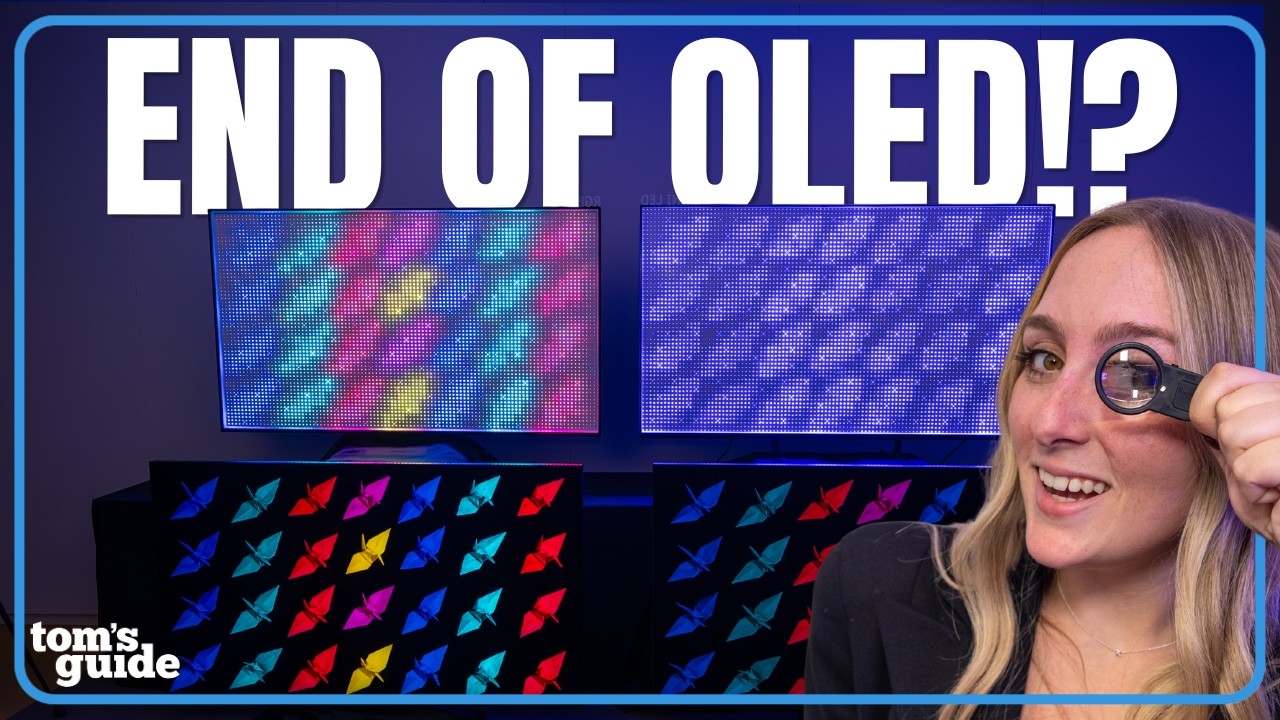
What is RGB LED?

In some ways, RGB LED TVs are simply specialized versions of traditional Mini-LED TVs; they use an array of teeny-tiny (albeit bright) LEDs clustered into dimming zones that can be dynamically adjusted in real time to enhance contrast.
To create color, traditional Mini-LED TVs rely on a color filter in conjunction with white- or blue-colored light (depending on whether or not quantum dots are in the mix). RGB LED TVs, on the other hand, take a different approach.
They come in many marketable names, but whether Samsung Micro RGB, LG Micro RGB evo, Hisense RGB Mini-LED, or Sony True RGB, the hardware is similar: red-, green-, is similar: red-, green- and blue-colored LEDs that generate brighter, purer color than what we’ve come to expect from garden-variety Mini-LED TVs.
In fact, based on our hands-on testing of RGB LED TVs from almost every major brand, color is the primary benefit of RGB LED technology. On brightness, contrast control, and other picture-quality factors, RGB LED TVs are about on par with the best quantum dot-enhanced Mini-LED TVs of recent years.

One significant disadvantage of RGB LED technology compared to traditional Mini-LED TVs is color crosstalk. In certain scenarios, light-colored objects can take on the shade of nearby colors because of the brightness and proximity of those LEDs. A commonly cited example is the white lines of a soccer pitch appearing lightly green rather than proper white.
How well an RGB LED TV mitigates color crosstalk — or any of the issues associated with Mini-LED backlighting, including haloing and light bloom — ultimately comes down to its engineering and the overall philosophies of the brand that built it. And then there’s the matter of price.
The most affordable RGB LED TVs are still costly. Brands like Hisense, Samsung and Sony offer two tiers to choose from, but I would still classify the lower-tiered options as premium sets.
A TV like the Sony Bravia 7 II strikes a balance between price and performance. It delivers the superb color and punchy brightness associated with RGB LED technology, but its components and software aren’t as sophisticated as the brand’s flagship True RGB TV, the Bravia 9 II. It’s a step-down option, but as a Sony-engineered TV, it handles the finer aspects of picture processing quite well.
For some folks, the punchy palette of an RGB LED TV might not be the best choice for a living room or home theater. Just as RGB LED is a step above regular LED TVs, Tandem OLED is a step above run-of-the-mill OLED displays.
What is Tandem OLED?

Tandem OLED (also known as RGB Tandem) is an umbrella term that typically refers to a high-end OLED display manufactured by LG Display. Multiple generations of Tandem OLED display technology have been developed to date.
Tandem OLED emerged as a way to compete with the high brightness and added color volume of quantum dot-enhanced OLEDs from Samsung Display. Select models in the QD-OLED series often use Tandem OLED panels when QD-OLED isn’t feasible or cost-effective at a given size.
Tandem OLED sets itself apart from traditional WOLED displays with an extra layer within its structure. In simple terms, it trades a yellow layer for red and green layers—a structural difference that allows for a longer-lasting, more-efficient panel.

In performance terms, OLED TVs that use Tandem OLED displays can achieve higher brightness and color volume than OLED TVs that use standard, WOLED-style displays. Most of this added brightness comes from small, specular highlights (like the muzzle flash of a gun or an intense glint of sunlight reflecting off a car’s headlight).
However, as good as high-end, Tandem OLED-equipped TVs tend to be (like the flagship-level LG G6), their color isn’t quite as bright and pure as what we typically see on top-tier QD-OLED TVs (like the Samsung S95H). White highlight brightness is gobsmackingly good on the LG G6, but its color isn’t as punchy as the S95H.
And since QD-OLED TVs rival RGB LED TVs in color, RGB LED TVs are, on average, more colorful than current-generation Tandem OLED TVs. Additionally, although RGB LED TVs must fight their own battles with issues like color crosstalk and haloing, they’re nevertheless brighter than Tandem OLED TVs in full-screen brightness.
RGB LED vs Tandem OLED: Outlook

RGB LED TVs excel in two areas: brightness and color. Thanks to their cutting-edge hardware, RGB LED TVs also offer premium features and high-end performance. (In other words, there’s really no such thing as an ultra-affordable RGB LED TV yet, and when it comes to picture quality, you can expect a certain level of quality from these sets.)
However, RGB LED TVs also share the same weaknesses as most Mini-LED-based TVs, like haloing, light bloom, and subpar off-axis viewing. In addition, many RGB LED TVs exhibit color crosstalk.
OLED TVs benefit immensely from self-lit pixels — whether Tandem OLED or not. You don't need to worry about light bloom or color crosstalk on an OLED, and OLED TVs offer the widest viewing angles money can buy.
Thanks to its sophisticated hardware, an OLED TV that leverages Tandem OLED technology can deliver highlight brightness that comes close to that of an RGB LED TV. But due to the limits of OLED technology, Tandem OLED-based TVs don’t even come close to matching the sustained, full-screen brightness of an RGB LED TV. Nor do they produce as wide a range of color.
RGB LED TVs also deal with the same weaknesses associated with most Mini-LED-based TVs.
My recommendation? If you’re looking for the sort of brightness that fills a room or borderline-psychedelic color, an RGB LED TV is a better choice than a Tandem OLED-based TV. This is especially true if you do a ton of daytime TV-watching.
If you’re looking for the surgical contrast control and unparalleled depth that comes with an OLED TV, few RGB LED TVs come close. By shopping for a Tandem OLED in particular, you’re guaranteeing yourself one of the brighter OLEDs money can buy, too.
While a Tandem OLED is best suited for a dim room or darkened home theater, make no mistake: It’ll hold up just fine during the day, provided it’s not directly opposite a window or light fixture.

Follow Tom's Guide on Google News and add us as a preferred source to get our up-to-date news, analysis, and reviews in your feeds.
More from Tom's Guide