When the camera performance is exceptional out of the box, there’s not a huge incentive for me to invest in any of the best iPhone lenses out there. Perhaps it’s due to past experiences that make me reluctant to use them more, but I’ve had a change of heart after testing out one for the past month.
The Shiftcam 240mm Super Zoom Tele lens not only adds more optical zoom to the iPhone’s main camera, but it also does the same with its telephoto camera. I’ve paired it with my iPhone 16 Pro Max using Shiftcam’s specialty case to easily fasten the lens to either camera — and the results I’ve been able to capture are surprising.
However, this telephoto lens is better suited at something else entirely different. It actually works extremely well as a macro lens when it’s paired with four 10x macro lenses that connect to each other. Even though it looks like my iPhone’s sporting a bazooka, I can’t tell you the macro shots I’ve been able to get with it. In fact, they feel almost unworldly.
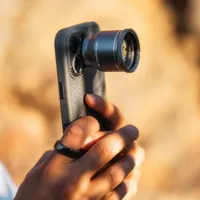
More zoom range for your phone

In order to use the Shiftcam 240mm Super Zoom Tele, you still have to buy a specialty case for your phone — which costs between $40 and $50 depending on the model. It’s way better than trying to use the Universal S.Mount because the cases line up perfectly with each camera lens.


After strapping it onto the 12MP telephoto camera of my iPhone 16 Pro Max, it effectively gives it 10x optical zoom. I took it to the beach to snap a few shots of the New York skyline, and you can see how much closer it gets with the lens on — even though the difference in detail between them aren’t as dramatic looking, which is simply due to atmospheric distortion.


However, you can see from the other shots above how the Shiftcam 240mm Super Zoom Tele does capture better detail. I can actually read out the words on the street signs in the first set of shots, while the closeup of the seagull illustrates how the lens results in getting me closer with more definition.

I think it’s ideal for nature as well, which you can see in the before and after clip above where I’m able to spot a bird resting up on a tree. The telephoto camera is good, but the lens attachment lets me get even closer to see more detail — and with some good ol’ digital zoom — makes it look like I’m extremely close to it.
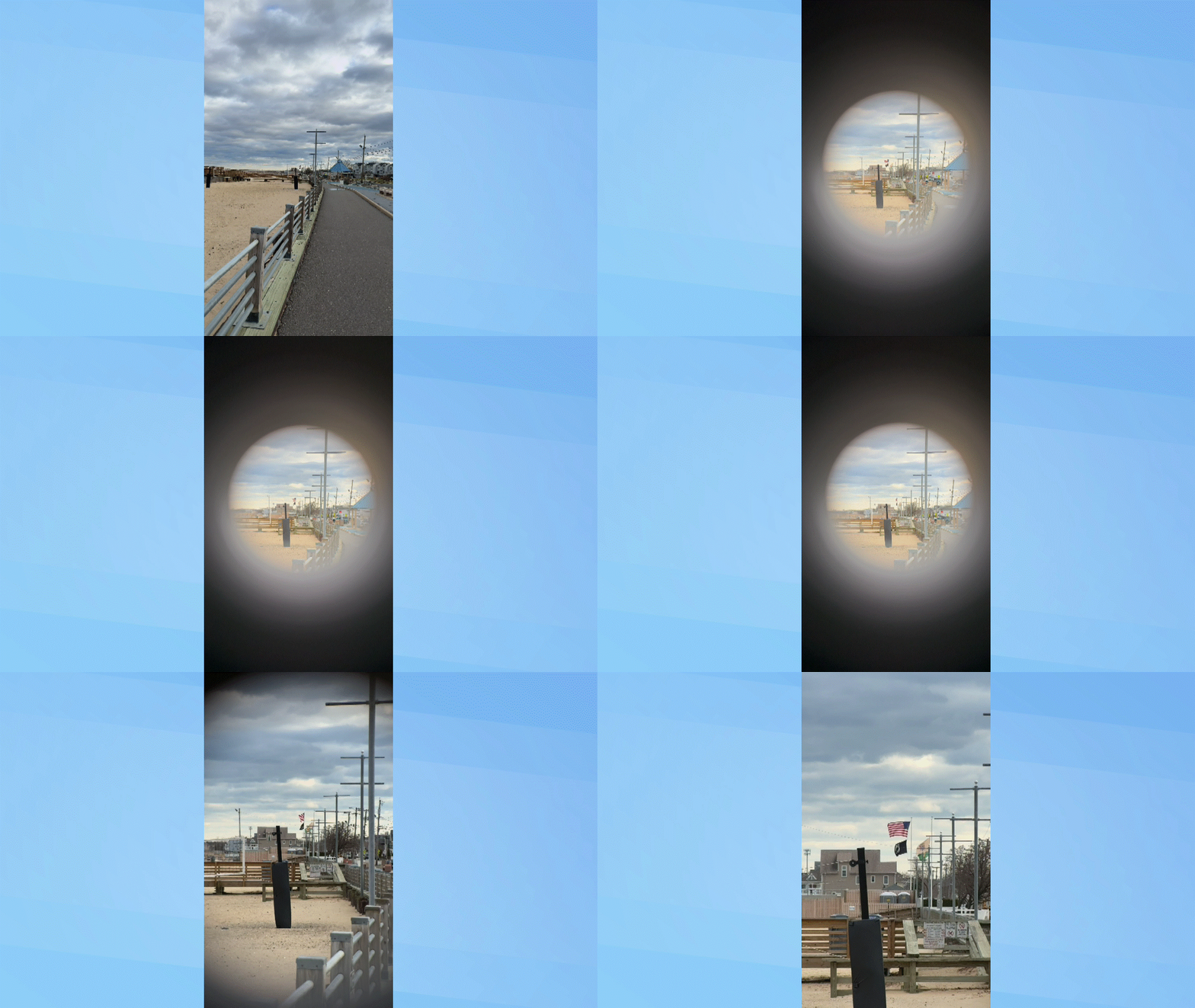
I’m able to also add more zoom to my iPhone’s main camera, but since it has a wider field of view, the result is like looking through a keyhole. Of course, a quick digital zoom fixes this and still makes the footage usable.
Way better as a macro lens

As much as I love adding more range to my iPhone’s telephoto camera, this lens is remarkable for macro photography — so much so that many of the shots I’ve captured look unworldly. By fastening four 10x macro converters to the barrel of the Shiftcam 240mm Super Zoom Tele, it lets me get ultra close snapshots with impressive magnification.


Honestly, it feels like I’ve teleported into the quantum realm because these photos are unlike anything I’ve captured. Even though the iPhone’s already equipped with its own macro mode, the problem with using it is that I’m forced to point the camera super close to whatever I’m shooting — whereas with this setup with the Shiftcam lenses, there’s about a 4 inches of separation.
That’s helpful because this focal distance leaves extra room so that I don’t disturb whatever I’m shooting, plus it allows for ample light with my subject. Lighting is key because it allows me to shoot at a faster shutter speed, which helps to reduce blurring. I’m honestly excited to see what else I’ll be able to capture when spring arrives with this macro lens.
Extra stuff you should know

I’ve already explained that you need a specialty case in order to use the Shiftcam 240mm Super Zoom Tele lens properly, but you’ll also need to download a third party camera app. That’s because the native Camera app doesn’t let you manually select which camera you want to use. In fact, when I attach the lens to the main camera, it automatically switches to the ultrawide for macro mode because it senses something is really close to it.


Conversely, the same thing happens when I try to fasten it to the telephoto camera. I shelled out another $10 to download the ProCam app, seeing that it lets me manually select which camera lens to shoot. Secondly, I recommend also getting some kind of phone holder and tripod because it’ll help with all the shaking that’s introduced.
I’ve been able to capture some stuff handheld, like the dramatic shots of the moon above, but you’ll get the best results keeping the phone still as possible. Nevertheless, the Shiftcam 240mm Super Zoom Tele lens adds a new layer of creativity I didn’t expect to find with my iPhone. And yes, these lenses work with other phones — just as long you use a compatible case or the universal lens mount.
The telephoto lens by itself costs $250, which goes up to $314 if you upgrade to the macro kit. Shiftcam also offers a 240mm Full Kit for $ $404 that tacks on VND and CPL filters, along with a carrying case for everything. You might think this is overboard, but this is still pretty reasonable because buying similar lenses for my mirrorless camera would end up costing me thousands.

Follow Tom's Guide on Google News and add us as a preferred source to get our up-to-date news, analysis, and reviews in your feeds.
More from Tom's Guide
- Keep your phone looking its best with these 4 tips to make your case last
- Galaxy S25 prices have hit all-time lows — should you upgrade now or wait for the Galaxy S26?
- First the iPhone 17 Pro, now the Galaxy S26 Ultra? Why phone makers may be turning their backs on titanium