




The great OS battle has raged for what feels like centuries (it's actually only like 15 years). Apple fans throw stones that have "user unfriendly" painted on them in Calibri, Android fans return fire with lumps of clay with "uncustomizable" etched into them.
But there's only one argument that I'm really all that interested in. I've already decided my OS from a user-friendly point of view — my years of iPhone usage attest to that. But I've always wondered. Which of the two sounds better?
When I connect my headphones, which OS has better sound quality for wireless earbuds and headphones? So I put it to the test. I grabbed some Dali io-12 headphones, spun up Qobuz (my favorite of the best music streaming services), and got to testing.
iPhone
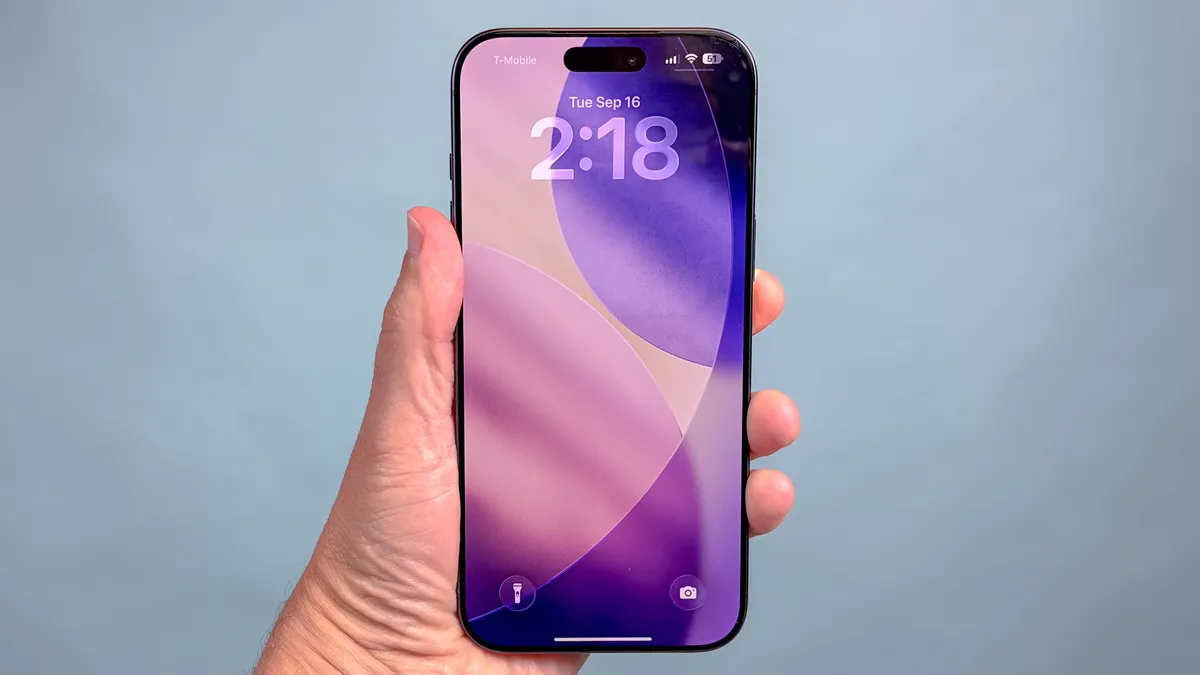
We start with my faithful iPhone 17 Pro Max. I connect my Dali headphones to my phone and open Roon Arc to listen to my Qobuz-based tunes. Immediately, I notice something strange — rather than Hi-res (as I often see when listening to wired headphones), it says "high quality," and nothing close to the Hi-res bit-rates I was hoping for.
I should have expected this, of course. iOS doesn't support the high-quality codecs that make the Dali io-12 sound so good — namely, LDAC. Instead, my Bluetooth connection relies on AAC, an aging, lower-quality codec that can't handle as much data.
Do my headphones still sound good? Of course, the hardware inside is still doing a great job at taking that signal and representing it as faithfully as possible. But it's not maximising the potential of my headphones, merely starving them of the resolution they crave.
Android

I move on to Android, with a Sony Xperia range topper. This phone supports LDAC, and I don't even have to dip into any settings menus to turn it on. I just connected my headphones, and away I went.
Now, when I start up Roon Arc and choose my tunes, I see that all-important 'Hi-Res' logo on the now playing screen. And, sure enough, my headphones sound even better. There's more detail and resolution, and the soundstage is more realistic. The bass is tighter, and everything feels more put together.
So, at the moment, it looks like Android is the way to go if you're looking for better sound. But whoa, there, audio traveller, there's more to think about here.
Throwing a spanner in the works

iPhones are actually capable of Hi-res audio, but you'll have to jump through some hoops. First off, you need some AirPods. Any AirPods will do, but they need to be AirPods. You'll also need an Apple Music subscription.
With these hoops suitably jumped through, you can finally enjoy those lovely, Hi-res audio tracks you want to listen to. You'll get much better sound than you will listening to Spotify as well, although there is a sonic barrier here that means this still won't sound as good as something on Android.
They're still, like, AirPods. And if you're chasing the best sound, you'll want something chasing sound rather than liveability like the AirPods.

And now there's another roadblock — not all Android phones are created equal. Some less expensive options don't support those Hi-res codecs, so you won't get their benefit from even the best sounding headphones around, like the Dali io-12.
This is harder than it looks.
So which is better?

As you might have guessed, Android is generally going to sound better than iOS. Thanks to those increased quality codecs like LDAC, compatible headphones will be able to maximise their sound quality from an Android handset.
If you've already got an iPhone and want the best sound, your best bet is to either grab some AirPods or go wired. Connect a separate DAC to either device, and you'll soon find that audio quality evens out across the two.
If you absolutely need an iPhone and want the best sound quality, then make sure you also drop around $80 on something like the Noble Sceptre. It gives your phone LDAC support, as well as other Codecs, and really does make your music sound amazing.
So which is better? It depends. Which Android phone do you have? Which headphones do you have? What streaming service do you use? Audiophiles are best off investing in Android handsets and Qobuz — everyone else? I know you're already using iPhones and AirPods. And that's going to be just fine.

Follow Tom's Guide on Google News and add us as a preferred source to get our up-to-date news, analysis, and reviews in your feeds.
More from Tom's Guide
- Prime Video's new No. 1 action-thriller is its best movie in ages — and a must-watch for fans of ‘Pirates of the Caribbean'
- I train my 72-year-old dad to stay strong, functional and mobile: Here's 3 essential exercises we never miss
- I put IKEA's new $35 cast iron pan head-to-head with my Lodge skillet — there was a clear winner

