




Remember the Microsoft Surface Headphones? I’m sure you do.
The PC giant’s first-ever wireless headphones were noteworthy, but struggled to compete with the market’s best noise-canceling headphones. It wasn’t until the Surface Headphones 2 launched that business really picked up for Microsoft. Enhanced audio, intuitive features, and powerful connectivity earned them critical acclaim.
Then the product completely disappeared. No marketing. No software updates. No availability. Rumors of a threequel were also put to rest once Microsoft confirmed it was cancelling the next generation of Surface headphones back in 2023.
Microsoft's almost sequel

The closest we ever got to a follow-up was the Surface Headphones 2+. I tested them a few years back…and was greatly disappointed. That all changed recently.
My wife needed a pair of cans to use for business calls, so I passed along my unit since it was the closest option within reach. Never did I think that she would rave about them. Her reaction encouraged me to give the headphones a second shot. What I experienced was eye-opening.
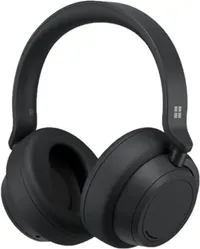
The Surface Headphones 2+ aren’t just the best work-from-home headphones ever created – they’re essential for Microsoft Office enthusiasts.
Now, before you go pointing out other Microsoft Teams-certified headsets, know two things: (1) Office integration feels more natural and seamless with the Surface Headphones 2+ and (2) these headphones offer a lot more value when factoring in other hallmarks.
Come see what I’m talking about.
The perfect Office companion

Let me preface this by stating that I am not a Windows user. I’m a macOS and Android guy. That didn’t affect how I used the Surface Headphones 2+ since most Microsoft-related features are tied to the company’s cloud-based productivity suite: Microsoft 365.
Voice dictation on these headphones is on point. Best of all, it works with all Office apps: OneNote, Outlook, PowerPoint, and Word. I used voice-to-text to create captions and subtitles for PowerPoint presentations and transcribe email responses. The feature is highly intelligible.

Half the reason why voice dictation performs at an elite level is Microsoft’s excellent software engineering. The other half is credited to the Surface Headphones 2+’s built-in mics, which demonstrate stellar speech recognition. That same functionality carries over to digital assistance for flawless Google Assistant and Siri voice command execution.
The Play My Email feature is just as rewarding. I’m someone who leaves his inbox with zero unread messages at the end of the day. Hearing emails in real-time was more efficient than skimming through dozens of lines of text. This allowed me to multitask around the house and not miss or overlook important emails.
A true Microsoft Teams player

The “big” change that Microsoft implemented on the Surface Headphones 2+ was the USB Link dongle. It comes bundled with the purchase and is exclusive to this version of the headphones. The accessory bypasses Bluetooth to form a dedicated connection for Microsoft Teams. I found it more reliable than standard Bluetooth when paired to my MacBook Pro. Connectivity was stabler and stronger. It also made pairing faster and provided in-call controls for Teams chats.
Everything else that makes the Surface Headphones 2+ an underrated gem

People forget how innovative the original Surface Headphones were when they came out. At the time, it didn’t matter if their active noise cancellation was secondary to category leaders, like the Bose 700 and Sony WH-1000xM4. The fact that Microsoft gave us 13 levels of ANC was astounding. That same technology holds up strong to this day.
Much of the fracas that surrounded me when working on my balcony was muted. That included dogs barking, landscaping tools, and talkative pedestrians by the pool area. High-pitched sounds (e.g., crying babies, whistles) were audible, but never broke my concentration.
It’s also worth reminding people that Microsoft’s headphones were some of the first models to feature Ambient and Passthrough modes. Both work exceptionally well on the Surface Headphones 2+. Ambient mode effectively increases situational awareness, while Passthrough mode demonstrates exceptional vocal capture to hear conversations loudly and clearly.

I’m glad Microsoft hasn’t ended smartphone support for the Surface Headphones lineup. Otherwise, we’d lose out on audio personalization features like the customizable EQ with multiple presets and Qualcomm’s aptX codec for CD-like sound over Bluetooth (Android and Windows only). These are accessible through the Surface app.
Lastly, the Surface Headphones series boasts one of the most attractive and unique designs constructed. It’s all in the details. What’s not to love about the creative dial controls, plush leather padding, sleek arched yokes, and sturdy craftsmanship that outclasses current minimalist-styled favorites (e.g., Apple AirPods Max, Sony WH-1000xM6).
The Surface Headphones 2+ currently sell for $149 at Amazon – an unbeatable deal considering their premium ANC, audio quality, design, and MS365 integration. Believe me when I say that your home office setup is incomplete without them.

Follow Tom's Guide on Google News and add us as a preferred source to get our up-to-date news, analysis, and reviews in your feeds.
More from Tom's Guide

