Tom's Guide Verdict
The Sony RX1R III is a powerful little camera with some extremely lovable qualities. It’s an ideal street weapon, packing beautiful high-res stills, a gorgeous 35mm lens, digital crops for framing flexibility, and great handling. But Sony, you asketh too much! As lovable and characterful as the RX1R III may be, its price is frankly ludicrous, especially given its disappointing EVF and poor battery life (admittedly symptoms of its compact design). Simply put: the RX1R III is a very good camera, but is far too pricey to earn a higher score.
Pros
- +
Gorgeous 61MP images
- +
Almost-Fuji-worthy film profiles
- +
Characterful old lens
- +
Subject detection AF
- +
Compact
Cons
- -
Very pricey
- -
No focus joystick
- -
Lackluster EVF
- -
Disappointing battery life
Why you can trust Tom's Guide Our writers and editors spend hours analyzing and reviewing products, services, and apps to help find what's best for you. Find out more about how we test, analyze, and rate.
The RX1R III is Sony’s resuscitation of the RX1R line. Its predecessor, the RX1R II, was launched way back in 2015. As such, we in the photography community assumed the line had been killed — after all, Sony is Sony, so if it wants to release a new camera, it will. And it didn’t. Then compact cameras became a thing again.
The RX1R III is Sony’s attempt to capitalize on the market’s current hunger for compact fixed-lens cameras: from the humble 00’s era point-and-shoot; to premium compacts like the Fujifilm X100VI and the Ricoh GR IV; and onto ultra-premium compacts like the Fujifilm GFX100RF and the Leica Q3 43. Priced at over $5,000, it’s the latter two in particular the RX1R III is up against.
Make no mistake, the RX1R III is an extravagance. It’s intended as the plaything of the professional photographer or otherwise well-off enthusiast. And the key word there is “plaything” — this camera is a weekender. So, could this be one of the best cameras to remortgage your house for? Find out in my full Sony RX1R III review.

I'm a senior editor here at Tom's Guide, in charge of the site's reviews and cameras coverage. Follow me on Foto, Flickr and Instagram to see my photography.
Sony RX1R III review: Specs
Specs |
Sony RX1R II |
|---|---|
MSRP (launch) |
|
Sensor |
Full frame 61MP Exmor R |
Processor |
BIONZ XR |
Lens |
Zeiss 35mm Sonna T* (Fixed) |
IBIS |
None |
AF System |
693-point Hybrid AF |
Viewfinder |
0.39-inch OLED, 2.36m dots |
Display |
3.0-inch fixed LCD, 2.36m dots |
ISO range |
ISO100-102,400 |
Max video resolution |
4K/30fps |
Ports |
1x SD/SDHC/SDXC UHS-II. USB-C; mic/remote shutter; Micro HDMI; hot shoe |
Wireless connectivity |
Yes |
Max shooting speed |
5fps |
Max shutter speed |
1/4,000 (mechanical); 1/8,000 sec (electronic) |
Battery life (CIPA) |
270 frames (using viewfinder) |
Size |
4.5 x 2.75 x 3.5 inches |
Weight |
1.2lbs |
Sony RX1R III review: Price & availability
The Sony RX1R III costs $5,099 / £4,049. That’s a lot given this is essentially a condensed Sony A7C R ($2,999) — itself a condensed Sony A7R V ($3,900), both of which I've tested extensively. With the RX1R III, you’re getting less camera than those two in virtually all manners, yet Sony charges a surcharge… just because?

Kinda. The ultra-premium compact camera market is currently in a boom. Think of it like the housing market: if a four-bed house on your street sells for $X, that means you can charge $X for your four-bed house, too! The Fujifilm GFX100RF ($4,899) and Leica Q3 43 ($7,380) are also exorbitantly expensive. Thus, Sony feels it can charge five grand for its entrant.
The problem is: I’m not sure it can. The Leica Q3 43 has more features, including better video specs and optical image stabilization. And remember, the Leica Q3 43 is a Leica, not a rebadged A7C R. It’s special. The cheaper GFX100RF, meanwhile, features a beautiful 100MP medium format sensor. The usual drawback of medium format sensors is slower AF and drive rates, but a) the RX1R III’s isn’t that quick; and b) the Fuji isn’t that slow, either.


These cameras are all super premium toys — they’re all equally as unblessed in the raw speed and pro features departments. With that in mind, why spend $5,099 on a stripped-back A7C R, 61MP full frame Sony toy when you could spend $200 less on a 100MP medium format Fujifilm toy?
If you fancy emptying your wallet even more, you can also buy the RX1R III with some ludicrously overpriced accessories. A lens hood: $199. A leatherette body case: $248. And a thumb grip: $298. But hey, shipping is free and you get $50 cashback if you register the camera within 30 days (that’s less than 1% cashback.)
Sony RX1R III review: Design

The Sony RX1R III looks very similar to its predecessor, with no radical changes to the camera’s general size or dimensions. The top dials have been shrunk to sit flush with the top panel, which (marginally) helps its portability.
The RX1R III is extremely compact at 4.5 x 2.75 x 3.5 inches, and fairly lightweight at just under 1.2lbs. I had no issues wearing it around my neck for hours around the city. It handles excellently as a result of its diminutive size, plus the front grip and rear thumb rest — each subtle but effective. Both are finished with a textured rubber which is extremely grippy, allowing Sony to keep the actual grips shallow and unobtrusive.
The magnesium alloy body is finished in a “newly developed” iron black matte coating that looks more or less like the finish on most Sony Alpha cameras. Regardless, the finish is lovely, and the RX1R III feels beautifully made. As per all Sony cameras.
Displays
One of the major updates to the RX1R II is its viewfinder. The RX1R II had a removable EVF, allowing you to shrink the camera down. The RX1R III’s EVF is built-in, although incorporated entirely within the body so it doesn’t get in the way. The EVF cup is quite large but can be removed easily if you need to save space.

The EVF is the same resolution as that in the RX1R II and A7C R: 2.36M dots. For $5,099 and at 61MP, though, I’d expect more. The Q3 43 and GFX100RF each have 5.76M-dot EVFs, as does the A7R V. A higher resolution display would do better justice to the camera’s high-res sensor when shooting, focus checking and during playback. Given the space constraints, though, a higher-res EVF clearly wasn't viable. And to be honest, I'm not sure the camera's battery life could take more power draw.

The RX1R III’s rear screen is bright and easy to use in direct sunlight. It has likewise seen changes, with resolution rising from the RX1R II’s 1.22M dots to 2.36M dots — a run-of-the-mill rear display resolution. The screen is now fixed to the body, which is a pain when shooting from the hip or at tricky angles.
Connectivity
The RX1R III has a single SD slot, which is expected in a camera this compact and not designed for professional use. The A7C R and Leica Q3 43 each have a single slot, although the Fujifilm GFX100RF has two (a necessity given the huge 100MP RAW files).

The RX1R III has a 3.5mm mic port, a USB-C port and a micro HDMI port. There’s no headphone jack or interface, so you can’t connect headphones to monitor audio. Once more, however, I remind you this is not a workhorse or a video camera. Its ports are suitable for its purpose.
The RX1R III features Bluetooth and Wi-Fi, so you can hook up to the Sony Imaging Edge apps (mobile/desktop) for wireless file transfer and tethered shooting. The smartphone app is now as it has been ever since I first started shooting Sony in 2019: a buggy, unreliable waste of time.
Sony RX1R III review: Controls

The RX1R III is a decent camera to control. All the rear controls are located on the right-hand side of the camera, making them easy to reach with one hand. All except the C2 Fn button: it’s located on the outside of the thumb rest, which necessitates bringing a second hand into play. Not a big deal.
The RX1R III features an on-lens aperture control ring which, as a Fuji shooter, I love. This removes the need to change aperture using a command dial — important on the RX1R III, as it only has a single assignable dial. The camera could’ve done with a frontal command dial, which would allow more intuitive control over ISO than by using the rear wheel, although I got by just fine.

Unfortunately, Sony has removed the focus selector dial (present on the RX1R and the RX1R II), so you need to change focus modes via the Fn menu or an assigned button map. Disappointing but, again, not a huge deal.
Annoyingly for a camera that’s so photography-biased, there’s also no focus joystick. To shift AF point, you first need to select the movable AF point mode from the focus menu — too many steps when in a hurry to get your shot. As long as you never actually confirm a focus point, though, you can jerry rig it to stay in a movable state. Still, not ideal.
Menu
Sony’s menu system is very good. It’s user friendly, with an intuitive layout and color coding to make navigating easy. Importantly, it remembers where you were last time you used it, which makes going back and forth to tweak and re-tweak settings much quicker.
Sony RX1R III review: Autofocus
The Sony RX1R III uses a Zeiss Sonnar T 35mm F2 lens, which is rather long in the tooth now. It’s the same lens used on both predecessors, and it shows. This lens is rather noisy while autofocusing, which I’ll cover more in the video section later.

Sony’s AF system is very, very proficient, and the RX1R III sports the manufacturer’s vaunted AF algorithms and automatic subject detection modes — humans, animals, birds, vehicles, etc. In decent light, everything works just fine. The AF detects subjects quickly and reliably, as per any Sony, and the lens can focus just about fast enough to keep up with moving subjects, as long as they aren’t too fast.
In the studio portrait of Tom's Guide senior writer Nikita at the top of this section, the camera was able to lock onto her eye, tracking it throughout the frame.

In lower light, the lens struggles. I took the RX1R III to an evening Thanksgiving dinner. I came away with some good shots, but quite a few were out of focus as the camera failed to detect subjects. In the photo of my wife Laura directly above, the camera managed to lock onto her eye, but only after some hunting. It took me quite a few attempts to get the camera to lock onto the dog's eye in the photo below.

Admittedly, though, it never feels like a big deal with the RXR1 III — this camera is primarily about slower-paced, personal photography, with a definite bias towards street, documentary, architectural and artistic endeavours.
The 35mm is a joy to use manually, too, which Sony’s MF assist magnifier makes a walk in the park. The focus ring is smooth, with a long throw, allowing plenty of fine control. Manual focusing really suits the ethos of this camera — it just feels right.

There’s also a close focusing mode that drops the minimum focusing distance (in AF and MF) to 20cm, allowing you to get some close-up shots — combined with the cropping headroom of 61MP, this allows you to capture a good amount of fine detail.
Sony RX1R III review: Image performance
As I mentioned above, the Sony RX1R III features a 35mm F/2 lens, which is utterly lovely. The moderately wide 35mm field of view on full frame is ideal for a variety of scenarios, but especially street, documentary and architectural photography.

You can apply in-camera digital crops to effective 50mm and 70mm focal lengths, and still come away with acceptably high resolution images thanks to the sensor’s 61 megapixels. It’s nice to have that extra reach while framing, and also to use the tighter frames to help you compose shots. It all makes the RX1R III a very flexible camera on the street.
The crop is all digital and only applies to JPEGs, so when shooting in RAW + JPEG you still get the full 35mm FoV RAW file. I like that any crop used is pre-applied to the RAW file in Lightroom (if importing with the 'use camera settings' box checked), so you can open up a file to alter color and exposure without losing the framing you used in-camera.

The lens is extremely sharp, doing justice to the high-res sensor. It also has a lot of character, and thanks to the fairly fast f/2 maximum aperture, you can generate some nice out of focus backgrounds.
I've seen some discourse about this lens not having been updated since the last model, but honestly, I think this is the perfect lens for this type of camera. It makes lovely images and is just so damned flexible on the street, especially with the digital crops. If it ain't broke, why fix it?


The camera's mechanical shutter tops out at 1/4000sec, which isn't particularly fast. The same can be said for the electronic shutter, too, which maxes out at 1/8000sec. For the fast majority of use, this will be fine, but if you're shooting wide open outdoors in bright light, you might want to pack some 49mm ND filters in your bag.
The shutter is slow because it's a leaf shutter. The trade off for that slower maximum speed is that the camera can sync to flash at any speed (up to its maximum) — arguably not too important in a street camera. It also means, though, that the RX1R III won't suffer from rolling shutter, as light hits each part of the sensor evenly.
Color
As always, Sony’s color replication is excellent, with natural-feeling colors in the Standard profile and 15 stops of dynamic range to enable smooth color transitions. With those 61MP RAW files, you’ve got a lot of flexibility with editing, too.


That said, with so much resolution and the creative profiles available on the RX1R III, I was more than happy to just use extra-fine JPEGs most of the time, unless I had a serious color or exposure issue to correct.
On the topic of color profiles, in a blatant attempt to catch up with the popularity of Fujifilm’s in-camera film simulations, Sony has developed its own. And they’re ideal for a street camera like the RX1R III, allowing you to achieve stylized retro-inspired looks straight out of camera. Check out the image captions throughout to see which color profiles were used.


The FL, FL2 and FL3 profiles (FL = Film Look) are exceptional. FL gives a slightly washed-out, nostalgic look but boosts blues and greens, making it great for sunny days and blue skies. FL2 washes out the color even further, with lots of contrast for a retro film style. FL3, meanwhile, lifts shadows and scales back contrast, for a brighter look.


My favorites are SH (Soft Highkey), which reduces contrast but boosts saturation; and IN (Instant) which gives a distinct retro instant camera vibe. I just left the camera in these two or FL3 most of the time.


Sony’s black and white profile is, as ever, utterly gorgeous, with its super strong contrast and deep shadows giving a sleek, modern feel. I spent years of my life solely shooting B&W on the Sony A7 and A7 III. I was tempted away by Fujifilm’s Acros, which has a more retro, filmic feel. Every time I shoot Sony, though, I miss it.
High ISO and dynamic range


Just like its siblings using the same sensor and processor (the A7R V and A7C R), the RX1R III retains very strong image quality at high ISO. It shoots up to ISO102,400, although I wouldn’t push above ISO25,600. The images above are the out of camera JPEGs (with default noise reduction applied) at ISO12,800 and ISO25,600.
Obviously, for the cleanest images you’ll want to shoot as low as possible, but I’d happily shoot at ISO12,800. Meanwhile, ISO25,600 still looks surprisingly good, although noise reduction has had to smooth the image enough to seriously affect sharpness.


The images above are the RAW files of the same images. Again, ISO12,800 is noisy but nothing that can’t be solved in post. ISO25,600 would need some attention in post for sure, but it's eminently salvageable.


As with the A7R V and A7C R, the RX1R III has 15-stops of dynamic range at ISO100 facilitating smooth tonal transitions while also offering lots of flexibility in post. As you can see in the two images above, I was able to rescue some highlights around the fake ice cubes on the softbox netting. Meanwhile, I could reveal lots of shadow detail in post. Shadows also remained fairly noise-free, with clear tonal separation, although there is some noise around the lens hood.
This is a very extreme test, though, and in real world usage, this sensor and processor combo deliver outstanding dynamic range giving you lots of tonal separation and flexibility in challenging lighting.
Continuous drive

This isn’t a camera intended for high speed photography, topping out at 5fps in maximum drive. Its buffers are also limited by the single card slot and the large 61MP files, so you can forget sustaining that rate for very long in RAW + JPEG.
Still, 5fps is there when you need it, and I used it to fire off some bursts of JPEGs to capture dogs as they moved about during a Thanksgiving dinner with friends, and to capture swans floating down the river Avon in Bath, U.K., which you can see in the 'Image performance' section above.
Sony RX1R III review: Video performance
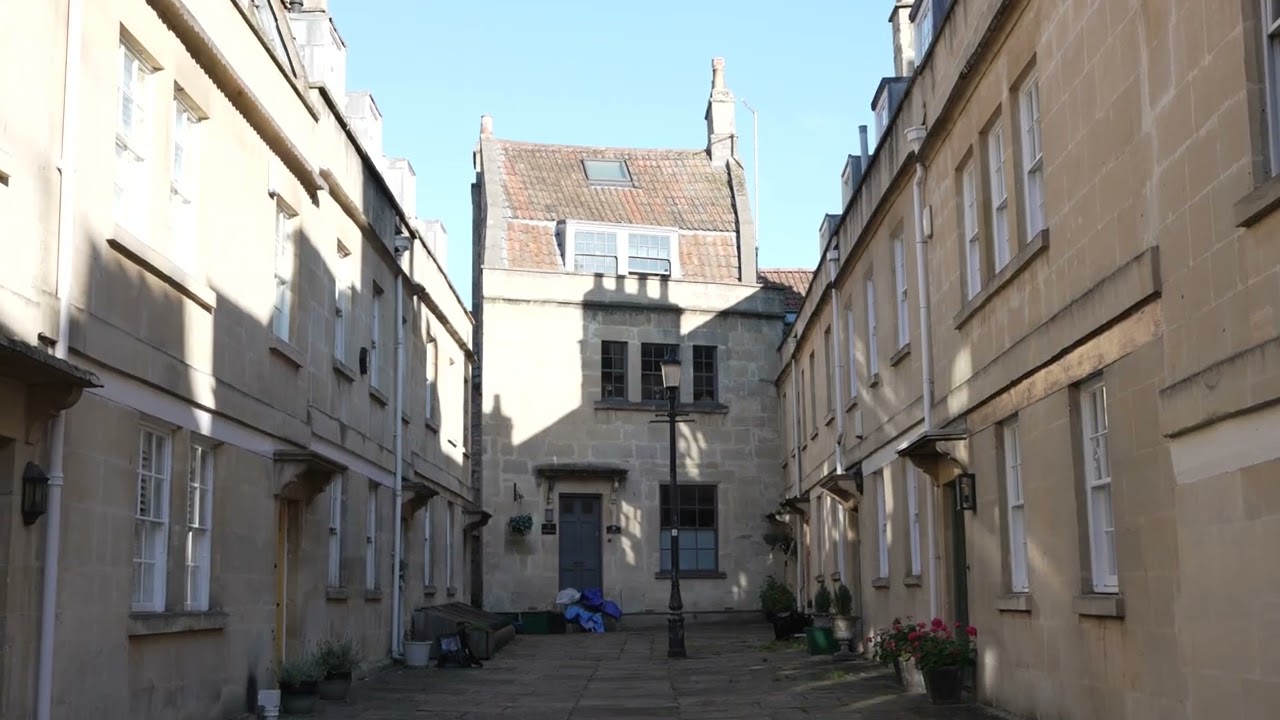
The Sony RX1R III isn’t a video-centric camera. That said, it has a few recording features up its sleeve. It shoots 4K at up to 30fps, with Sony’s usual range of Picture Profiles, including S-Log3 and S-Gamut3.Cine for increased dynamic range, and S-Cinetone for graded out-of-camera footage. I love S-Cinetone; it reminds me of Fuji’s Eterna Cinema, delivering cinematic, almost ethereal-looking footage.
It also features Sony’s SteadyShot digital image stabilization (incurs a crop), which does a really good job at smoothing out the jitters of handheld footage, as you can see in the sample footage above.
The 35mm lens is quite noisy and shaky when focusing, although if you’re using an external mic away from the camera, that shouldn’t be too much of an issue.
Sony RX1R III review: Battery life

The Sony RX1R III’s battery life is fairly poor, with a CIPA rating of 270 shots. At best, I was able to achieve just over 300 shots before needing to charge, although that was using high speed drive for intervals, which inflate shot-counts per charge. After a few hours of street photography, I received a red battery warning icon, so it won’t last a full, intensive day of shooting. Add 4K video into the equation and the camera drains in no time.
I’ll caveat the above with the fact that Sony’s U.K. representative sent us a third party aftermarket battery for testing, but my testing results were more or less in line with the stated CIPA ratings. Either way, the RX1R III’s battery life absolutely pales in comparison to the GFX100RF, with its 800-shot battery life, although it's in line with the 350-shot Lecia Q3 43.
Sony RX1R III review: Verdict
The Sony RX1R III has been a really tricky camera to review. $5,099 is frankly extortionate for a scaled down A7C R, while the paltry EVF res and battery life make the price an even harder pill to swallow.

However, the RX1R III has some incredible virtues. The high-res images are beautiful, as I’ve come to expect from this 61MP Exmor R sensor, and the AF is more than capable enough for this camera’s intended purpose.
And on the topic of purpose, it’s important to frame this camera along those lines. The RX1R III camera is designed, first and foremost, as a street weapon. And it is. It handles sublimely, the digital crops give lots of flexibility, the lens is gorgeous and the new color profiles deliver beautiful stylized results right out of camera. All these things make it ideal as a plaything camera for pros on their days off.
Would I buy it over the Fujifilm GFX100RF? Not a chance, although I’d be buying the A7C R before both. Nevertheless, the RX1R III still succeeds at its core purpose, and for that reason, it deserves an overall positive review. And besides, it is just a lovely, lovely thing.