




It's simply impossible to make good coffee with a bad grinder, so when it comes to testing the best coffee grinders, we get granular. We've tested dozens of coffee grinders, from Breville to Mazzer, rating them on retention, static, consistency and value for money.
With so many different types on the market, it can be tricky to buy the right one for you. The most important thing to consider is what you plan on using your grinder for. If it's the best of the best, the Eureka Mignon Specialista is our top pick. We suggest the Baratza Encore for espresso. But if you're on a budget, the Breville Dose Control Pro is an outstanding all-rounder if you want a less expensive electric grinder, and if you don't mind doing things manually, the cheapest option in this guide, the 1Zpresso Q Air, costs just $60.
Spoiler alert, not a single blade grinder made the list. If you want to buy the best coffee grinder, you'll have to opt for burrs.
Many people opt for a separate coffee grinder when looking for a coffee maker or one of the best espresso machines, because among coffee experts, the perception is that you'll always get more for your money when you opt for a dedicated grinder. But we'll leave that shopping decision for another day - let's get into the best coffee grinders we've tested.
The best coffee grinder you can buy


Tested in our reviews lab by Tom's Guide's reviews editor Peter, the Eureka Mignon Specialita was (and continues to be) put through its paces for everything from espresso to drip coffee as part of our testing. This is a premium option, not one for entry-level enthusiasts, but it's a highly dependable flat burr option that will get the best out of every single bean.
Made in Italy, you'll pay a premium (around $600 to be exact) to get your hands on the Eureka Mignon Specialita in the U.S., as opposed to a more tolerable £400 in the UK. We do think it's worth it for espresso-lovers who want to make a durable investment though, thanks to its incredibly high build quality and low retention.
Although this is an all-purpose grinder, the Mignon Specialita is the one we use when testing espresso machines because of how capable it is for this especially challenging task. It has 6 grind settings but this is split up on a stepless dial that has a very wide throw, meaning you'll be able to make tiny adjustments if you like to get stuck into the details of your espresso.
As for the settings, you can adjust the timer down to the tenth of a second and switch between single- and double-portafilter measures thanks to the touchscreen display. Our main gripe is that the chute can be a little messy, but on the plus side, you'll lose a lot less bean in the grinding process due to the low-retention design.
Read our full Eureka Mignon Specialita review
Best coffee grinder for espresso


The Baratza Encore ESP is our best grinder for espresso. There are two versions of the Encore: the ESP and the Encore (no ESP). You will want the Encore ESP, as the original does not grind fine enough for espresso. And as of early 2026, Baratza released the Encore ESP Pro, which didn't live up to our expectations when we tested it. It's still good, but for an extra $100 compared to the original, we don't think it does enough to justify its higher price point.
At $199, we were actually gobsmacked by how affordable the Encore ESP is for the quality of its performance. No, it’s not as impressive as the Eureka Mignon Specialita, but it is around $300 cheaper.
You’d expect a $200 grinder to have some uniformity or fineness issues, like the Breville Dose Control Pro can be prone to. But that’s not the case with the Baratza Encore ESP. Besides being super easy to use, it also performed really well in our retention and uniformity test, although there was a little clumping, which we had to break up with our finger before brewing.
We’ve even got the data to prove its outstanding uniformity. The Baratza Encore ESP jumped from 10% passthrough to 90% passthrough, which means it has good uniformity. If the majority of the grounds can pass through the coffee sieve, it means they’re all the same size. This will result in a better-tasting espresso.
The coarser we ground, the more inconsistent the grind was, but if you’re using this grinder for espresso and not drip coffee, this won’t be an issue.
Retention was very impressive — just 1.55% on average. This means only a little coffee was stuck in the inner burrs after grinding. In general, the Baratza Encore ESP is a fantastic espresso-forward grinder. It has great uniformity in fine grinds and very little retention, making it an ideal option for espresso. The best part? It’s just $200.
Read our full Baratza Encore ESP review
Best hand coffee grinder


There’s very little disagreement in the coffee world about the best hand grinder. Most people will say the Comandante C40 MK4 is the best hand grinder around, hands-down. Of course, there are other fantastic options, but the Comandante C40 MK4 just has that finesse that pips others at the post.
The C40 MK4 has a ‘Nitro Blade’ burr which is made of martensitic stainless steel — a type of steel used in surgical instruments, pumps, valves, and more. In simple terms, it’s very strong and very resistant to corrosion.
Because of this patented burr, the C40 MK4 is very expensive. It starts at a massive $277 and increases depending on the color and style. We tested the walnut veneer version, which is usually around $330. However, although the C40 MK4 is pricey, it’s so darn good. We have no complaints about this grinder other than its price.
In terms of super-specific, almost scientific data, the Comandante C40 MK4 performed exceptionally well in my retention, uniformity, and clumping tests. It can easily grind smaller than 300μm, suitable for even Turkish coffee. It also jumped from 1% passthrough to 95% passthrough, indicating that the burrs grind super consistently for uniform grind.
For retention, the Comandante C40 MK4 also impressed us. Its average retention was 2.75%, which is on the higher end for other hand grinders, but still impressive in real terms. The C40 MK4 still generates static electricity, but of course it would — it’s literally grinding tiny little particles. As far as usability goes, though, this static was almost nonexistent. We didn’t notice any clumping issues during testing, either.
If you’ve got $300 to spend on the best of the best hand grinders, the Comandante C40 MK4 won’t let you down. And, to top it off, Comandante offers a lifetime warranty (for its burrs), so you’ll be able to grind in confidence.
Read our full Comandante C40 MK4 review
Best budget hand grinder


The 1Zpresso Q Air delivers as an ultra-light, compact hand grinder, making it a solid companion for travel or single-cup brews. At just over 300 grams, it slides easily into a bag or backpack, ready to serve up fresh grounds wherever you find yourself. Best of all, at $60, it's the cheapest option in our guide, and still scored an impressive 4.5 stars in our tests.
Featuring a 38mm conical burr, the Q Air produced consistent grinds for a budget-friendly model, with even particle sizes that support reliable extraction. This consistency matters whether you’re brewing espresso or a more forgiving pour-over, which is rare in this price range.
The Q Air’s stepped adjustment dial offers a 3mm grind range, giving tangible versatility for coffee lovers who switch between styles. Each of its 30 clicks adjusts the burrs by around 25 microns, so whether you’re dialing in something fine for espresso or going coarser for French press, the marked steps support dependable coffee across the spectrum.
We found retention to be impressively low in bench tests, just 0.1 grams on average, so nearly all of your beans make it into the cup. For single-dosing or when you want to avoid waste and simplify cleanup, this low-retention design is a real asset.
Against the Comandante C40 MK4, it can’t quite match the premium hand grinder’s build or grind refinement, but the Q Air wins on price by a very considerable margin.
There are trade-offs. You don’t get the stepless dial or flat burrs of the Eureka Mignon Specialita, and the Q Air’s adjustment mechanism may take a few sessions to master. Once you’ve gotten used to it, day-to-day use is simple and reliable.
In real-world use, the Q Air shines for those who brew on the go. Its compact body fits perfectly inside an AeroPress, making it a favorite among travelers and campers. It’s not the grinder for those chasing flagship features or absolute uniformity. For anyone seeking excellent grind quality, low retention, and true portability at a budget price, the Q Air is a standout pick.
Read our full 1Zpresso Q Air review for more.
Best budget electric coffee grinder


If you’re on a budget, then the Breville (Sage) Dose Control Pro is the perfect coffee grinder for you. It’s just $159, which might seem like a lot of money, but coffee grinders can very easily get to well over $500.
In terms of performance, it’s fair to say that the Dose Control Pro behaves like a budget grinder. While we don’t think that’s necessarily a bad thing, it is worth noting. We found that the Dose Control Pro couldn’t go fine enough for certain brewing methods and beans. If you gravitate towards light-roasted beans then you might need to adjust the inner burr to get the grinder fine enough. Don’t worry, it’s pretty easy.
Actually, using the Dose Control Pro is all pretty easy. To adjust the grind, all you have to do is move the hopper left or right. Left is finer, and right is coarser. We had no trouble using this grinder whatsoever during testing.
The Dose Control Pro has pretty good uniformity. We’ll give you some data here — it looks scientific and confusing, but it’s really not. While the grinder never managed to get as fine as 300μm, it had big jumps from 500μm to 800μm, which is what you want to see. This means the grind is mostly uniform.
There’s also a considerable lack of retention. The average retention was 2.15%, or 0.43g in real terms. To get this number, we ground 20g of coffee and calculated how much was left inside the grinding mechanism.
In terms of clumping, while no grinder has managed to evade the laws of physics and completely eviscerate clumping, the Dose Control Pro performed well. There was minimal clumping during testing, and we think it’s more than enough for the average person.
If you’re on a budget but still want a big-name grinder, then the Breville Dose Control Pro is the best option. No, it won’t impress serious coffee purists, but for a beginner, cheap machine, it’s great.
Read our full Breville Grind Control Pro review
Best premium coffee grinder


Got $1,500 to spend? Yeah, us neither. But if you're going to splash out on any element of your coffee setup, it really should be your grinder, and the Mazzer Philos is an iconic option for a reason.
We put our grinders through a set of uniformity tests using a coffee sieve, and the Philos attained practically perfect results, jumping from 0% to 100% at click 50 for a delicious pour-over. It's also capable of brewing extra-fine for balanced espresso shots.
Again, if you're looking for practically perfect in every way, you'll want to pay attention to our retention tests. The Philos gave us a result of literally 0% retention in two of our three tests, making it by far the lowest retention grinder we've ever tested, with an average of 0.8% over our rounds of three 20g doses.
Tester Erin couldn't stomach awarding such an expensive machine a perfect five-star review, especially when its warranty is limited to 12 months, which is actually less than the Comandante C40 MK4. but admitted that were she to invest in one grinder for the rest of time, it'd be the Philos: "Once you have it, you won’t want to buy another one again, because this one is so perfect."
Read our full Mazzer Philos Coffee Grinder review.
Also tested
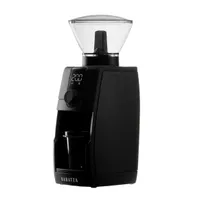
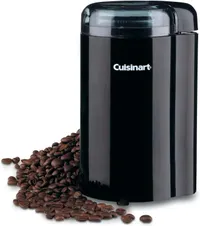
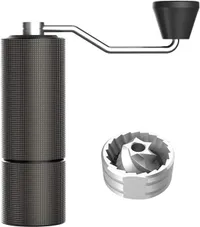
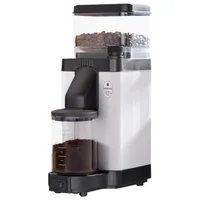
We test a lot of coffee grinders here at Tom's Guide, so inevitably, not all of them will make the cut. Here are some models we've recently put through their paces, which didn't quite make the top six.
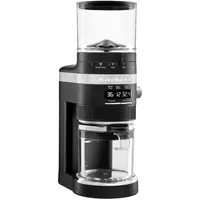
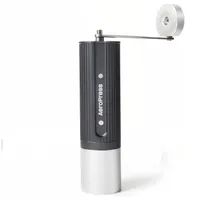
How we test the best coffee grinders

With a six-year career of testing the very best in home tech, I can't go a day without a good cup of coffee, and have had the chance to put some of the leading coffee brands to the test in my own kitchen.
I worked closely with Tom's Guide's reviews team to test the grinders in this guide, and tried a number of them myself for good measure.

As a former barista (and current product tester), I've spent a lot of time getting hands-on with coffee grinders.
After a combined three years at two of the biggest coffee chains and a year at an artisan independent coffee shop, I can detect a well-balanced shot when I taste it, and I know how important the grinder can be in achieving that perfect extraction.

I’m Tom’s Guide's Reviews Editor and I’ve been a coffee enthusiast for almost a decade now.
I spend large chunks of my day testing out the latest and greatest coffee gear, from coffee grinders and weighing scales through to pour-over drippers and espresso machines.
I'm a big believer in consistency when testing different models, which is why we use the same brand of beans across all of our testing, and the same grinder (our top pick, the Eureka Mignon Specialita) for all of our coffee maker reviews.
How we test
Why you can trust Tom's Guide Our writers and editors spend hours analyzing and reviewing products, services, and apps to help find what's best for you. Find out more about how we test, analyze, and rate.
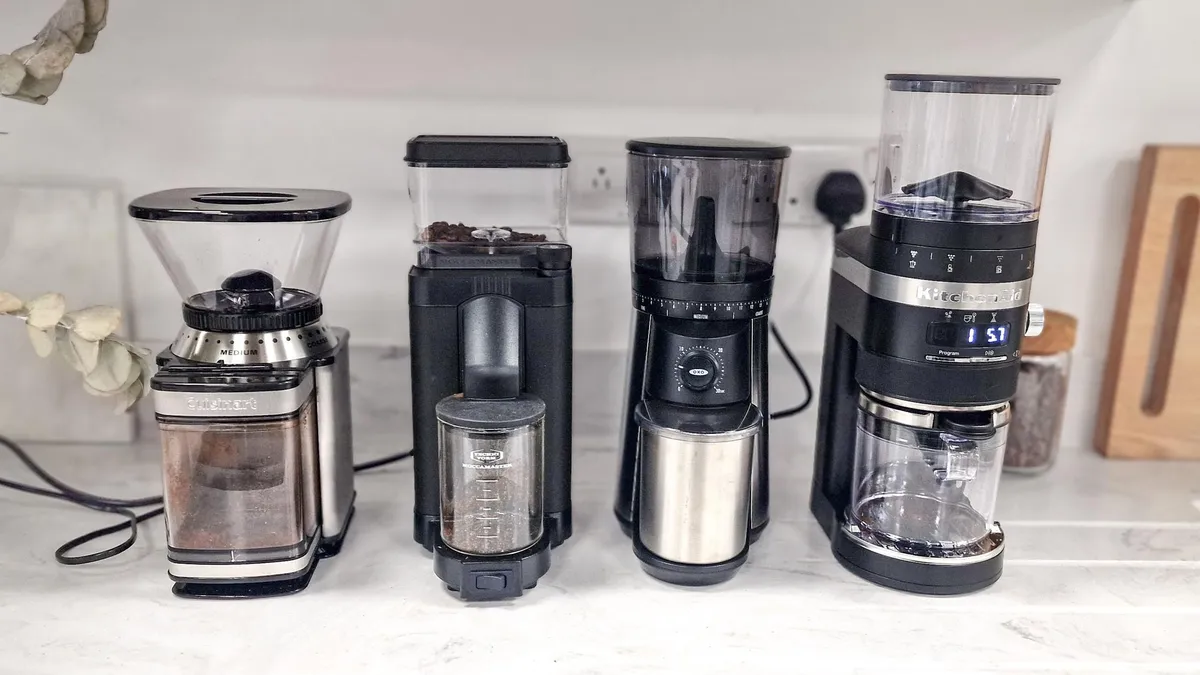
To find the best coffee grinder, you first need to select your candidates. I was keen to test the market-leading options from more popular brands like KitchenAid and Technivorm, but there is also a range of smaller and more specialist coffee brands like 1Zpresso and Comandante worth consideration.
Luckily, between myself and the reviews team, we've got a handful of coffee obsessives who know our conical burrs from our flat burrs, and some great tools for testing consistency and retention across our lineup.

We consider a range of subjective and objective features when reviewing coffee grinders. This includes user experience, noise levels, variety of grind settings, static created in grinding, and the retention after our beans are finished.
Consistency

To examine how evenly and precisely our coffee grinders worked, we used a Kruve sifter that stacks layers of sieves to separate our coffee grounds into three distinct particle size ranges. This allows us to examine how evenly the grinder breaks down our beans, a measure which we then use to determine the overall consistency of the grinder we're testing.
Retention

Another objective test we use when reviewing grinders is weighing for retention. With 99% of coffee grinders, you won't get the amount of coffee you put in back out the other end of the grinder. Some particles will naturally stick to the interior of the grinder, whether through static or simply in elements of the grinder's build. Some retention is to be expected, and frankly, it's not a huge deal. But if you're someone who likes to ensure your coffee recipe is consistent, you'll want a grinder with minimal retention to get the same amount of grounds out each time. To we test this, we simply weigh the beans before and after grinding, to see how much as been lost in the process.
Clumping

Like retention, clumping is a very normal part of grinding. It's literally inevitable that as you break down coffee beans you'll create some static which will cause coffee grounds to clump together, but some grinders are worse culprits than others. Clumping can create channelling in the extraction process, so when a machine produces a lot of it, you'll want a WDT tool to hand to break it up. While it's not a deal-breaker, we do make note of the clumping levels of each grinder we test to ensure it's going to make life easy when it comes to brewing.
