







Microwaves have one job, so it's surprising how many of them aren't up to task. We've all used a bad microwave: it will leave a bowl of soup deceptively bubbling but ice-cold in the center and chicken part-defrosted, part-frostbitten.
So when choosing the best microwaves, we focused on the basics. Sure, extras like a popcorn setting and a mode for frozen pizza sound nice, but if a microwave can't evenly heat soup or melt chocolate, none of those settings matter.
Our top pick of the best microwaves is the Toshiba EM131A5C-BS, and it has been for some time. The microwave market doesn't change much, and Toshiba has stood up to every test. It even has a mute button, which is one of those settings that can come in surprisingly handy over time.
On a budget? We recommend the Black+Decker EM925AB9 to our lineup thanks to its rave reviews and impressive specs for a sub-$100 price point. And if you're looking for something that maxes out on features, the new IKEA GÅTEBO promises to replace your air fryer as well as your microwave.
The best microwave for most people


There's a sweet spot for most appliances where the price, performance and features are all in balance.
For microwave ovens, you'll find that’s the case in the inexpensive Toshiba EM131A5C-BS, which heats evenly and quickly and offers preprogrammed settings including ones for popular items like popcorn, baked potatoes, and pizza.
You won’t find lots of fancy features here; there's no voice control and no sensors to determine the setting and time precisely. But there are some nice touches for convenience, especially considering its compact frame.
One of the smartest features here is its humidity sensor, which customizes reheating to ensure your food doesn't dry out. This also makes it ideal for steaming vegetables or reheating rice.
With 1000 watts, this is the most powerful microwave featured in this guide, and it's held the top spot for some time. Its balance between affordability and quality features make it a strong contender, especially in a market that's, let's be honest, hasn't changed much in the last decade.
Best budget microwave

Want a great microwave for under $100? Look no further. The BLACK+DECKER EM925AB9. It's got an astonishingly rave set of reviews for such a budget-friendly option, and can go either above-range or on countertops thanks to its versatile, space-saving design.
There are a number of pre-set modes available with this microwave, including an option to pre-heat plates, warm up beverages, as well as a setting for vegetables, popcorn and potatoes. These are all settings we'd expect to see on more expensive machines, making this extra value for money.
The 0.9 cubic foot capacity is slightly smaller than the 1.2 cubic foot Toshiba, which sits in the top spot. But it's also a smaller option, meaning you can place this microwave in the most compact of kitchens. Better yet, its 900-watts of power are more than enough for speedy reheating in a microwave of this size.
Other notable features include a child lock and a push-button door. There's even a setting for warming up dinner plates. For the price, it's a smart choice.
Best combi microwave

IKEA is much better known for its flat-pack furniture, but the IKEA GÅTEBO is a surprisingly strong release from the brand. Released in 2026, it immediately sold out when buyers realised it acted as an air fryer, convection oven, grill and microwave in one, all for $200.
When I tried it in my own kitchen, I did notice that it's a little less powerful than some of the other options in this guide. With a maximum power of 900 watts, which matches the much smaller BLACK+DECKER EM925AB9, it won't compare with the Toshiba in our top spot for sheer zapping power. But when I tested it, I found that it's still more than capable of defrosting, reheating, and even crisping up a chicken skewer.
How about its air frying? Well, it won't replace your air fryer, but it did do a decent job of crisping up fries and toasting bread when I put it head-to-head with an actual air fryer, and it would happily do the job of both appliances if you're not able to fit both a fryer and a microwave in your kitchen.
For $200, this is a seriously capable and budget-friendly option, but you may notice the lack of power when it takes over three minutes to heat your soup right to the middle of the bowl.
Read the full IKEA GÅTEBO review
How we chose the best microwaves

I'm Tom's Guide's Managing Editor for Buying Guides. Formerly head of the homes section, I've been testing kitchen appliances for six years, including a handful of microwaves.
The thing about microwaves is that they all perform a broadly similar role, so when deciding what to incude in this guide, I prioritized trusted brands with years of user testimonial to back them up. I recently added IKEA's latest release, which also acts as an air fryer and grill all for under $200.
Buying advice
How to choose the best microwave for you
Why you can trust Tom's Guide Our writers and editors spend hours analyzing and reviewing products, services, and apps to help find what's best for you. Find out more about how we test, analyze, and rate.
There are two main types of microwave available: countertop and over the range. Here's what you need to know about each of them, as well as other specifications and features you should keep in mind while choosing your next microwave.
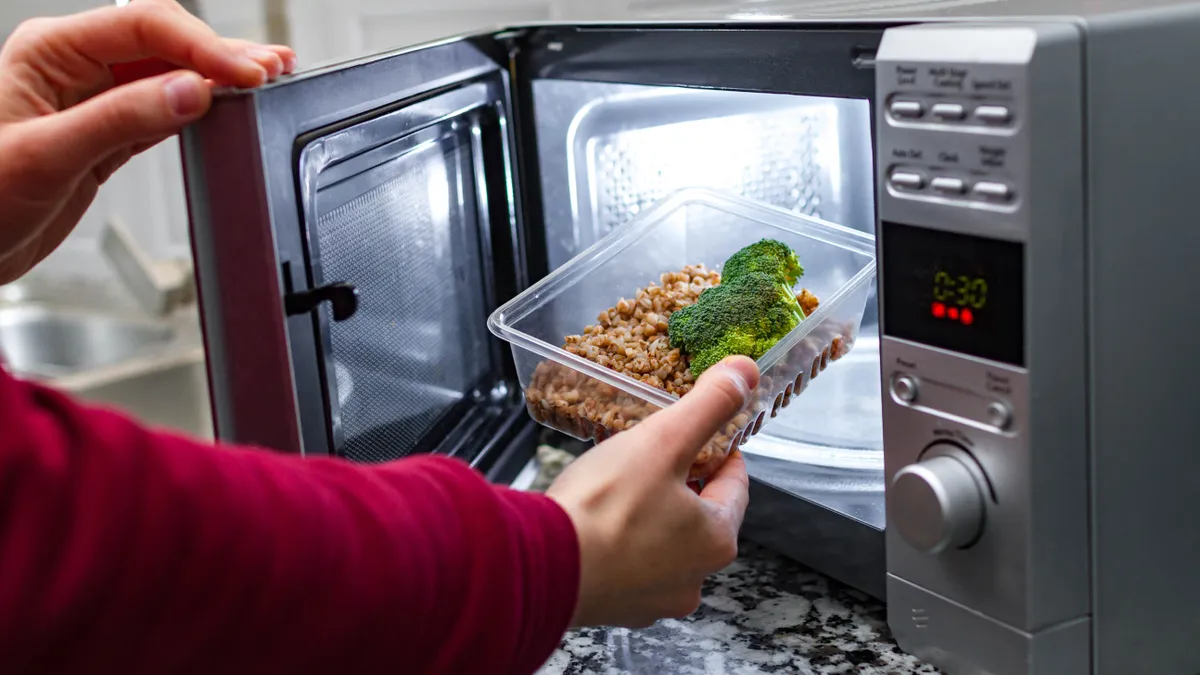
Types of microwave
Countertop: These appliances sit on your countertop next to your cutting board and toaster. They don't require any installation other than being plugged into a nearby electrical outlet.
Over-the-range: Also known as OTR, built-in, or microwave hood, these units are installed above your range, freeing up countertop space and providing a vent that sucks in and filters out smoke and odors from cooking. They require professional installation, as they will be attached to the cabinets or the wall behind them and hooked up to electrical wiring.
The most common size is just under 30 inches wide and about 16 inches deep. Most have a left to right door opening, but some high-end models may have a door that opens downward as on a conventional oven. Either way, check to ensure that any adjacent cabinet-door fittings will not block the microwave or make it awkward to open. Keep in mind. OTRs are less convenient to access, especially for children or anyone wheelchair-bound. Also, be aware that while they do provide ventilation, they don’t exhaust as well as a hood that vents to the outside.
Power
Microwaves are rated by the number of watts that they give out. Wattage can vary from 500 to 1500. For the most part, the larger the oven, the higher the wattage and the faster the oven will cook. However, other factors, like the size and shape of the cavity, can also affect cooking time. You should find 800-1200 watts sufficient.
The Toshiba EM131A5C-BS Countertop Microwave, which sits in the top spot of this guide, offers 1,000 watts of power. For its 1.2 cubic foot capacity, that's more than sufficient. The IKEA GÅTEBO, by contrast, offers 900 watts, which is plenty for microwaving but resulted in a slower grill and air fry performance.
Size
Be sure to measure both your space and the microwave you are considering purchasing, including its height to make sure it can fit under a countertop.
Microwave oven capacity is given in cubic, feet but that number. doesn’t give you a realistic estimate of usable space. Virtually all microwaves have turntables, and it’s more important to measure the turntable. Its diameter will affect how big a dish the oven will be able to hold.
If you have a favorite microwavable baking dish, either measure it from handle end to handle end or bring it to the store to determine if it will be able to rotate on the turntable. There are a few models that give you the option of deactivating the turntable.
However, microwaves heat more evenly with the turntable rotating, so we only recommend that you plan on using that feature occasionally to warm up food on a large platter or cook a lasagna.
Features
Sensors cook or defrost foods automatically to a precise degree of doneness. They measure the moisture given off during heating before calculating cooking time; they tailor the time to the actual food rather than cook for a predetermined amount of time.
Preprogrammed keys have preset power levels and times for functions like popping popcorn, cooking bacon, and melting butter. Although most microwaves will have a popcorn button, the other choices will vary from model to model. These programs always cook for the same amount of time regardless of the actual food. Sometimes you are given the option to select the quantity or package size.
Express Keys for one-minute or 30-seconds or the number on the key let you cook quickly without giving much thought to a precise time or power level.
Convection Cooking or Grilling is available on many ovens. This capability adds considerably to the cost. While it can come in handy, especially around the holidays when you need extra oven space, it rarely works as well as a full-size oven or even some toaster ovens.
