In the last year, one name has continously popped up in conversations about the future of school: MacKenzie Price. To some, she’s a visionary who sees what education could be in the age of AI. To others, she’s a Silicon Valley disruptor moving too fast with too little evidence of the benefits of AI.
Either way, Price — the co-founder of Alpha School — has become impossible to ignore. With her school tuition ranging from $40,000 to $65,000 a year with an AI-driven curriculum, and a promise that kids only need two hours of formal “learning” per day, it's hard to ignore the buzz around the “Elon Musk of AI education.”
As a parent of a highly intelligent, neurodivergent child who has struggled to fit neatly into traditional school, I’ve found myself watching Price’s experiment with unusual interest — and, unexpectedly, a fair amount of hope.
But what does all of this actually mean?
Who is MacKenzie Price?

According to her LinkedIn profile, Price is Stanford-educated with a degree in Psychology and deeply embedded in the world of tech, education and futurism. Over the past few years, she has built a visible public persona through her podcast, YouTube channel and appearances in “Future of Education” circles, where she argues that traditional schooling is outdated for an AI-driven world.
More than simply running a unique school, she’s selling a philosophy about how children should learn, work and think in the coming decades.
That’s part of why she’s become such a lightning rod. Supporters see her as bold, innovative and refreshingly honest about the flaws in conventional education. Critics see her as overconfident, elitist and willing to experiment on children before the evidence is clear.
Like Musk, Price is essentially highlighting a very specific vision of the future.
What is Alpha School?

I went to a boarding school and although I have not visited Alpha School, I think it's safe to say it is not your typical private school. Instead of a full day of classes, students spend roughly two hours a day on core academics, guided largely by AI tutors and personalized learning software.
The idea is that AI can move faster than human teachers at diagnosing gaps, adapting lessons and keeping students engaged.
The rest of the day is meant for project-based learning, creativity, collaboration, physical activity and real-world skills — the kinds of things Price argues are often squeezed out of traditional schooling.
Alpha School currently operates in Austin, Miami, Scottsdale, San Francisco and a lower Manhattan campus, with plans for more expansion. The price tag — around $65,000 per year — puts it firmly in elite private-school territory.
But unlike other private schools, it isn't trying to make school better, but completely redefine what "school" means. Price states on her LinkedIn page that "Our greatest resource is untapped human potential."
How Price compares to Elon Musk and other tech leaders
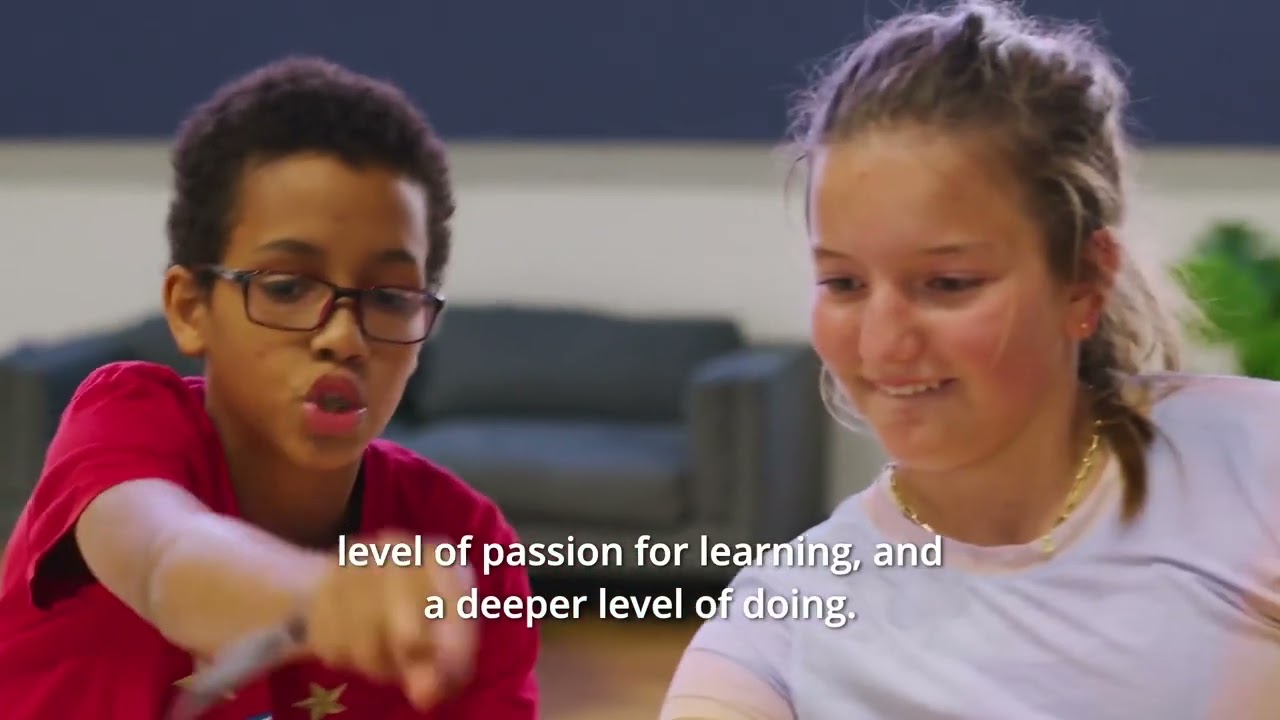
Beyond the headlines and hot takes, MacKenzie Price has been unusually vocal about why she believes Alpha School’s model is necessary — and her own words help explain why she inspires such strong reactions.
In public talks and on her Future of Education podcast, Price has argued that traditional schooling hasn’t kept pace with the world students are entering. She’s repeatedly made the case that AI makes it possible to rethink the very shape of a school day.
On her own platform, Price has said that AI allows students to “crush academics in just two hours a day,” freeing up the rest of their time for creativity, hands-on projects, and real-world skills that rarely get enough attention in conventional classrooms.
She’s also framed Alpha as fundamentally different from a tech-first experiment — positioning it instead as a student-first model. In interviews, she has emphasized that Alpha’s AI tools are meant to meet kids where they are, diagnosing gaps in understanding and letting them move at their own pace rather than forcing everyone into the same rigid timetable.
Why this model resonates with me as a parent

I have three children — all with very different personalities and learning styles. So while my middle schooler is a go-with-the-flow type kid, my third-grader is neurodivergent, highly intelligent and deeply creative — and traditional school has often felt like a poor fit for her. She can grasp complex ideas quickly, yet struggles with the pace, social dynamics and rigid structure of a conventional classroom.
I’ve watched her become bored in some classes and overwhelmed in others. I’ve seen her brilliance shine at home, in projects she chooses and in one-on-one conversations — only to dim when she’s forced into a one-size-fits-all system.
That’s why Alpha School’s model caught my attention. The idea that learning could be personalized, adaptive and compressed into a focused block, rather than stretched across hours of lectures and busywork, feels aligned with how many neurodivergent kids actually think and learn.
I’m not saying Alpha School is a perfect solution — or even the right one for every child. But I am saying that for kids like mine, who struggle to “fit” into traditional schooling despite their intelligence, Price’s vision feels worth exploring.
What this says about the future of education

Not everyone is convinced that Alpha School is a glimpse of the future. And while ambitious, I think we can all agree that it's risky. There's the concern of compressing core academics into such a short window sacrificing depth of learning, sustained focus or the kind of intellectual endurance that develops over years of traditional schooling.
Or, just the simple fact that the model relies on screens and AI system, is easily argued that human interaction, debate and collaboration are just as critical to childhood development as academic content.
There’s also the question of access. With tuition hovering around $65,000, Alpha School is out of reach for most families, which raises uncomfortable questions about whether this kind of innovation will widen — rather than close — existing inequities in education.
Bottom line
As a parent, I feel the tension in all of this. I don’t want my child raised by an algorithm or cut off from meaningful human connection. At the same time, I’ve watched her struggle inside a system that wasn’t built for kids who think, process or socialize differently.
That’s what makes Alpha School so complicated — and so compelling. It forces us to ask whether the risks of doing something radically new are greater than the risks of staying exactly where we are.
Will more schools adopt shorter academic days powered by AI tutors? Or will Alpha remain a boutique experiment for tech-forward elites? What seems clear is that AI is already reshaping education — whether through personalized tutoring apps, automated grading or tools like ChatGPT that students are using every day.
Whether you see MacKenzie Price as a pioneer or a provocateur, one thing is certain: the classroom of the future is already being built — and for parents like me, that future feels both daunting — and full of possibility.

Follow Tom's Guide on Google News and add us as a preferred source to get our up-to-date news, analysis, and reviews in your feeds.
More from Tom's Guide
- I keep coming back to these 5 custom GPTs — and there are hundreds more worth trying in ChatGPT
- Google Maps just got a major AI upgrade — and it’s finally hands-free for walkers and cyclists
- Pokémon reveals what AI still gets wrong — here’s what I found