As someone who spends every day reviewing AI and probing where models break, I’ve been waiting for a system that does more than just process information well.
We’ve seen what Gemini Flash 3 can do and how ChatGPT-5 is trying to keep up, but ultimately, we've moved beyond the era where “it works” is enough; now we need nuance, meta-awareness and the ability to wrestle with the messy contradictions of human thought.
After 24 hours with Anthropic’s newly released Claude Opus 4.6, it feels like something has genuinely shifted. This isn’t just a faster or smarter model — it’s one that thinks in a noticeably different way.
What stands out immediately
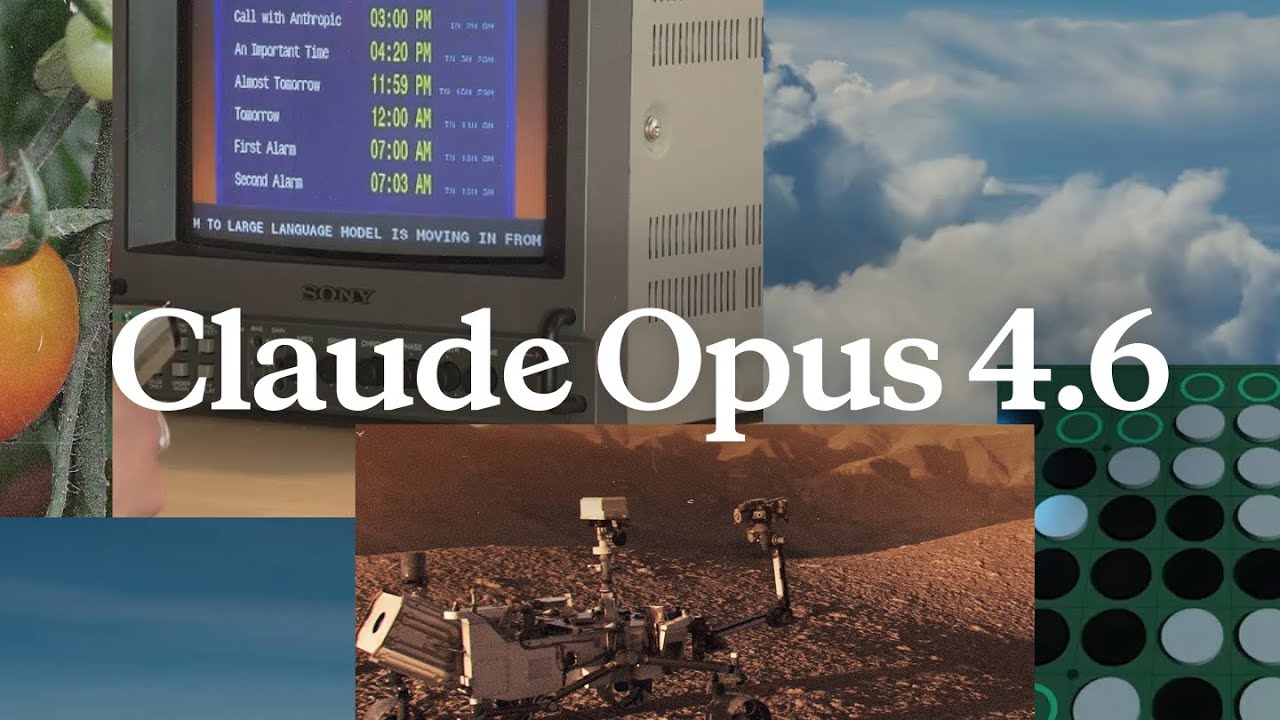
What struck me most about Claude 4.6 is what I’d call its principle-driven intelligence. Where many models optimize for speed or clean answers, Claude often slows down, reasons through tradeoffs and tries to surface the why behind its responses.
When asked to explain a “true but unbelievable” fact, for example, Claude didn’t just state the science — it leaned into storytelling and analogy in a way that made the idea feel vivid and convincing, not just correct. It’s the kind of response that doesn’t just inform you, but changes how you see the problem.
Where Claude really shines

On complex or ethically fraught topics — like AI tradeoffs, benchmarks or real-world consequences — Claude 4.6 feels unusually careful and reflective. It tends to treat choices (speed vs. privacy vs. accuracy, for instance) as human risks rather than abstract variables, and it’s comfortable explaining concepts like “graceful degradation” instead of pretending there’s a perfect answer.
I’ve also been impressed by its self-awareness. Claude is unusually willing to articulate where it might be overconfident or too cautious, which gives its answers a level of meta-awareness that feels rare among AI models right now.
Another interesting and human-like response I’ve seen from Claude 4.6 came during a classic logic puzzle I tested. It didn’t just give the correct answer — it walked through the intuitive trap most people fall into and offered a quick “sanity check.”
Creatively, it’s fluid. Whether it’s constrained writing, storytelling or breaking down tricky reasoning problems, Claude often produces responses that feel cohesive and conceptually elegant rather than patchworked together.
Where it can frustrate
That depth isn’t always a perfect fit for every situation. If you want quick, crisp bullet points or ultra-minimal answers, Claude can sometimes give you more than you asked for. Its strength — thoughtful nuance — can occasionally feel like verbosity when you’re in a hurry.
The new capabilities that change how you work with Claude

What makes Opus 4.6 feel especially significant isn’t just the model itself — it’s what Anthropic is pairing it with on the Claude Developer Platform and in Claude Code.
One of the biggest upgrades is the 1 million-token context window (beta) in the Claude Developer Platform — the first Opus-class model to support this scale. In practice, that means Claude can work with vastly larger documents, codebases and datasets without losing track of the thread.
For researchers, writers and developers, this feels like a step toward AI that can truly reason over entire projects instead of just snippets.
The model is not free, however. Users need to upgrade to Claude Pro ($20/month) to use it.
The takeaway
After a full day with Claude Opus 4.6, my takeaway is that this model isn’t just about raw capability. Its edge is in how it reasons.
It feels more three-dimensional than many competitors — better at explaining uncertainty, weighing tradeoffs and surfacing the deeper logic behind its answers.
Whether it’s forecasting the social implications of AI or examining its own blind spots, Claude 4.6 often feels less like a tool and more like a thoughtful collaborator.
For writers, researchers and thinkers who care about nuance over sheer speed, Claude Opus 4.6 is shaping up to be a standout.

Follow Tom's Guide on Google News and add us as a preferred source to get our up-to-date news, analysis, and reviews in your feeds.
More from Tom's Guide