If, like me, one of your New Year's resolutions is to get back into fitness, then you need one of the best fitness trackers to get the most out of your workouts.
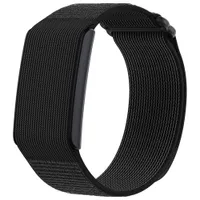
I have the Amazfit Helio Strap, which is a super-budget, screen-free, subscription-free fitness tracker (how many more compound adjectives can I fit in there?). The Helio Strap is capable of going into battle with a Garmin, Fitbit, or Apple Watch and coming out victorious. I love this little strap, and it has a permanent place on my wrist.
But why? Well, I did my first strength training workout since getting my Helio Strap, and I was met with a secret feature I didn't even know about. The built-in accelerometer automatically detects your exercises and creates a map of muscles worked. It's a game-changer.
The muscle map is a game-changer for beginners

Now, I have to admit, I didn't realize my Helio Strap had this feature until now. I've been wearing the watch every day since September. With the best fitness trackers, there are often so many features that it's nearly impossible to keep track. As many of these features are related to super-specific workout types, you may not discover them, possibly ever.
For example, if your fitness tracker has a niche swimming feature — for argument's sake, let's say it gives you a rating based on how you'd fare as a merperson — but you don't swim, you'll never discover it.
As someone who doesn't really do resistance training, it's understandable that I hadn't come across this feature until now. But in 2026, I'm determined to improve my strength, and discovering the muscle map feature was pure kismet.
Here's an example of what the Helio Strap (and the Zepp app) can do.

I'm not going to pretend I'm a weight-training expert; I'll be the first person to admit that I need as much help as possible when it comes to building strength. So, having this muscle map is a blessing.
Although I know which exercises I need to do for my goals, having it visualized for me is a game-changer. Now, I can see precisely where I've worked out, and which areas I might've missed.
I could even take this graphic to the PTs at my gym and ask them for some quick tips. As I don't tend to work out more than once a week, I know I need to do a full-body workout during that one session.
For example, my abs are grayed out, which suggests I might need to add a core exercise to my routine next time. I can see that I mostly worked out quads, hamstrings, and my upper back, so I should probably add an extra glute exercise to get that full-body workout.
Powered by an accelerometer

So how does this "muscles worked" data actually function? How does my Helio Strap know?
Well, it's all to do with the fitness tracker's built-in accelerometer. An accelerometer is basically a sensor that tracks movement, velocity, gravity, and acceleration. Using all that captured data, the Helio Strap automatically detects which exercise you're doing. Fitness trackers use this sensor for everything: sleep, workouts, steps, etc.
The accelerometer worked really well during my workout. Here's a screenshot from the Zepp app showing the exercises it detected.

I'd say this is about 80% accurate. I definitely remember doing three sets of everything, but the Helio Strap missed a few. Or, I could've just thought I'd done three sets, but I was actually gaslighting myself. Who knows.
Luckily, though, if the Helio Strap misses a few exercises, you can edit them manually.
As a beginner, I don't mind that the fitness tracker might've missed some. Right now, all I want is a general estimate so I can see which areas of my body I need to focus on next time. For me, this is perfect.
Head-to-head with Garmin, Apple, Fitbit

While other fitness trackers have an accelerometer — I'm not claiming Amazfit has invented anything here — it's rare to see this feature in a budget product.
Of course, the best Garmin watches have a built-in accelerometers, which generates "muscles worked" graphics after workouts. Garmin watches can display "muscles worked" graphics after strength training, HIIT workouts, pilates, and cardio.
Some users on Reddit have reported that Garmin's "muscles worked" detection is highly inconsistent, but I can't speak to this as I've never used a Garmin watch. I was mightily impressed with my Helio Strap, though, as it accurately detected most of my workout.
Fitbits have accelerometers, too, but lack the "muscles worked" graphic you might expect on a premium and well-respected fitness tracker. Even the best Fitbits require a third-party app to generate muscle maps.
Surprisingly, Apple Watches also rely on third-party apps to generate muscle maps. If the $99 Helio Strap can do it, you'd expect it on an Apple Watch too, right? Well, you'd be wrong. You'd need to download something like StrengthLog (which is free) to get the same results on your $400 Apple Watch 11, for example.

The Amazfit Helio Strap, though? It does it all for free, baby. That's right. My $99 screen-free, subscription-free, 14-day-battery-life fitness tracker does something an Apple Watch doesn't.
Sure, the Apple Watch 11 does more overall than the Helio Strap, but I kind of... don't care? The Helio Strap does everything I could ever want it to — accurate sleep tracking, in-depth BioCharge, fatigue, and readiness analysis, accurate muscle maps after workouts — and more.
For me, the Helio Strap is the perfect fitness tracker. I can't wait to use it until it disintegrates, which will hopefully be a long, long time yet.

Follow Tom's Guide on Google News and add us as a preferred source to get our up-to-date news, analysis, and reviews in your feeds.
More from Tom's Guide
- No crunches needed — tighten your core and build full-body strength in 30 minutes with Pilates and light dumbbells
- Short on time? This 15-minute dumbbell routine crushes your core without one sit-up
- No, we’re not joking — your calf muscles are called the ‘second heart,' here's why