


'Smart lighting is a journey rather than a single purchase' — why I’m still investing in Philips Hue 8 years later and what I’d buy this Black Friday

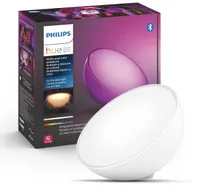
Eight years ago, I bought my first Philips Hue product: the Hue Go Portable Lamp. Eight years later, the bowl-shaped, battery-powered lamp still works, and it has quite a few friends.
Philips Hue is one of the few tech ecosystems I’ve genuinely enjoyed investing in, and one that has become more valuable to me over time. But Philips Hue does have a reputation for being expensive. That's why I consider Black Friday deals one of the best opportunities to either get started with Hue or expand an existing setup.
Ahead of the shopping holiday, I asked Marco Merolla, Executive Vice President and Business Leader of Connected Lighting at Philips Hue, about the company's approach to affordability, product longevity and the future of smart lighting.
His answers shed some light on why customers like me keep coming back, and where there's still room for improvement when it comes to connected smart homes.
Philips Hue Black Friday deals — quick links
- Up to 51% off Philips Hue @ Amazon
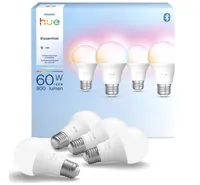
- Philips Hue Essential color smart bulbs (4-pack): was $69 now $39 @ Amazon
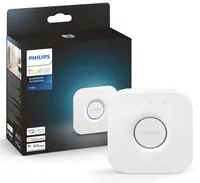
- Philips Hue Bridge: was $69 now $55 @ Amazon
- Philips Hue Go Smart Portable Table Lamp: was $94 now $75 @ Amazon
- Philips Hue Holiday Festavia String Lights: was $219 now $185 @ Amazon
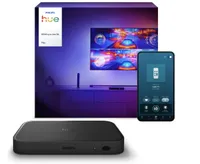
- Philips Hue Play HDMI Sync Box 8K: was $384 now $269 @ Amazon
I believe your smart home should grow with you
I'm vehemently anti-big-light. One of my proudest domestic achievements is successfully converting my fiancé to the cause, too.
My apartment is laden with lamps, most of which are from IKEA. I also have a Hue light strip running along the back of my Lovesac couch and Hue bulbs in the built-in pendant lights above my kitchen island. But generally, rather than buying smart-specific fixtures, I prefer picking out lamps that complement my mid-century modern decor and making them smart myself.
Merolla described smart lighting as a gradual progression rather than an all-at-once overhaul. Most people start with a single room or routine and build outward as they see how it fits their space. Still, I was curious how Hue reconciles its need to keep selling products with customers' expectations that their relatively expensive lights will last.
“Our goal is not to encourage replacement for its own sake, but to give consumers meaningful reasons to expand and enhance their existing smart lighting setup as their needs change,” Merolla said.
The other side of that equation is lowering the barrier to entry without fragmenting the system. Hue's more affordable Essential range runs on the same underlying software and ecosystem connectivity as its flagship lights, trimming peak brightness and color performance to hit a friendlier price. It’s a smart option if you're outfitting an entire apartment and don't need top-tier output in every corner lamp..
I'd prioritize getting a Hue Bridge

I've extensively tested competing smart lighting products in varying price ranges from Govee, Wyze and Nanoleaf. Govee, in particular, makes some incredibly fun lighting fixtures, and its adoption of Matter has made it a more compelling option for Apple Home users like myself.
But I've experienced software glitches with these other brands over the years. Nearly a decade into my smart home journey, I simply don’t have patience for connected gadgets that don't work as expected 100% of the time. Sharing a home with someone less interested in technology makes reliability and simplicity even more important.
“Physical controls remain important, since not everyone wants to reach for their phone every time they adjust the lights,” Merolla said.
Despite my investment in Hue, I rarely need to open the app for everyday lighting controls. Between wall-mounted Hue dimmer switches and shortcuts I've configured in my iPhone's Control Center through Apple Home, the lights feel as immediate as traditional switches.
You don't actually need a Bridge to get started. Bluetooth-enabled Hue bulbs work directly with your phone for up to 10 lights. But upgrading to a Bridge unlocks remote access, advanced automations, Apple Home integration and entertainment synchronization, while scaling up to 50 lights and 12 accessories on the standard model.
If you're eyeing the newer Bridge Pro, you get triple the capacity, wireless placement without an Ethernet tether, and MotionAware, a feature that uses subtle signal shifts across your existing bulbs to detect movement without dedicated motion sensors.
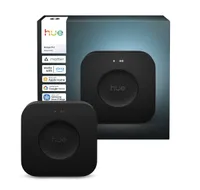
“The Hue Bridge continues to play an important role in delivering a robust, connected lighting experience, while innovations such as MotionAware demonstrate how lighting infrastructure can become more intelligent and responsive to people’s needs,” Merolla said.
If you're planning to expand beyond a few bulbs, I'd invest in the infrastructure now rather than revisit your setup later.
My favorite Philips Hue splurge

If you've already established a Hue ecosystem, the Philips Hue Play HDMI Sync Box is easily one of my favorite ways to get more out of it.
What I love about the experience is that it isn't limited to a light strip behind my TV. The lights I've already accumulated around my living space can react to what's happening on screen, making my apartment feel like one cohesive entertainment setup.
Hue has also been finding new ways to make entertainment lighting more interesting. Earlier this year, it introduced Sports Live, which uses live soccer match data to trigger lighting effects. It doesn't even require a Sync Box if you already have a Bridge and compatible color lights.
The Sync Box is admittedly a luxury, and it wouldn't be my first Hue purchase if I were starting from scratch. But it's exactly the kind of accessory I'd wait until Black Friday to buy
What I want to see from Philips Hue next
As much as I appreciate Hue's reliability, I'd love to see more intelligence built into the experience. Whenever I add another lamp to my living room, for example, I have to revisit my entertainment area's lighting configuration. Smarter spatial mapping could make that process considerably easier.
I'm not the only one looking for refinements. In a 2026 wishlist discussion on the Philips Hue subreddit, users called for more granular brightness controls, better Natural Light scene integration with third-party platforms and the ability to group multiple bulbs in a single fixture.
Merolla told me that the company sees an opportunity to move beyond simply controlling individual devices.
“We believe the future of smart lighting is less about controlling individual devices and more about creating experiences that naturally respond to the way people live.”
If I had to rebuild my smart home tomorrow, I'd probably start exactly where I did eight years ago: with a little Hue Go or a handful of smart bulbs.
The beauty of building a smart lighting ecosystem is that you don't need to buy everything at once. And with Black Friday discounts, you can take that first step (or if you’re like me, your next one) for considerably less.
Shop more Black Friday deals
- YETI: deals from $17 @ Amazon
- iPhone 18 Pro: free w/ unlimited @ T-Mobile
- Advent calendars: deals from $6 @ Walmart
- REI: up to 50% off Arc'teryx, Fjallraven, more
- Skechers: sneakers from $20 @ Amazon
- Alo Yoga: apparel/accessories from $29
- Ninja/Shark: deals from $39 @ Walmart
- Crocs: deals from $29 @ Amazon
- Lego sale: deals from $9 @ Amazon
- Nintendo: games from $21 @ Amazon
- TV sale: deals from $79 @ Best Buy
- Dell: monitors/laptops from $99
- Nectar: mattresses from $349 @ Nectar

Follow Tom's Guide on Google News and add us as a preferred source to get our up-to-date news, analysis, and reviews in your feeds.