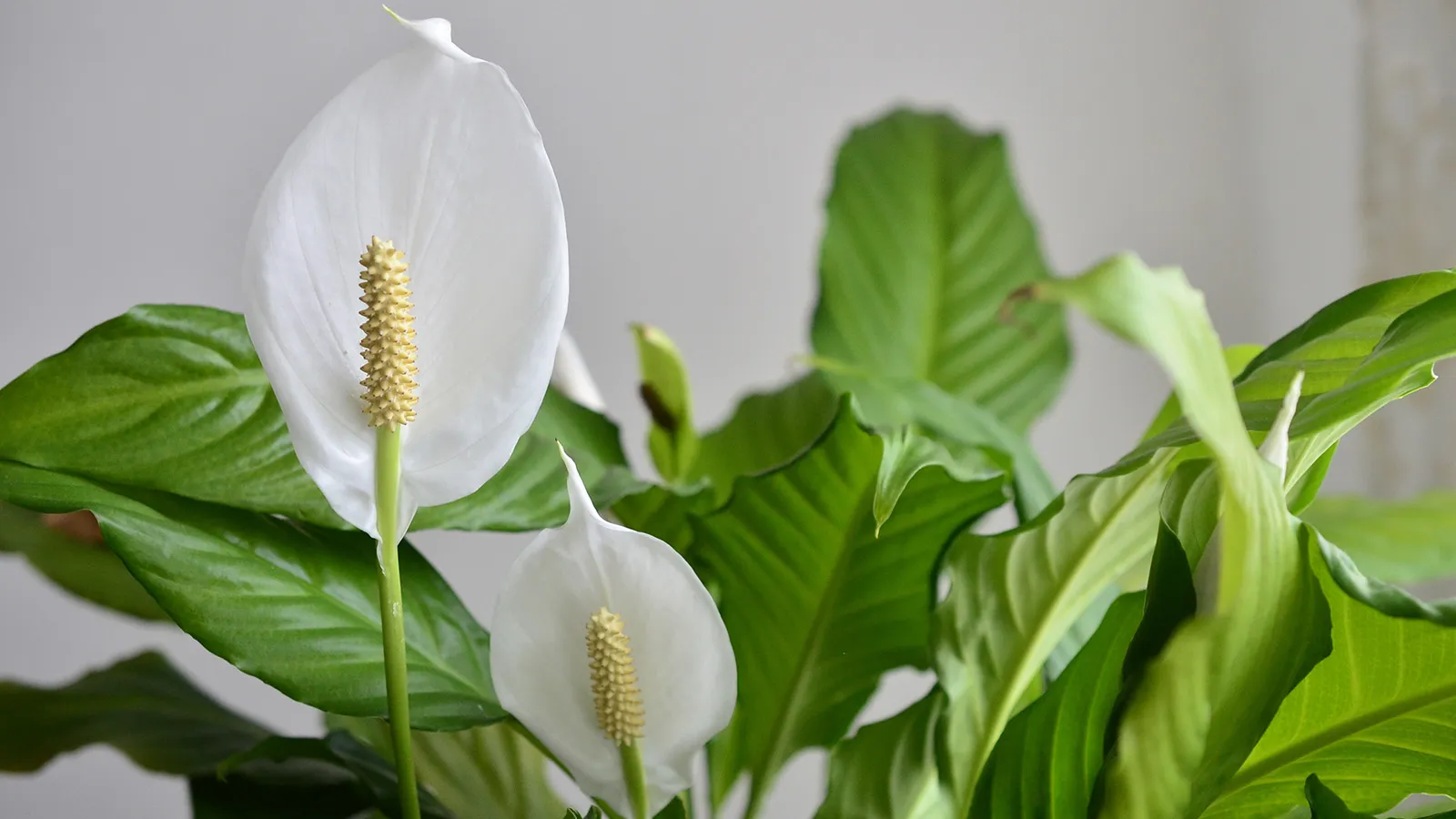
Peace lily leaves should lie flat with gentle curves along their length. When they start curling inward, rolling at the edges, or folding lengthwise, the plant is signaling stress from its environment.
Curling is the plant reducing its surface area as a kind of self-protection. Leaves that once spread wide tighten into scrolls or fold along the center vein, in response to conditions it can't tolerate.
Fix the underlying problem and the plant recovers. Existing leaves relax slowly, but new growth comes in flat and healthy. Here's what's likely causing it.
1. Fix your watering schedule
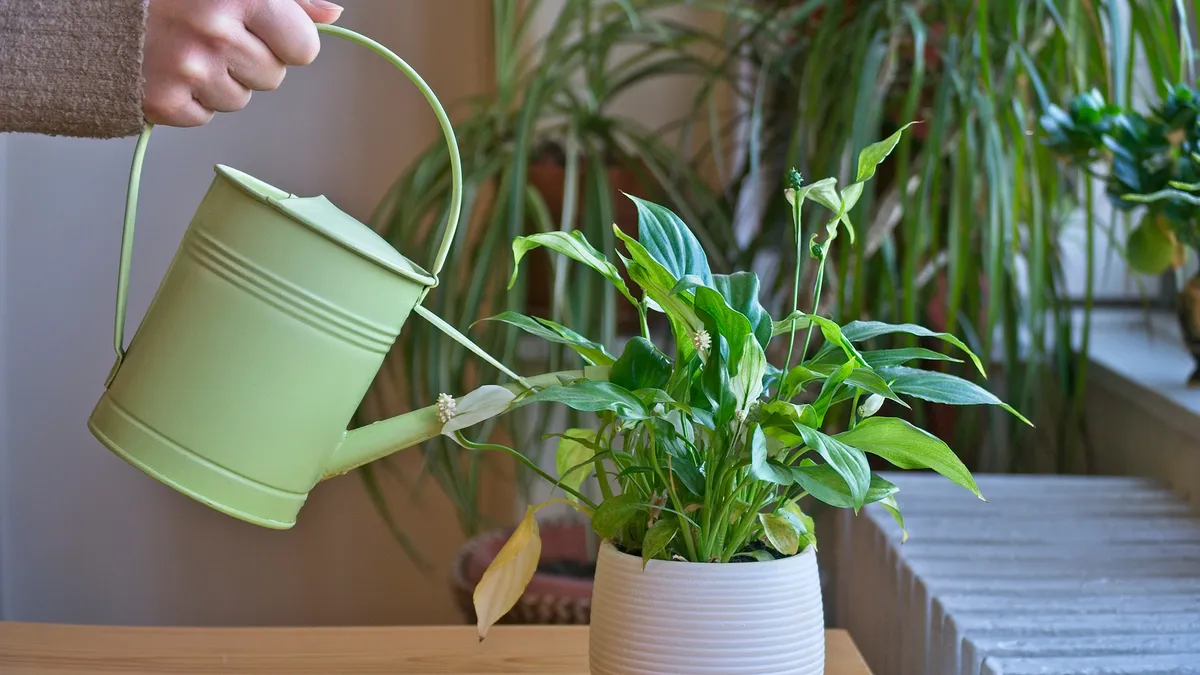
Incorrect watering, either too much or too little, is the most common cause of curled peace lily leaves. Both extremes stress the plant, triggering leaves to curl as a protective response.
Underwatering causes leaves to curl inward to reduce surface area and minimize water loss through transpiration. The plant conserves whatever moisture remains in its tissues. Soil pulls away from pot edges when bone dry, and the entire plant may droop alongside curled leaves.
Overwatering suffocates roots and prevents them from absorbing water properly. Even though the soil is wet, damaged roots can't function, so the plant behaves as if it's thirsty. Leaves curl despite soggy soil, and you also might notice yellowing leaves.
Always empty saucers after watering so plants don't sit in standing water. Use pots with drainage holes so excess water escapes rather than saturating roots. This prevents root rot while ensuring roots get enough moisture.
2. Move it away from direct sunlight
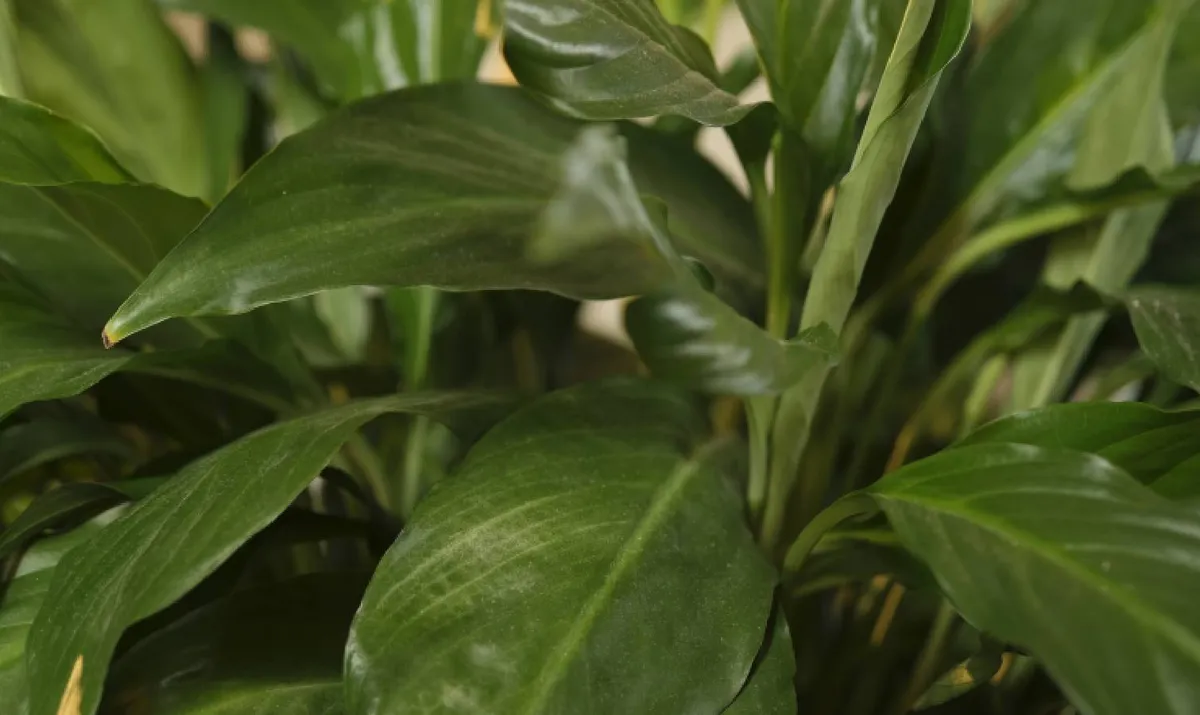
When exposed to too much direct sun, leaves curl inward to reduce the surface area getting hit by intense light. This protects leaf tissue from sun damage, but the plant suffers overall. You'll also notice bleached patches or brown spots on leaves alongside curling.
South and west-facing windows deliver the most intense afternoon sun that's particularly harmful. Even a few hours of direct exposure daily causes progressive damage.
Peace lilies thrive in bright indirect light, meaning plenty of ambient brightness without direct sun rays hitting the leaves. Place them near east-facing windows that get gentle morning light, or several feet back from south or west-facing windows.
If your peace lily sits in a window receiving direct afternoon sun, move it to a shadier location immediately. Filtered light through sheer curtains works well, as does placing the plant 3-4 feet away from bright windows.
3. Increase humidity around the plant
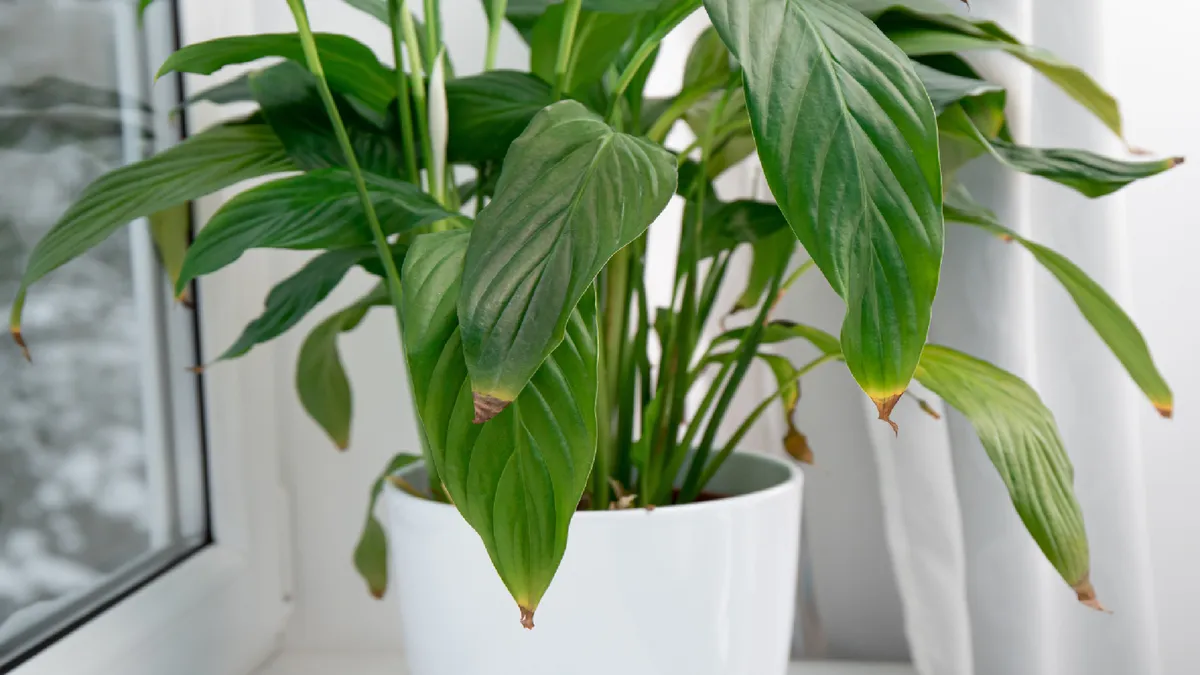
Low humidity causes peace lily leaves to curl as the plant tries to reduce moisture loss. Indoor air, especially during winter when heating runs or summer when AC removes moisture, often has humidity levels far below what peace lilies prefer.
Increasing humidity around your peace lily prevents moisture from evaporating too quickly through leaves. The plant doesn't need to curl leaves defensively when air moisture is adequate.
The simplest solution is moving your peace lily to naturally humid rooms like bathrooms or kitchens where steam from showers and cooking raises moisture levels. This requires zero extra effort.
Alternatively, you can create humidity using a pebble tray. Fill a shallow tray with pebbles, add water just below the top of the pebbles, then set your pot on top.
Grouping multiple plants together also works. Plants release moisture through transpiration, and clustered plants create a more humid environment than isolated ones.

Follow Tom's Guide on Google News and add us as a preferred source to get our up-to-date news, analysis, and reviews in your feeds. Make sure to click the Follow button!
More from Tom's Guide