




With summer fast approaching, there's nothing more satisfying than having a lush, green lawn to enjoy, especially if you're hosting backyard gatherings.
And while you might have taken steps to prepare your lawn during the winter months, the cold snap can affect the growth of your grass. This is because turfgrass usually goes into a dormant state in order to conserve energy and survive winter temperatures. This essential process effectively halts growth until the weather becomes warmer.
But if you want to ensure a healthy, greener lawn just in time for summer, you'll need to do this one critical gardening task in May. In fact, doing this can make all the difference to the overall appearance of your lawn. So what is this key job?
Don't forget to scarify your lawn in May

Essentially, scarification involves tearing up the top layer of soil to remove dead grass, heavy thatch, moss, and other debris that have built up on your lawn. This is similar to the process of dethatching, that aims to remove the thatch layer that builds up between the soil and the lower parts of the grass .
The key difference here is that scarifying is a more intense process that gets further deep into the ground, cutting grooves into the soil to remove moss and other build-up. This also allows adequate aeration to the soil.
And while a thin layer of thatch benefits grass, too much creates a barrier that prevents water and nutrients from reaching the roots, effectively suffocating the lawn.
What’s more, this can cause your lawn to become spongy and prone to disease, ultimately ruining your lush, healthy grass.
Think of scarification as a deep cleansing process for your lawn. This allows the grass to "breathe" again, helping the spread of healthy development by allowing fresh air, water, and essential nutrients to enter the soil and be better absorbed.
May is a crucial time for your lawn, particularly if you have warm-season grasses.
After the dormant winter, the grass enters its growth phase, making it a critical time for the root zone to receive oxygen, water, and vital nutrients.
In addition, May is when the soil in your yard will have warmed enough to encourage active root development — making this the perfect opportunity to tend to your lawn and help it thrive. What’s more, if your lawn has been compacted with dead grass, thatch or other debris, it will be unable to absorb vital nutrients — preventing it from reaching its full potential.

How to scarify your lawn
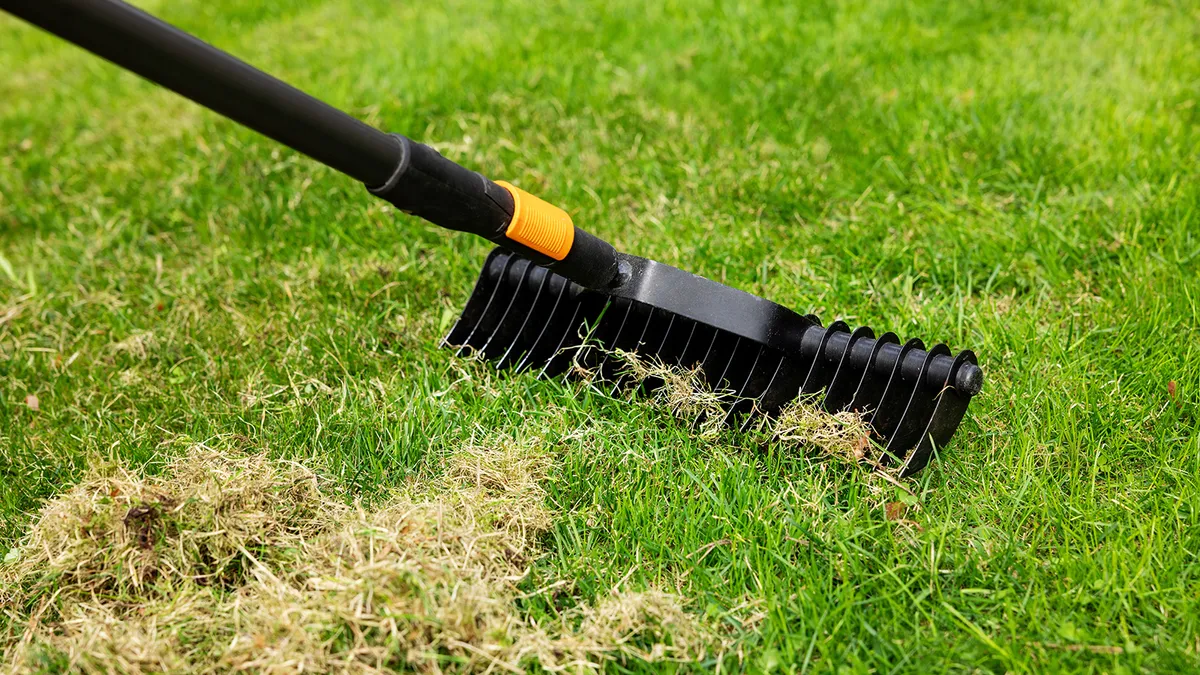
To do this crucial job, you’ll need to have the right tools. Be sure to have the best gardening gloves, a lawn mower, a leaf rake, a scarifier (for larger lawns), or a springbok rake for smaller yards.
First, gardening experts advise watering your lawn a few days before scarifying. This is because watering the lawn prevents the soil from drying out, which can cause the turf to tear during the process. Next, you’ll need to lower your mower's cutting height to cut your grass short, aiming for a length of approximately 2-3cm. This allows for the blades to reach the debris properly without obstruction.
Use a scarifying tool or a springbok rake, depending on your lawn's size, to start removing heavy moss and thatch. Move the tool steadily across the lawn, allowing the blades or tines to lift the debris. For best results, it’s recommended to work in one direction, but if the thatch is particularly heavy, repeat the process at a slight angle.
Once you’ve finished, you’ll need to immediately collect the excess debris with a sturdy leaf rake. Try not to leave it on the lawn for too long, as this will block light, air, and nutrients — defeating the purpose.
Don’t forget to seed and feed the grass afterwards to give it a better chance to thrive. Spread grass seed over patches and apply a seasonal fertilizer to give it that healthy boost for the summer.
So if you want lush grass this season, you’d better get out and do this crucial job before it’s too late. For more top tips on getting a greener lawn, check out these 11 secrets to a lawn that’s greener than your neighbor's and 7 budget hacks for a stunning green lawn.

Follow Tom's Guide on Google News and add us as a preferred source to get our up-to-date news, analysis, and reviews in your feeds. Make sure to click the Follow button!
More from Tom's Guide

