







As an avid runner who loves racing, I’ve been testing the best carbon plate running shoes ever since the original Nike Vaporfly 4% launched. I’ve tried almost every super-shoe released since then by a major brand and know as well as anyone how much carbon shoes can help when it comes to running fast and setting PRs.
The lightweight, propulsive designs of plated shoes help you to run more efficiently so you can maintain your fastest speeds throughout races, and carbon shoes are the most technologically-advanced running shoes you can get.
They’re also the most expensive, however, and less durable and suitable for regular use than the best running shoes for training. That means you need to pick wisely when selecting your super-shoe, and my go-to racer right now is the Asics Metaspeed Sky Tokyo, which I rate as the fastest and best shoe for events of any distance.
The Metaspeed Sky Tokyo is not your only option though, and I've also rounded up our favorites across a range of brands and styles.

Nick Harris-Fry has been running for over a decade, during which time he’s logged PRs including 2:25:32 for the marathon and 15:30 for 5K. He’s always wearing carbon plate running shoes in his races to test their performance, and has tried almost every top super-shoe out there.
The best carbon plate running shoes you can buy right now
Why you can trust Tom's Guide Our writers and editors spend hours analyzing and reviewing products, services, and apps to help find what's best for you. Find out more about how we test, analyze, and rate.
Best carbon plate running shoes overall

I ran two marathon PRs in the Asics Metaspeed Sky Paris, the predecessor to the Metaspeed Sky Tokyo, and it has a claim for being my favorite racing shoe of all-time.
That means when I say that the Metaspeed Sky Tokyo is a significant upgrade on the Sky Paris, you know it's a special shoe.
The new midsole setup now includes a layer of FF Leap foam, which is Asics's lightest and springiest material, and it improves the ride of the Metaspeed Sky Tokyo to make it more comfortable for long events and faster over any distance.
In my testing of the Metaspeed Sky Tokyo I've now run my fastest half marathon and a 2:24 marathon, and it's become my go-to racer for my key events.
It's one of three great Asics racers available right now, and some runners might prefer the softer and lighter Asics Metaspeed Ray, but it's more expensive and less stable than the Metaspeed Sky Tokyo, which I think is a better bet for most runners.
- Read our full Asics Metaspeed Sky Tokyo review
Best Nike carbon plate running shoes
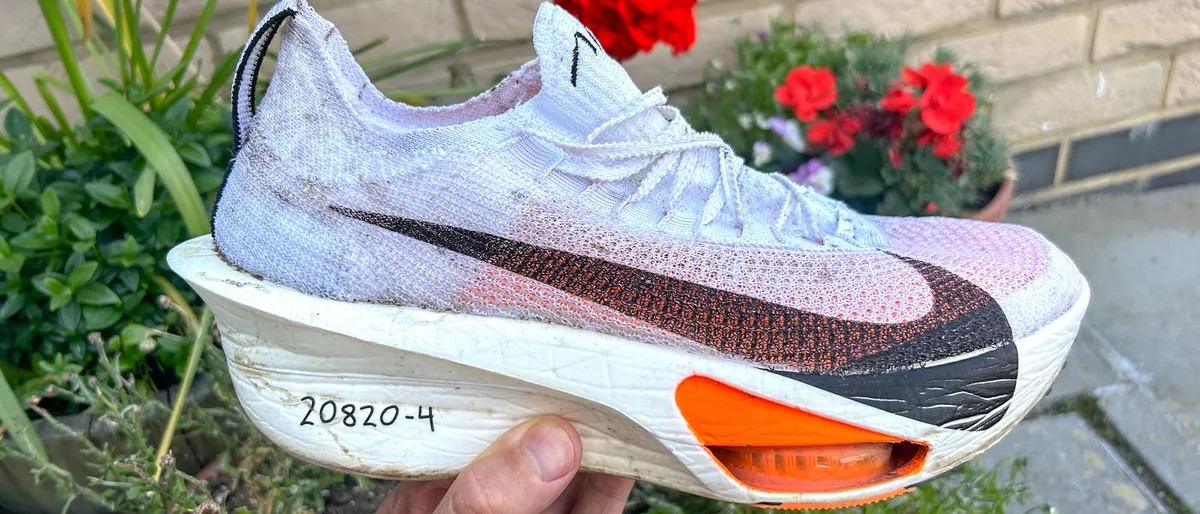
The Nike Alphafly 3 is the shoe that Kelvin Kiptum used when setting the world record at the Chicago Marathon 2023 and a strong contender for the title of the best carbon racing shoe overall thanks to its incredibly propulsive ride, which is powered by a tall stack of bouncy ZoomX foam and a full length carbon plate.
I've raced various distances in the Alphafly, and clocked over 80 miles in the shoe in total including several hard and long training runs, and it’s outstanding. It saves your legs on long, hard runs, while being light and nimble enough to help you speed through short races and interval sessions.
It's one of the older carbon shoes on the market, so it seems likely that Nike will launch a new version of the Alphafly at some point in 2026. I'd like to see the Alphafly 4 get lighter, but the Alphafly 3 will surely remain a top option and could start to appear in sales more regularly.
- Read our full Nike Alphafly 3 review
Best Adidas carbon plate running shoes

The Adios Pro 4 is not actually the top racing shoe in the Adidas range, with the Adidas Adizero Adios Pro Evo 2 being the shoe the brand's elites often race in. However, the Pro Evo 2 is very expensive, not particular durable, and didn't live up to its price tag during my testing, so the Adios Pro 4 is the shoe I'd pick out for amateur runners of all levels.
It's still an impressively fast shoe for races of any distance, with a propulsive ride powered by the carbon-infused energy rods in the midsole, which act like a carbon plate in stabilizing the bouncy Lightstrike Pro foam and adding punch to the ride of the shoe.
It's my favorite Adidas racer yet, with a lighter and faster design than the Adios Pro 3, and notably better grip than the Pro Evo 2. It's not the most stable shoe, but carbon plate racers rarely are, and it's been supportive enough for long, fast runs for me.
I'd look out for the fit of the shoe, however, which can be a little tight around the toes. If you're looking for a marathon racing shoe in particular this will be a concern, so it might be worth going up half a size if you often have trouble with shoes rubbing your toes.
- Read our full Adidas Adizero Adios Pro 4
Best On Running carbon plate running shoe

If you're looking for a comfortable, stable marathon shoe, the Cloudboom Strike 2 has got you covered. It's fast, with a bouncy, natural feel thanks to its more subtle ride than other carbon-plate running shoes.
In testing, we found that the Cloudboom Strike 2 fit well. It was a little tighter around the toes than other On shoes we've tested, but this is common in running shoes. Plus, its upper allows you to adjust the fit, which is beneficial considering some people find other On shoes (for example, their LightSpray shoes) more difficult to get on.
The Cloudboom Strike 2's dual-density midsole uses two layers of the brand’s springy PEBA-based Helion HF foam that sandwich a curved carbon plate to create what the brand calls a Speedboard.
This would be pretty standard for a shoe of this kind, but what makes the Cloudboom Strike 2 stand out is its CloudTec Sphere geometry. This means that channels have been cut into the midsole to increase the rebound you get from the foam. This gives the shoe a subtle, bouncy yet more natural feel than super high-stack running shoes.
While the Cloudboom Strike 2 is fast, it does not feel quite as fast as other carbon-plate running shoes, for example the Asics Metaspeed Sky Tokyo.
With this being said, it is very well balanced and feels better at lower paces than some other shoes. Additionally, it's a good option for fast runs on light trails due to its firmer sole and lower drop than some rivals.
So, if you're looking for the absolute fastest running shoe on the market, then the On Cloudboom Strike 2 will not suit you. However, if you value stability and comfort in your racing shoe, as well as preferring a more natural ride, then the Cloudboom Strike 2 is a great option for you.
- Read our full On Cloudboom Strike 2 review
Best Brooks carbon plate running shoes

Brooks took longer than most brands to release a top-notch carbon racer, with the early models of the Hyperion Elite lacking the propulsive ride of the best super-shoes.
The brand is making up for lost time now though, having launched the Hyperion Elite 4 PB and Hyperion Elite 5 in 2025, with both shoes being excellent racing options.
I rate the Hyperion Elite 5 a little more highly than its predecessor thanks to its slightly lighter and springier design. The DNA Gold foam in the midsole is a PEBA material that offers a lot of energy return, aided by the carbon plate.
The 'bubbles' on the sides of the midfoot allow Brooks to carve out some foam and reduce weight without making the Hyperion Elite 5 too unstable, and it has quite a natural and forgiving ride for a carbon plate racer, which might make it more suitable for those new to super-shoes.
While I enjoyed using the shoe for several workouts and a 10K race, I rate a couple of shoes as faster than the Hyperion Elite 5, but it's Brooks' best carbon plate running shoe yet and a more than capable performer.
- Read our full Brooks Hyperion Elite 5
Best carbon plate running shoes for 5-10K

The Mizuno Hyperwarp Pure pairs its Enerzy XP PEBA foam midsole with an astonishingly low 5oz weight (in a US men's 9.5) to deliver a ride that feels both featherlight and powerfully responsive. This combination creates an incredibly lightweight shoe that's perfect for 5K and 10K distances.
The Hyperwarp Pure's midsole is made entirely of Mizuno's Enerzy XP PEBA foam, with a full-length carbon plate running through it. It also has a forefoot rocker to push you onto your toes. I'll admit that I haven't been very impressed with lower-stack shows in the past, but the Mizuno Hyperwarp Pure has.
The ride is fluid and fast, moving you from your heel or midfoot onto your toes. I still felt the benefit of the rocker, despite the fact that it is a low-drop shoe. It's super lightweight, with a nimble and aggressive feel that still doesn't sacrifice any comfort.
Plus, its monofilament woven upper is very thin and breathable. It isn't necessarily built for comfort, but despite this, I had no problems with hot spots or rubbing during testing, and my foot was held securely by it during fast runs.
During testing, I was pleasantly surprised at how good the Hyperwarp Pure feels when holding fast paces for longer stints. During the six hard workouts I completed in the shoe — including track sessions with short reps, a tempo 10K, and a 12-mile road workout — it held up incredibly well, no matter the pace.
One thing to keep in mind is that the Hyperwarp Pure can be a little snug when it comes to length. I'm usually between sizes and opted for the smaller one, but on reflection, the larger size would have been the better option. In general, your normal size should be fine, but if you (like me) find yourself between sizes, go for the bigger one.
If you prefer a high-stack shoe, then the Hyperwarp Pure is likely not for you. But, if you want a super-lightweight shoe that gives you a grounded, more connected feel than its more cushioned competitors, then it's a great option.
- Read our full Mizuno Hyperwarp Pure review
Best New Balance carbon plate running shoes

New Balance's flagship racing shoe has changed a lot over the five generations to date, and the changes made to the SC Elite v5 make it lighter and more aggressive than its predecessor, and the brand's best racer yet in my opinion.
The midsole is made from a springy PEBA foam and has a sharper rocker than on past models, which creates a faster and more propulsive toe-off, aided by the carbon plate.
While it's not as wide and comfortable as its predecessor, the New Balance SC Elite v4, the Elite v5 is straight-up faster, especially for shorter events like 5K and 10K races.
For me, the shoe lacks some of the dynamism of my favorite racers, but the Elite v5 is certainly a quick shoe you can smash your PRs in, and pairs well with New Balance's trainers like the impressive Rebel v5.
- Read our full New Balance SC Elite v5 review
Best Hoka carbon plate running shoes

Hoka was one of the first brands after Nike to make a carbon plate running shoe, and while its early attempts at super-shoes missed the mark, it now has two excellent options in the Hoka Rocket X3 and Cielo X1 3.0.
The Hoka Cielo X1 3.0 is my preferred pick of the pair, being lighter and bouncier than the Rocket X3, and having a more aggressive rocker shape that helps to push you onto your toes with each stride.
That said, the Rocket X3 is a more stable and supportive shoe, and very light and quick itself, so some runners might prefer it to the wilder ride of the Cielo X1 3.0
The Cielo X1 3.0 is the lightest Hoka racer yet and has a couple of key updates on the Cielo X1 2.0, being more stable and also offering better grip, as well as slightly softer ride. If you love bouncy racing shoes, then this is one of the springiest you can get from any brand.
- Read our full Hoka Cielo X1 3.0 review
Best Saucony carbon plate running shoes

The Saucony Endorphin Elite 3 is the latest in the Endorphin Elite series, and it delivers a ride that is both plush and exhilarating, thanks to its notably soft and springy midsole.
As with the Saucony Endorphin Elite 2, the midsole of the Endorphin Elite 3 is made from Saucony's IncrediRun foam. I was used to the extremely soft ride feel of this foam thanks to training extensively in the Endorphin Elite 2.
However, in the Endorphin Elite 3, the IncrediFoam provides a level of sink and bounce not seen in the previous model. It's an odd, if enjoyable sensation which propels your foot forwards. As a result of the extra padding, the Endorphin Elite 3 is also a little heavier than its predecessor, coming in at 7.9 ounces for a men's US size 10 shoe. So, if you prioritize lightness over cushioning, this is likely not the shoe for you.
The softness of the cushioning also meant that I had to be careful taking turns at speed, and it's not particularly suited to short runs. However, they are great for marathons and long, hard training runs — my legs always felt fresh the day after training in them, even if it was a difficult session.
So, if you're looking for a super-cushioned, extra-bouncy shoe for long-distance running, consider the Saucony Endorphin Elite 3. However, if you proritize a super-light shoe for quick, fast runs, or more stability, you may want to look elsewhere.
- Read our full Saucony Endorphin Elite 3 review
Also tested

The Brooks Hyperion Max 3 is a max-cushioned shoe with a nylon plate that offers a bouncy ride. While it's super comfortable and works well for long runs, it doesn't have the speed of other plated shoes, and it's pretty pricey, too.
Read our full Brooks Hyperion Max 3 review

The Saucony Endorphin Speed 5 is a super versatile running shoe. It offers a fast ride for races and workouts, while being fairly comfortable on easy runs. However, we have found other running shoes to be more comfortable, and it has a relatively high price tag.
Read our full Saucony Endorphin Speed 5 review

The New Balance SC Elite v5 has a stiff, propulsive carbon plate which, paired with springy midsole foam, makes it a super-fast running shoe. However, there are some rivals that are faster, as well as lighter.
Read our full New Balance SC Elite v5 review

The Hoka Rocket X3 is more supportive and comfortable than most carbon plate super-shoes, while still being speedy and lightweight. However, it's not as propulsive as other racers, and it's not super fast, either.
Read our full Hoka Rocket X3 review

The Hoka Skyward X2 offers a comfortable and fun ride with a bouncy midsole design that makes it ideal for easy and long training runs. However, it's pretty expensive, and it isn't very suitable for faster runs.
Read our full Hoka Skyward X2 review

The Nike Zoom Fly 6 is a comfortable but fast training shoe that should be able to handle the majority of your training runs. You can even use it on race day, too. Its major downside is that it's on the heavier side when compared to other plated shoes.
Read our full Nike Zoom Fly 6 review
How I test the best carbon plate running shoes
It’s quite simple really, I run in them! All of the shoes above have been put through their paces on a number of different sessions — from speedier runs around the track, to longer, slower, tempo sessions on the sidewalk.
I’ve also worn most of them for races of different lengths — including faster 5K’s, longer half-marathons and the odd marathon to test how they make me run and feel on race day.
When testing running shoes, I look at the fit and feel of the shoe, as well as stand-out features, like laces that are designed to stay tight as you move (because who wants to stop and re-tie their shoe mid-race?) and cushioning around the Achilles.
How to choose the best carbon plate running shoes for you
When it comes to choosing the best carbon plate running shoes for you, there are a few things to consider. First, the fit. Like the best sports bras or best running leggings, the best running shoe for you will fit your foot comfortably and not rub, pinch, or slip as you run. Some brands are likely to fit your foot better than others, so it’s good to try them before investing. If you have a wider foot then take care when picking a shoe, as many racers are quite narrow — the New Balance SuperComp Elite v4 is one carbon shoe that does have a wider fit.
Next up, you’ll want to think about the weight of the shoe, and the event you’re planning to race. Some carbon shoes are built to be especially bouncy and comfortable over marathon distance, like the Nike Alphafly, which makes them a bit heavier than others, and less well-suited to 5K or 10K events. If you mainly stick to short distances then very light carbon shoes like the Nike Vaporfly will be better.
Finally, the price of the shoes. There’s no question that carbon plates come at a price. If you’re not able to spend upwards of $200 on a pair of running shoes that you can’t do the majority of your training in, it might be worth looking for older models in the sales, with the Adidas Adios Pro 3 and Saucony Endorphin Pro 3 being two carbon shoes that are often discounted in our experience.
FAQs
How to look after your carbon plate running shoe
Unlike your day-to-day running shoes, carbon plate running shoes have a much shorter shelf life. Most shoe retailers say they'll last a few hundred miles, but the softer, bouncier foams, and the carbon plates mean you'll probably only get a couple of races out of your carbon plate shoes.
It's important to note that these shoes aren't for a gentle jog in the park, they are for road racing and striving for a PR. You'll probably want to do a couple of speed sessions and perhaps a long run or two in your carbon plate running shoes before the race, but that's about it.
Of course, this does make things a little more expensive, but you're better to train in an everyday pair of running shoes, and save these for the big day to extend the life of your carbon plate shoes.
Are carbon plate running shoes worth it?
How much of a difference can a pair of running shoes really make, we hear you ask. According to a study published in the journal Sports Medicine, carbon plate running shoes may improve running economy by 3-4.2%. While this might not sound like a lot, this is linked to a 2% improvement in finish time, which is nearly 5 minutes off a 4-hour marathon.
How long do carbon plate running shoes last?
One of the biggest drawbacks when it comes to carbon plate running shoes is that they won't last as long as your everyday running shoes, mostly because they are built to be lightweight and fast rather than durable, so they have minimal uppers and outsoles.
That said, you will still get several hundred miles of running out of most carbon shoes, even if they're only that absolute best for racing for the first 200 miles or so of use in my experience.
Are carbon plate running shoes legal?
Yes, at the moment, the World Athletics rules state that running shoes with a carbon fiber plate are still legal, but they have to abide by a couple of rules to be used in road races. First, they can’t have a stack height of over 40mm, and second, they can’t contain more than one carbon plate in the midsole.
All brands have a racing option that sticks to these guidelines for their elite runners to use, but many now also have a rule-breaker in their line-up, like the Adidas Prime X2 Strung, which has a 50mm stack height at the heel and two carbon plates in the midsole. This would make it illegal for elites to use in races, but the rules don’t really apply to amateurs not planning on hitting the podium, so it’s more a personal choice whether you use an ‘illegal’ shoe or not.
Note that the rules are different for track races, where the stack height limit is 20mm for shorter events up to 800m, and 25mm for races above that distance, so super-shoes cannot be used — lightweight spikes or racing flats are what runners use instead. From November 2024 the rules will be simplified to make the limit 20mm for all events on the track.
