Turntables — record players, whatever you call them — are enjoying a major revival right now. Vinyl is on the up, has been for years, and I don't see any signs of it stopping soon. After wanting a record player for about 10 years, I finally got one last month.
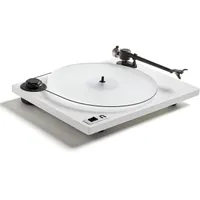
I've got the U-Turn Orbit, one of the best turntables. Although it's been love at first sight, I've still learned a few hard lessons — don't make the same mistakes as me.
If you're thinking of getting your first record player too, you'll definitely want to make sure you know these tips before you jump into the deep end.
Phono pre-amp, power, passive... What?

When you're just branching out into the world of record players, all the technical jargon can be super overwhelming. Trust me, I was overwhelmed at first, too. Let me give you a really simplified breakdown.
All turntables need power in order to operate. This is true of headphones, earbuds, and speakers. While record players need a mains connection (as in, the plug you stick in your power outlet), they also need something called a phono pre-amp (also called a phono stage).
Essentially, a phono pre-amp is the bit of tech that ensures sound actually comes out of your speakers when your turntable spins. Imagine it as the ligaments in between your joints that help your muscles and bones move.
A lot of modern record players have a phono pre-amp built in, but you must check before purchasing. If your record player doesn't have a phono pre-amp, you'll need to buy a separate device, which can often go for upwards of $300.
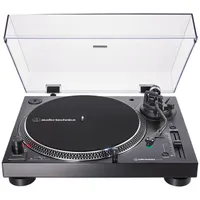
If you're a newbie, I would recommend buying a record player with a built-in phono pre-amp. I have the U-turn Orbit Special and love it, but I'd also recommend the lauded Audio-Technica LP120XUSB for newbies.
Invest in the turntable, not the speakers
Imagine, if you will, spending nearly $500 on a high-quality turntable, like the U-turn Orbit Special. Now imagine throwing an extra $1,500 at some premium speakers, like the KEF LSX II. Makes you wince, doesn't it?
You'll be happy to know that you don't need super-premium high-end wool-mesh-deoxygenized-copper-dual-triple-quadruple-quintuple-driver-bass-woofer-silk-tweeter speakers to get the best sound out of your new record player. Although whatever Biblical monster I've made up there does sound pretty cool.
As long as you've got a high-quality record player, you can get away with cheap speakers. Trust me on this, and also let me explain.
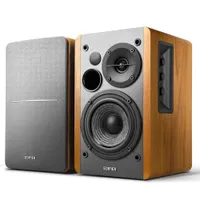
To go with my $400+ turntable, I use the fantastic, 4.5-star-rated Edifier R1280T. These speakers are just $149 and pack a major punch. With rich, warm bass and melodic, balanced mids and treble, I can't see myself using any other bookshelf speakers.
I've tested even cheaper speakers — the Majority D40X ($99) — and while I've not used them with my turntable, they have an aux input, and I'm sure they'd sound great.

But why? Why don't you need the "best of the best" speakers, if you've just invested in the "best of the best" turntable?
This is a very simplified version of events, but it's basically all down to the signal chain. Imagine the game "Broken telephone". If the first person majorly mispronounces their designated phrase, then it's going to be a garbled mess by the time it makes its way to the final player.
Now imagine that the first person whispers the phrase perfectly. The second player knows exactly what to say to the next whisperer — and so on and so forth.
The turntable is the first link in a signal chain. If you have the best possible initial signal, you get the best possible final signal.
Now, I'm not saying you should buy garbage speakers that sound like drunk cats singing the National Anthem. Of course, you should still buy good speakers, but you don't need to buy $1,500 premium speakers if you've got a very good turntable.
Sure, those mythical $1,500 speakers will make your music sound even better. But think of these as more of an aspiration than a necessity. Trust me, you'll be fine with your $150 Edifiers — I sure am.
Clean the needle!

Yeah, I know this one's kind of gross, but if you're a beginner, don't fall into this trap. You need to clean both your turntable needle and the vinyl itself. Dust obviously collects in the vinyl's grooves and then gets picked up by the needle.
Dust on the needle will majorly warp the sound and can damage your vinyls in the long run. I've found a few products you might want to check out to prevent this issue, and we've also got a list of the best beginner turntable accessories, should you desire to check out more.

Follow Tom's Guide on Google News and add us as a preferred source to get our up-to-date news, analysis, and reviews in your feeds.
More from Tom's Guide
- U-turn Orbit Special review
- This new turntable makes listening to vinyl as simple as CDs — and it doesn't break the bank
- I tested this record player for a month — and it reminds me why I love vinyl in the first place