Every time a new AI model launches, the focus shifts to exciting features like more human-like voices, longer reasoning chains and lifelike image quality. But the features that actually make your day easier are usually the ones quietly baked in; the tools buried a few taps deep or in dropdown menus most users forget exist.
As a power user on nearly every AI available, I looked to the top AI assistants like ChatGPT, Gemini, Claude and NotebookLM to surface the most underrated AI features that are exceptional for everyday use. Here’s a look at what each one can do and how they can meaningfully save you time, make everyday tasks smoother and maybe even reduce a little stress.
1. Gemini Canvas
Best for: messy tasks, writing, coding, planning and “living documents”
ChatGPT tends to get the spotlight when people talk about “Canvas,” but in actual daily use, Gemini Canvas is often the more practical and reliable tool — especially if you work in Google Workspace. Instead of editing inside a chat window, Gemini opens a full Google Doc–style canvas where you and the AI can work together in the same document.
This solves one of the biggest frustrations with traditional chat-based editing: the back-and-forth copy/paste shuffle. With Gemini Canvas, you can see exactly what changed, keep your original text visible, and avoid the “AI overwrote my entire draft” problem that still happens in other tools.
I’ve found it especially helpful for writing, coding and structural edits, because it maintains a transparent revision process. Nothing disappears. Nothing gets bulldozed. Every change feels intentional and you can see what's happening in real-time.
You can use Gemini Canvas to:
- Restructure a messy outline
- Merge two story drafts
- Create comparison tables
- Rewrite sections in different tones
- Track edits between versions
Bottom line: If you write, plan or brainstorm even occasionally, Gemini Canvas feels like the closest thing to a real-time AI collaborator — and one of the most underused productivity features in any AI app right now.
2. Claude Projects

Best for: long-term creative or work projects
Most people still use AI as a one-off search box, typing a prompt, getting an answer and moving on. Claude Projects is the opposite of that mindset. It gives you a dedicated workspace where you can store documents, instructions, tone guidelines and reference material — and Claude will pull from all of it whenever you ask.
What makes Projects stand out is how it turns Claude into a persistent research assistant. Instead of re-explaining the same context every time you start a new session, Claude remembers your files, your goals and your working style. It’s the closest thing to giving an AI an actual “brief” and having it stay on task.
You can use Claude Projects to store:
- A working outline
- Multiple longform documents
- A style guide
- A character list or cast sheet
Claude automatically references everything in the project without you repeating instructions or re-uploading material.
Bottom line: If you’re juggling multi-step work — novel chapters, research, reports, or long-term planning — Claude Projects is a genuine game-changer. It keeps your entire workflow organized and lets you pick up exactly where you left off.
3. Gemini App Extensions

Best for: pulling info from Gmail, Docs, Calendar and Maps
Gemini App Extensions are one of Google’s most practical AI features, yet one of the least discussed. Extensions allow Gemini to plug directly into your Google apps (Gmail, Drive, Docs, Calendar, Maps, YouTube and more), giving it permission to retrieve information, summarize content, draft replies and perform tasks that usually require digging through multiple tabs.
With Gemini App extensions you can ask Gemini to pull everything together automatically. It’s not scraping or summarizing; it’s actually securely reading what’s in your Google Workspace data with your explicit permission and using it to answer questions with real accuracy.
Personally, I’ve used it to search my Gmail for an invoice from two years ago, pull data from a long-forgotten document buried within my Drive, summarize a dense, multi-message email thread I didn’t want to open, build a trip itinerary based on Maps results and travel times and even draft email replies using details pulled from a different doc entirely.
This feature is the ultimate time saver because Gemini seamlessly connects and responds faster than I could even begin to search through layers of folders manually.
You can use Gemini app extensions to:
- Search your Gmail
- Scan Docs and Sheets
- Pull data from Drive folders
- Check events in Calendar
- Look up locations in Maps
Bottom line: If you’re like me and already live inside Google’s ecosystem, Gemini App Extensions might be the single most useful AI feature you’re not using. It turns Gemini into a connected, context-aware assistant that can pull real information when you need it.
4. ChatGPT “Read Aloud” Mode

Best for: listening to documents, articles or summaries while multitasking
I am absolutely obsessed with this feature. It’s one OpenAI quietly added within the app. The “Read Aloud” button actually reads responses in a natural voice. But, perhaps even more useful, this feature allows ChatGPT to actually read long documents (even eBooks!).
Because it blends into the interface you may have missed it, but using it turns ChatGPT into a personal narrator you can listen to while driving, cleaning or cooking.
You can use ChatGPT Read Aloud to read:
- A dense technical explanation
- A long email I didn’t want to stare at
- A summary of a meeting transcript
- A set of step-by-step instructions for a home repair
Bottom line: This feature is wildly useful. If multitasking is your default state, this is quietly transformative.
5. NotebookLM “Discover Sources”
Best for: studying, research, and turning documents into an explainer guide
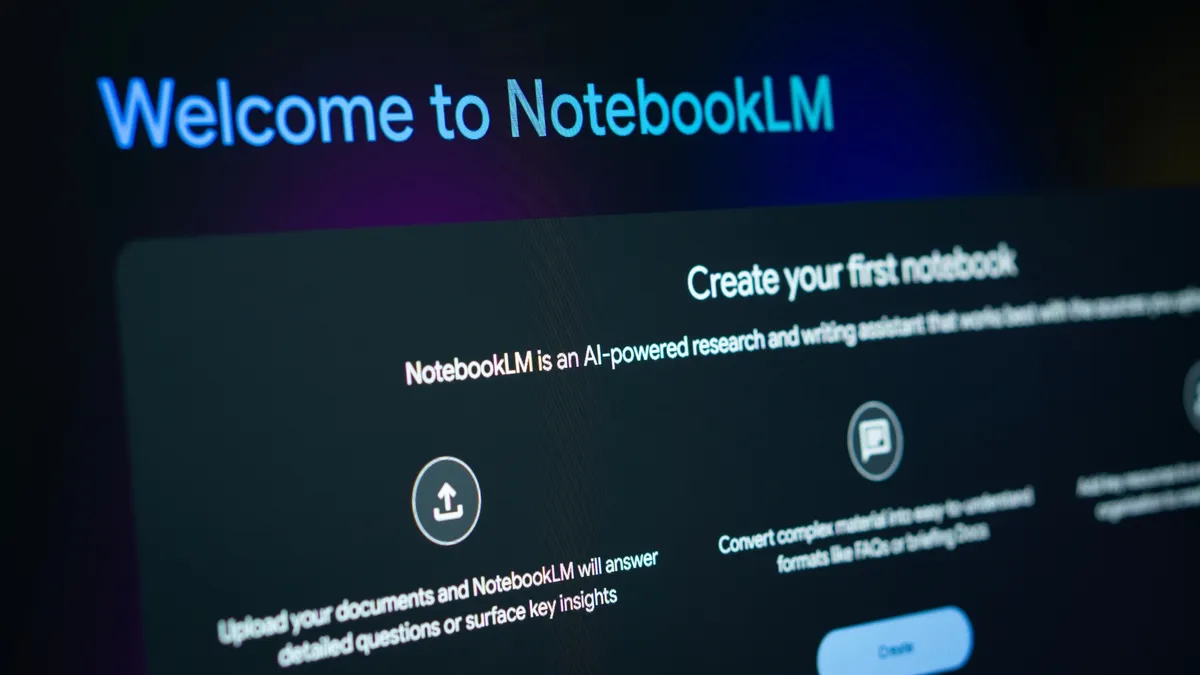
I’m a huge fan of NotebookLM. It remains one of Google’s most practical AI tools. The standout feature is how it creates a tailored workspace around your sources and can now search the web live. When you upload PDFs, Docs or notes, NotebookLM instantly analyzes them and builds a focused knowledge layer that the AI can pull from. It’s not training a new model, it’s simply restricting the AI to your material, which makes the answers far more accurate and personalized.
What’s wild to me is how useful NotebookLM is but it’s one of the least marketed AI tools from Google. It excels at turning complex material into clear summaries, flashcards and explanations.
You can use Google NotebookLM to:
- Create study guides
- Custom FAQ
- Podcasts
- Compiling key takeaways
- Develop quizzes
Bottom line: This is the best tool for anyone learning something new or breaking down dense material.
6. ChatGPT “Upload + Analyze” for screenshots

Best for: troubleshooting, decoding forms, shopping comparisons
ChatGPT’s image analysis (especially with screenshots) is one of its most powerful features. So instead of manually typing out confusing text or copying instructions from a PDF, you can simply snap a screenshot and let ChatGPT make sense of it.
I’ve used this feature to break down nearly everything that clutters modern life such as school forms, instruction manuals, bills and insurance statements, contracts and documents with fine print, error messages on device settings and even for side-by-side product screenshots when I’m comparison shopping.
Because ChatGPT can read the image, extract the text and interpret the context, it’s often faster and clearer than searching for answers online or flipping through documentation.
You can ask ChatGPT to:
- Explain what a specific section of a form means
- Highlight terms that might require action
- Summarize confusing language in plain English
- Identify potential issues or missing information
- Provide step-by-step instructions based on what it sees
- Compare two product screenshots and tell you which one fits your needs
Bottom line: If you ever take screenshots to “look at this later,” ChatGPT can turn those images into immediate clarity. It’s one of the simplest, most underrated ways to use AI in daily life, and one of the biggest time-savers for parents, homeowners and anyone who hates deciphering forms.
7. Claude “Artifacts” mode

Best for: code, diagrams, tables and polished outputs
Artifacts create a separate, editable output pane for code, UI mockups, charts and formatted content. So many users think of Claude as an excellent writing tool, which it is, but overlook that it can help you build, too. With Artifacts, Claude turns into a lightweight design and coding tool for fast and effortless applications.
I use it to create functioning webpages, table templates, simple data visuals and PDFs.
Bottom line: If you ever need something visual or structured, this feature is far more powerful than most people realize. Plus, you can immediately share Artifacts with others who may want to add or edit to your work.
8. Gemini “Live” follow-up questions

Best for: real-time explanation and walk-through tasks
Gemini Live lets you talk conversationally with the model, including follow-up questions that stay tightly on topic. It can walk you through tasks efficiently and, in my opinion, has a much less annoying voice than ChatGPT Voice. I’ve used it to troubleshoot a router, understand interest rates, find egg substitutes in the middle of cooking and even help me better explain science concepts to my fifth grader.
Bottom line: It’s a real-time assistant with a human-like voice that can offer just about anything from recipe advice to walk you through complex chores like changing a tire.
9. ChatGPT “Memory” for Personal Preferences

Best for: small but meaningful daily conveniences
If you’re not using Memory with ChatGPT, you’re missing out on some seriously useful support. With Memory enabled, ChatGPT remembers your preferences, which could mean everything from writing style and topics of interest to constraints (like no serial comma or em dash).
People either don’t enable it or forget how powerful it can be. I keep it enabled so I don’t have to repeat myself. And, the more you use ChatGPT, the more it gets to know your style such as responses in bullet points rather than long paragraphs. Or, the tone and voice you prefer for each query.
Bottom line: ChatGPT Memory mode is a major time saver for those who use ChatGPT frequently.
10. NotebookLM “Audio Overviews”

Best for: listening to summaries instead of reading
As someone who juggles a lot, having documents read to me is a way I streamline my workflow. Thanks to NotebookLM, I can automatically turn any uploaded document into a podcast-style audio overview, complete with two AI narrators discussing the material conversationally. All I have to do is listen and I’ll get all the information about any document or email read to me.
This is a seriously underrated tool because it’s often hidden within the AI tool. If you’re mostly using NotebookLM for quizzes and research, you may miss it completely. But once you try it, it’s pretty addictive. I’ve used it to gain insights (even from documents I’ve already read), hear key arguments and just to get a conversational breakdown to hear the information expressed in a different way.
Bottom line: If you ask me, this is one of the most natural and engaging ways to absorb information quickly.
11. ChatGPT “Custom Instructions Remix”

Best for: instantly shifting tone, format or expertise on command
ChatGPT’s Custom Instructions have been around for a while, but the underrated part is how powerful they become when you temporarily remix them. You can toggle them on, adjust them for a specific session, or override them with a single line. I like that I don’t have to permanently change my settings to get a different tone, especially now that ChatGPT has new personalities.
Most people think Custom Instructions are “set it and forget it.” But remixes turn ChatGPT into a flexible expert who can change tone, skill level or formatting style instantly. I’ve used it to change priorities on a subject (accuracy over creativity) or to get short, tactical steps rather than long paragraphs.
Bottom line: This tiny feature can have a huge impact, especially if you switch between multiple writing styles or roles during the day. It's one of the fastest ways to get consistently better AI responses with almost zero effort.
The takeaway
As someone who tests AI for a living, I know there are a lot of AI tools available. But not all of them are useful and sometimes, the most helpful ones are the least advertised. Many times, they are hiding in plain sight behind features you may use all the time. .
From Gemini Canvas to Claude Projects to ChatGPT’s memory and screenshot analysis, these underrated features can quickly transform how you work, write, plan and problem-solve every day. Even better? Many of these game-changing tools are free. Give them a try and let me know what you think in the comments.
More from Tom's Guide
- ChatGPT gave me business advice with a Taylor Swift twist — and the results were shockingly smart
- I found 5 shockingly helpful uses for ChatGPT you haven't tried yet — and they all make my life easier
- Anthropic has pulled ahead of Gemini and ChatGPT with its new update — here's why
Follow Tom's Guide on Google News and add us as a preferred source to get our up-to-date news, analysis, and reviews in your feeds.