As a personal trainer, I tell everyone the same thing: you don’t have to overhaul your entire workout regimen to get leaner, stronger, or fitter as you age, but you might need to tweak it. For example, I am now in my mid-30s, and I care more about yoga, Pilates and mobility routines than ever before as my posture, strength and stability become even more important.
If you find your workouts need adjustment as you get older, it’s far from doom and gloom. Let me introduce you to the “2-2-2” or “2-workout-2-set” method — it could be a game-changer for how you build strength and muscle without burning out.
What is the 2-workout-2-set method?
I first heard about the 2-2-2 method deep diving into Alain Gonzalez’s YouTube video (via Men’s Health). He says there’s a better way to access gains after 40 without training like you’re still 20, and it will help you build muscle and strength and recover faster without burning out your joints.
You might be wondering why he specifically focuses on the 40-and-over category. Sarcopenia refers to age-related muscle mass and strength loss, which can impact how you move as you get older, affecting anything from posture to balance. It starts in your mid-30s and 40s, but accelerates over 50, so this is the time to focus on maintaining strength and muscle without impacting your joints.
The method involves two full-body workouts per week using two sets per exercise, focusing on compound exercises like squats, presses, pull-ups, or lunges, for example. These are the most efficient exercises as they target multiple major muscle groups, saving you time in the gym. The idea is to maximize mechanical tension by repeating efforts consistently close to failure.
What are the benefits of the 2-2-2 workout method?
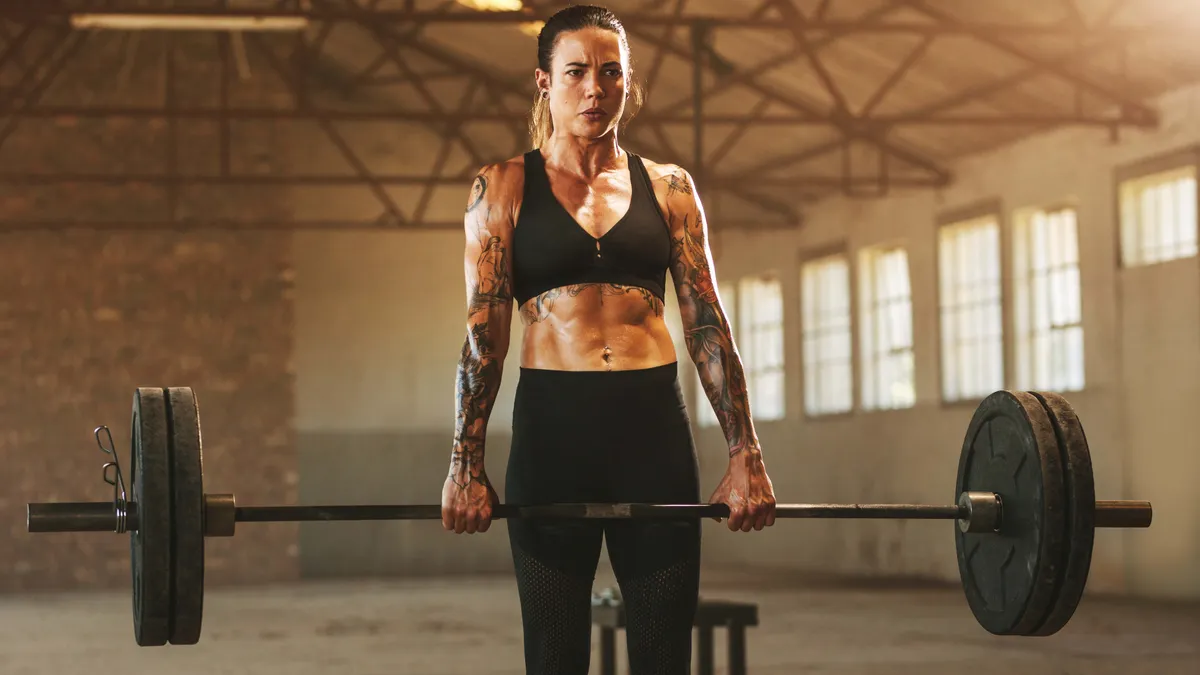
Two sets don’t seem like much per exercise, but you’ll be going hard and working close to failure, which means loading heavier than you might for three or four sets. And it’s research-backed, as my colleague reported with a study that suggests just two “direct” sets per muscle group could increase strength. And another piece of research suggests the "one-set rule” (just one “hard” set per move) could produce lean muscle mass growth.
In other words, science suggests that unlocking gains comes from direct loading intensity rather than endless hours of unstructured workouts. For that reason, also try to avoid training back-to-back and allow yourself a day or two (or three) to recover in between.
Just two workouts per week? Yep. Gonzalez references a further study that suggests training twice per week led to “superior hypertrophic outcomes to once per week” among participants.
That gives you more time to focus on recovery, which is where the muscles we’ve essentially broken down through exercise can repair and rebuild, helping them to grow and strengthen. Without recovery, you increase the likelihood of strain or injury.
Science suggests that unlocking gains comes from direct loading intensity.
High-quality, close-to-failure workouts can produce meaningful results, allowing you to train hard in each session without fatiguing. Gonzalez points to longevity as a huge benefit of training the 2-2-2 technique, as it can protect your joints, tendons and ligaments, allowing them to adapt and recover by spreading your volume out. These parts of your body are crucial for healthy aging.
How to program the 2-2-2 workout method
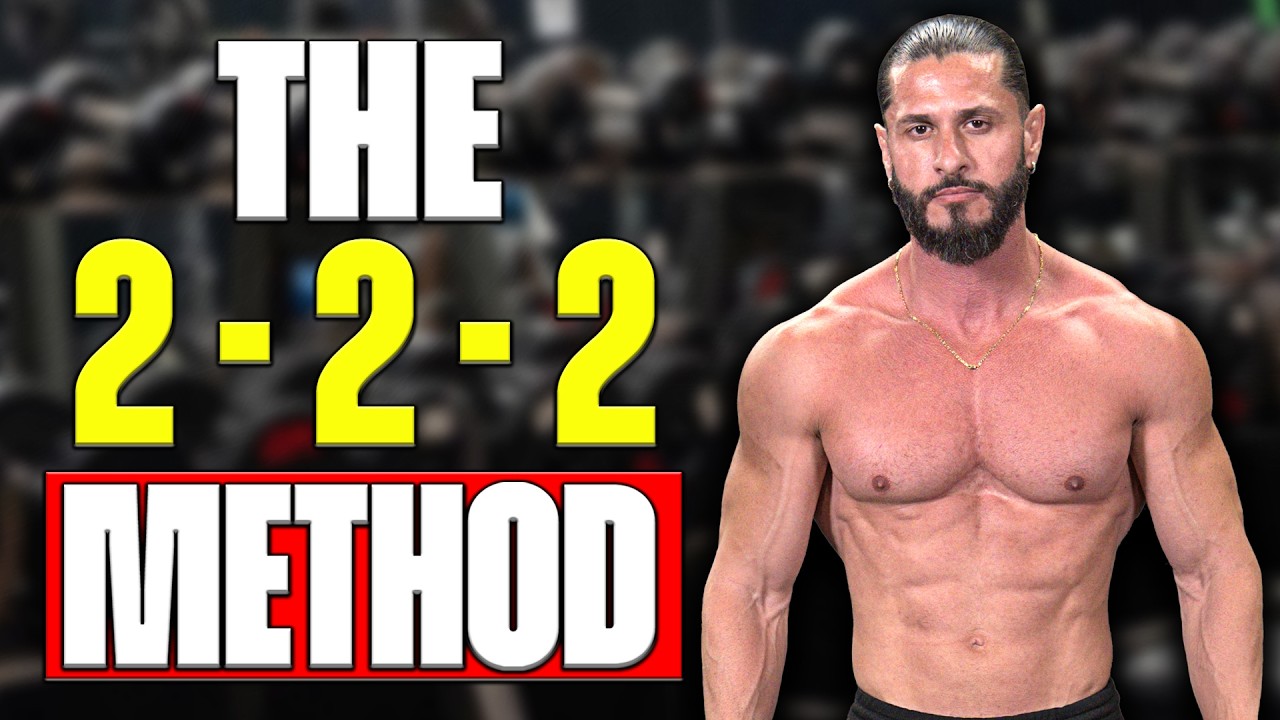
Try to focus on all the major muscle groups, including your back, chest, legs and core and stay structured with two workouts, A and B. Perform both A and B within the week but give yourself two to three days between training sessions so that you can benefit from muscular and neural recovery.
Gonzalez encourages four movement patterns: the squat pattern for your glutes and quads, the hinge for the posterior chain, a push pattern for the chest, triceps and shoulders and pull work for your biceps and back muscles. Frequency stays optimal but you hit the major muscle groups twice per week.
Gonzalez adds that he chooses to switch up the emphasis of his movement patterns.
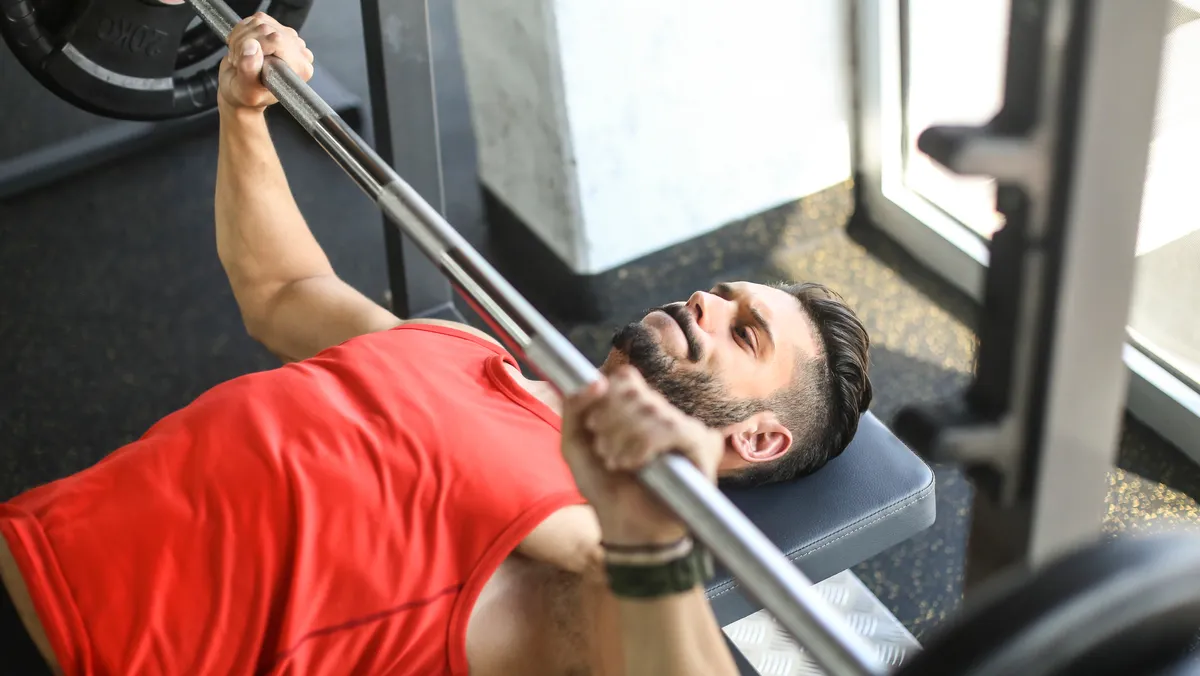
“For example, if my squat pattern in workout A is more knee extension dominant, then workout B will use a more hip dominant variation… as for pushing and pulling, my one non-negotiable rule is to alternate the plane of movement each session. If workout A focuses on horizontal pushing, for example, workout B will focus on vertical pushing.”
You can then throw in a few accessory movements at the end for the calves and delts, if you choose to.
For reps, focus on the six to 12 rep range. High reps and low load taps more into endurance training, whereas we want to focus on keeping tension where we want it and using effective volume rather than endless.
But how do you know you’re working close to failure? “You’ll know you’re there when your rep speed slows noticeably but your form and range of motion still hold,” Gonzalez says. If it feels easy, you’re not lifting heavy enough, so the last few reps before failure should feel like a real push. You only have two hard sets, so three to five minutes between sets is enough. For any isolation work, two minutes is enough to reset before you go again.
Gonzalez says experienced or trained lifters will benefit from this routine most, but doesn’t specify whether or not beginners should try it — we assume not. He also believes it's perfect for those with busy schedules who want to increase or maintain gains without spending hours in the gym.
More volume doesn't always mean more growth, so it pays to train smarter (and, in this case, harder).

Follow Tom's Guide on Google News and add us as a preferred source to get our up-to-date news, analysis, and reviews in your feeds.
More from Tom's Guide
- Forget running and swimming — study finds this sport adds 10 years to your life
- New study reveals cycling can reduce dementia risk by 88%
- Work out less and get better results — a new study says this is exactly how