







A poor dental routine can impact more than just your smile — it can have lasting effects on your heart and lung health, and even lead to pregnancy complications. Brushing and flossing are essential for reducing plaque and improving oral health. Together, they can help to prevent tooth decay and gum disease. However, many people skip flossing because the task can seem tedious or feel uncomfortable.
In recent years, water flossers have seen an increase of in-home use, and are becoming a more mainstream tool to improve flossing routines. But how does water flossing compare to old school dental string floss?
Water flossing vs. Dental string floss
Dental string floss as we know it has existed since the early 1800s when a dentist from New Orleans began recommending patients run waxen silk thread between their teeth. Despite its becoming commercially available in the 1880s, string floss still took some time to catch on. Nylon floss hit store shelves during World War II, but it still took well into the 70s for flossing to become a significant part of daily dental routines.
Flossing with dental string allows you to properly clean areas of your teeth that a toothbrush and toothpaste alone cannot reach. Deep in between the crevices of your teeth and right at the gum line, where food and plaque can become lodged and cause dental decay and disease.
String floss isn’t without its issues, though. Stringed floss can cause small cuts to the gums or be difficult to squeeze between teeth that are closer together. It can also be difficult to use and ineffective when braces and other orthodontics are involved.
Water flossing can help alleviate some of these problems when it is a part of a healthy oral care routine. Water flossers spray a stream of water between the teeth and gum line, forcing away plaque and food debris with a pressurized water spray.
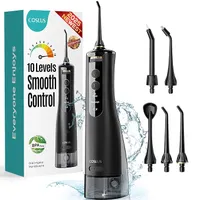
A more recent technical advancement in dental hygiene, water flossers consist of a water reservoir, a handheld nozzle, and a pump that creates a flow of pressurized water that can be typically be adjusted for gentle or rigorous cleaning. They more dexterity friendly than their stringed counterparts, and just by the sheer nature of water these flossers are better suited at a getting into harder to reach areas where plaque likes to hide.
Water flossers also overcome the obstacles presented by orthodontic devices like braces and dental implants. The water flow can easily reach the tiny gaps to flush out debris and plaque build up, and there are even some versions of water flossers that feature swappable nozzles.
The downside to water flossers is that they can be a bit cumbersome to take along for travel, but it is an area that has also seen improvements and innovation in recent years. They're also much more expensive than dental floss.
The best of both worlds
There are benefits and drawbacks to both string and water flossers alike, but recent studies suggest that a hybrid solution might be the best approach for your oral hygiene routine.
A water flosser can be used to more precisely target plaque and be customized to your mouth, but dental floss is still very effective, and is much less expensive and more portable.
Combining brushing with a fluoride toothpaste, flossing with dental string, and finishing off with a water flosser can significantly improve your at-home dental plaque removal efforts for a well-rounded and comprehensive oral care routine.
