Meet my Dad: He has mild to moderate hearing loss, and the answer is a rather obvious-looking hearing aid. While the technology does indeed help with his hearing, it does look like he could tune into the local radio station if he turned his head to the right.
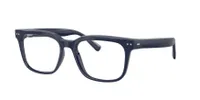
So as the smart glasses guy on the Tom’s Guide team, I had an idea: Nuance Audio Hearing Glasses. These specs are an all-in-one hearing and vision solution that’s helped him with his hearing loss more than I’d anticipated an over-the-counter hearing aid option could.
And it does so while looking subtly sleek, being easy to set up, and even overcoming the trickiest scenarios: crowded places and noisy restaurants. They’re not without a couple of issues, and at $840, it’s a big price to pay, but to get my Dad’s confidence back in public settings, worth every penny.
The setup

My Dad isn’t the most techie kind of guy, so this is a great test of making sure we can get off the ground fast. Normally, with gadgets I gave to him in the past, it would be my Mom holding the phone on FaceTime and me giving him specific instructions on what to tap.
This time, however, I did the evil thing and said nothing. He received them without context and just got going. Without any prompting, he managed to successfully pair and turn them on — a testament to the ease of activation on these specs. The Nuance app has a clear UI that is easy for him to navigate and tweak key settings.
Then comes the mode customization itself, which gives you a range of volume levels, microphone directional options and background noise suppression — all of which can be mapped to certain presets depending on the scenario you’re in for the best fit.
So far, so good!
Can you hear me?

Then came the first true tests, which meant leaving the hearing aid at home and using these instead. Now to be clear, while this is an FDA approved over-the-counter hearing aid, it’s not a replacement for medical-grade equipment if you have severe hearing loss. This is for minor to moderate difficulties.
That being said, though, the end results have been a breakthrough for my Dad.
Up until this point, my Mom had gotten used to speaking at a higher volume whenever talking to Dad. But the moment she habitually started to do so, he was quick to ask her to “turn it down,” as the directional mode microphones were doing a stellar job of picking up her voice with practically zero latency and projecting it into his ears.
Then came the trickier circumstances of a dinner at the pub with friends. At this moment, Dad opted to lower the background noise while using a combination of Frontal Mode (for the direct face-to-face chats) and All-around Mode (so voices from his friends next to him were picked up).
The Nuance Audio glasses really came into their own in these circumstances, and even went one further when a couple at the table next to them was having a bit of a passive aggressive argument, and my Dad was able to fulfill my Mom’s nosiness with the omnidirectional microphones.
But bringing it back to the actual use of them (don’t use them as spy glasses), they’re fashionable enough that he didn’t feel any insecurity that comes with wearing a hearing aid, and they really helped him in all the situations he found difficult. It's an issue that Nuance is well aware of.
"Hearing changes are a normal part of aging, yet the category has traditionally asked people to rely on devices that visibly signal “hearing loss” and carry a stigma," Nuance Audio's Head of Business Development, Matteo Dondero commented.
"Smart frames let people enhance their hearing without changing how they see themselves. The technology works quietly in the background, supporting conversations and social connections while the product itself looks like premium eyewear, not a medical device."
Plus, at five hours in our testing, the battery life is decent enough for taking to key events, and the premium-feeling case has the charging contact points in it to juice back to full within 45 minutes.
A slight whistle

One word of advice for if you do grab a pair of Nuance glasses of your own — make sure you pay attention to the settings based on each scenario. With my Dad’s hearing aid, this is all much easier to tend to, as its frequency for heightening hearing is set more generally to apply to all situations.
But with the many modes you can activate on Nuance glasses, if you have the wrong requirements for the wrong situation, you can hear a whistling sound as the specs start to work too hard.
In that first moment of testing the glasses with my Mom talking, one switch over to lowering surrounding noise and upping the volume to max led to some problematic high pitched whining.
And conversely, if you have no noise suppression on and All-around Mode turned on in a busy atmosphere, the mics can get quickly overwhelmed. Just pay attention to the settings and use the right balance for each moment — it's handy those presets are there to flip quickly.
Bottom line

My Mom always jokily accused Dad of “selective hearing” — meaning that any time he was asked to do something, it would fall on deaf ears. Now, he no longer has that excuse, but on a more serious note, these have been a stylish breakthrough for improving his hearing and confidence in public.
And they are proof that smart glasses are indeed the future. I know that sounds hyperbolic, but whether it's at the bleeding edge of replacing a smartphone or stylishly resolving a problem, they feel much less like a beta test and more like a gadget you'd buy.
"By 2026, smart frames will be seen as a natural extension of how people already move through the world, supporting focus, presence, and connection throughout the day," Dondero added. "...consumers have become far more comfortable with wearables that work quietly in the background, enhancing daily life without demanding attention or changing behavior."
Don’t get me wrong. At $1,000, they are expensive. Ray-Ban Meta smart glasses do offer conversation focus, which uses the on-board mics to amplify voices. But the difference in our own testing is night and day. Nuance Audios specs are the first smart frames to receive FDA market authorization for mild to moderate hearing loss. The hearing aid functionality isn’t just a fun added extra, it’s the whole thing.

Follow Tom's Guide on Google News and add us as a preferred source to get our up-to-date news, analysis, and reviews in your feeds.
More from Tom's Guide
- I wore the most advanced smart glasses for two months — the tech is futuristic, but the look is not
- I just tried Google's Android XR glasses — and Meta and Apple are in trouble
- I wore the Even Realities G2 smart glasses for a week, and it's the first pair of AR glasses I'd actually buy