It’s hard to remember a time before the Cast icon. It’s only been 13 since the debut of the Google Chromecast, but it's one of the most universally known icons in the world of tech. It's so ubiquitous that you can't go more than a few minutes without seeing the logo on a smartphone or tablet.
I watched the rise — and inevitable fall — of the Chromecast over the last decade-and-a-half as Tom’s Guide’s Managing Editor and TechRadar’s Senior TV Editor, and to commemorate its 13th birthday I’m throwing together a short retrospective on the device.
While it hasn’t lived on in its original form, Chromecast has left a legacy — and a technology platform — that continues to thrive on modern smart TVs. Here’s what you need to know (and what I can remember) about the streaming dongle that changed the tech landscape forever.
The origins of the Chromecast
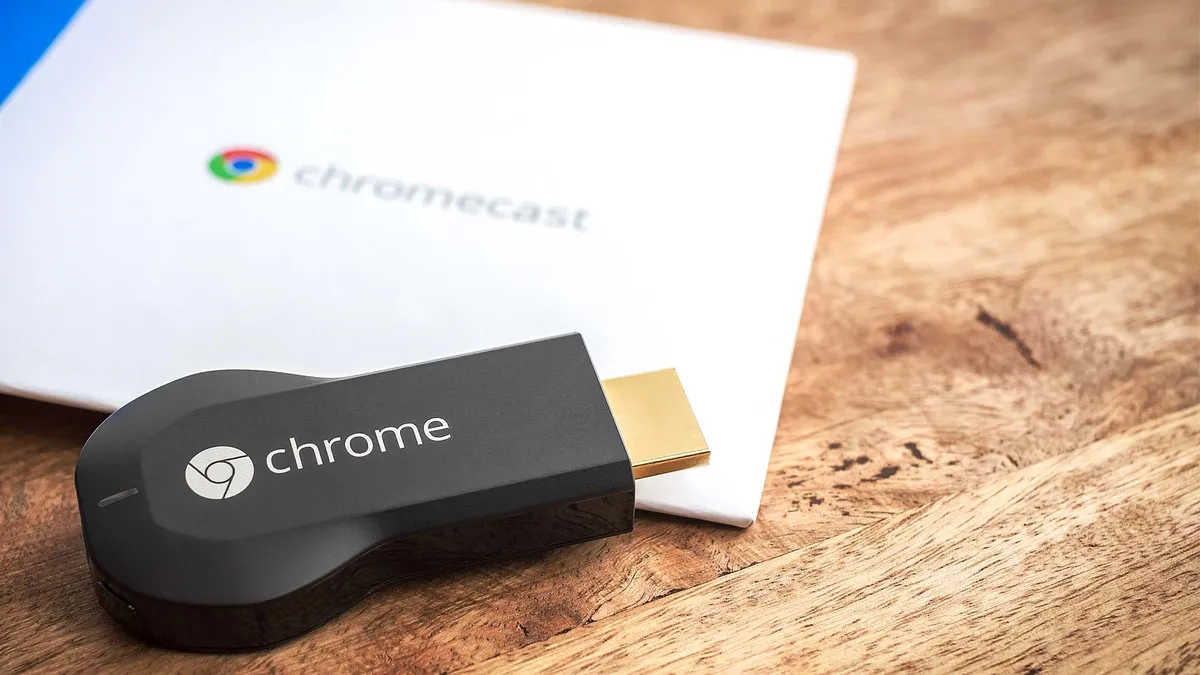
The Chromecast wasn’t the first streaming stick on the market. That honor belongs to the Roku Streaming Stick that was released in 2012. But the Chromecast wasn’t trying to be just another player — in fact, not being a player at all is what made it so different.
In fact, not being a player at all is what made it so different.
The original Chromecast, by design, didn’t have a UI. It was simply a tool that could accept incoming links from a phone or tablet living on the same wireless network. With no remote, Google could sell this innocuous-looking piece of cutting-edge technology for just $35.
And sell it did — the first batch of models was snapped up by Google devotees.
According to an excellent write-up from Fast Company in 2019, Chromecast is the brainchild of Google’s Majd Bakar. Apparently the story goes that then-product manager Rishi Chandra’s wife and Majd Bakar’s wife would sit in front of their TVs with laptops watching YouTube videos. When asked why they didn’t just play them on the TV instead, Chandra’s wife said “It’s just too much of a pain.” Bakar, a Google engineer at the time, and Chandra then set off to make what would become the Chromecast in 2012, first as a side project, but later as a full-time job.
The evolution of the Chromecast
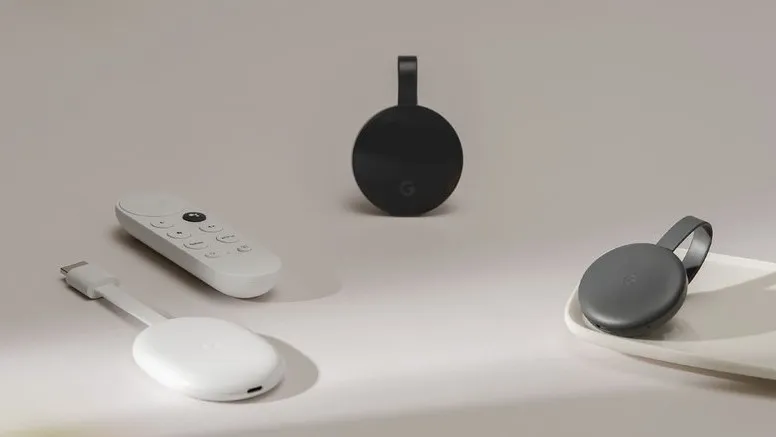
Reviewers (our own Marshall Honorof included) liked the form factor, but had qualms about its usability.
In our original Chromecast review, we lauded its easy setup, but said that it was limited in its functionality compared to the competition — a fair, but cutting critique of a device that wanted to break the mold.
Google thankfully didn’t let a few critical reviews stop it from innovating on the product: We got the Chromecast 2 with a circular design in 2015 alongside the ill-fated Chromecast Audio and my personal favorite, the Chromecast Ultra, in 2016.
In my review for TechRadar, I called the Chromecast Ultra “exceptionally smart, powerful and fast” and “hard to find a device that offers as much as Chromecast Ultra for the price.”
The era of the smart TV had begun, and with its dawning, the need for a dedicated smart streaming stick had dissipated.
By this time the Chromecast Ultra was under siege on all sides from both cheaper streaming sticks like the newly released Amazon Fire TV Stick and more competent high-end devices like the Apple TV HD.
Google would eventually fire back with a third-generation Chromecast in 2018 and the oblong Chromecast with Google TV in 2020, but by this time streaming sticks were out of vogue. The era of the smart TV had begun, and with its dawning, the need for a dedicated smart streaming stick had dissipated.
The legacy of the Chromecast

Google finally killed off the Chromecast line in 2024 and while the hardware may no longer be in production, its software lives on: Google was so successful in the creation of Google Cast, the wireless communication protocol for the Chromecast, that we’re still using the functionality 13 years later in modern smart TV platforms.
In 2026, almost every major smart TV platform comes with Google Cast functionality built in. (One of the last holdouts, Samsung, officially added it to its Tizen smart TV platform earlier this year.) You can still find a few outliers like Roku OS and Amazon’s Fire TV platform that don’t support it but, by and large, Google Cast is now the universal screen sharing standard. That is a monumental legacy for a $35 streaming stick to leave behind.
By and large, Google Cast is now the universal screen sharing standard. That is a monumental legacy for a $35 streaming stick to leave behind.
As for what comes next for Google's TV division, it’s hard to say. The company released the Google TV Streamer 4K, a more expensive competitor to the Roku Ultra, in 2024, but it’s yet to see the same level of adoption as the Chromecast did a decade ago.
While it's sad that we'll likely never see another one, the legacy the Chromecast leaves behind cements it as one of the best streaming devices ever made.

Follow Tom's Guide on Google News and add us as a preferred source to get our up-to-date news, analysis, and reviews in your feeds.
More from Tom's Guide