Powered by True RGB, Sony’s answer to the RGB backlighting revolution sweeping the TV industry, the Bravia 9 II feels like a masterclass in Mini-LED.
But the road here started with the original Bravia 9 and its groundbreaking 22-bit mini-LED driver. As I reported at the time, it was the first processor and backlight pairing I saw capable of producing a raw, yet recognizable image beneath the screen. Sony took that exact same high-precision driver and replaced traditional blue LEDs with individual RGB LEDs, producing the RGB Backlight Master Drive Pro.
I’ve already broken down what that means for True RGB, but now I can tell you what it means in a real TV that may impress enough to attract more than just early adopters.
Sony Bravia 9 II & Bravia 7 II: Price and availability
The Bravia 9 Mark II will be available some time in June and scales from a premium 65-inch model all the way up to a monstrous, luxury 115-inch theater display. Sony is also offering a lower-tier alternative with the Bravia 7 II that skips on Luminous Booster Pro (meaning, it’s not as bright) and the Black Screen Pro anti-glare panel I’ll get into a little later on.
| Row 0 - Cell 0 | Sony Bravia 9 II |
Sony Bravia 7 II |
50 inch |
N/A |
$1,599.99 |
55 inch |
N/A |
$2,099.99 |
65 inch |
$3,599.99 |
$2,599.99 |
75 inch |
$4,599.99 |
$3,099.99 |
85 inch |
$6,499.99 |
$3,999.99 |
98 inch |
N/A |
$8,999.99 |
115 inch |
$30,999.99 |
N/A |
I’m actually surprised by the pricing for the True RGB collection. Sony TVs tend to come with sticker shock, and while they’re by no means cheap, they’re more accessible than I originally expected.
Here’s what makes the Bravia 9 II so great
Visually, two major performance aspects completely blew me away.
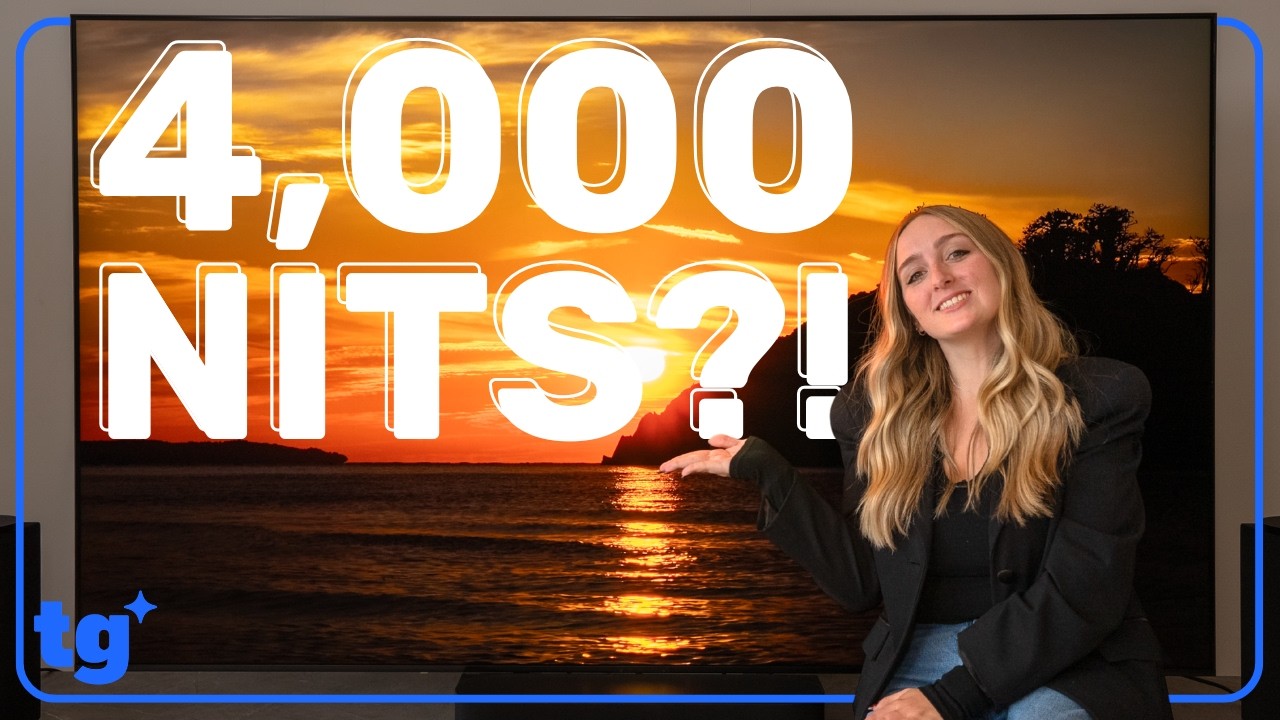
With nearly 4,000 nits pushing through the panel, I anticipated at least some degree of light spillage around dark backgrounds. But even in stark contrast scenes, blooming was virtually non-existent. Human eyes naturally bloom a bit anyway when hit with extreme brightness, but looking closely at the panel, there was no actual spillage. I saw further evidence of this control in the beautifully smooth gradations of sky scenes.

Then there’s off-angle viewing. I know I'm frequently guilty of pitting Mini-LED and OLED tech against each other for the sake of storytelling, and off-angle viewing has traditionally been an area of unmatched OLED dominance in that discourse. In the Bravia 9 II, because the colors are coming directly from both the True RGB backlight and the filter, the panel maintains color saturation much farther off-angle compared to traditional Mini-LEDs.

Speaking of OLED, Samsung more or less made anti-glare technology a mainstream fixture on flagship TVs starting with its S95 QD-OLED line. Most manufacturers have followed suit in one form or another, and for Sony, it’s dubbed Immersive Black Screen Pro.
Sony utilizes a “patent-pending nanostructure layer,” claiming its superior to traditional anti-glare solutions currently in the market. I saw it in effect side-by-side next to competitor TVs featuring their own premium anti-glare finishes. Sony’s panel did in fact seem to genuinely absorb the reflecting ambient lights rather than just scattering or dissipating them across the screen like the others.
Sony Bravia 9 II: preliminary test results
Sony is always chasing the performance profile of its BVM-HX3110 $30,000 professional studio mastering monitor in terms of color reproduction and brightness.
We got to run some benchmarks during our hands-on time. I must state that since this is a pre-production unit, these numbers might not perfectly reflect final retail performance, and we will absolutely re-test it thoroughly in our Tom's Guide lab. That said, testing HDR brightness in a 10% window as we do on all TVs, the Bravia 9 II reached 3,990 nits. The BVM-HX3110 masters up to 4,000 nits of brightness, so I guess Sony can say mission accomplished.
| Row 0 - Cell 0 | Sony Bravia 9 II |
Sony Bravia 7 II |
Hisense U9R |
TCL QM8L |
HDR Brightness (10% Window) |
3990 nits |
2078 nits |
3405 nits |
3719 nits |
BT. 2020 Gamut Coverage |
87.3% |
87.2% |
93.1% |
90.3% |
We also tested the Bravia 7 II, and it capped at 2078 nits in the same 10% window. While that’s a solid showing, it’s also evident that it’s a step down from the Bravia 9 II experience.
Raw brightness is easy, but controlling it presents massive engineering hurdles. Yet, Sony seems to have it completely under control.
The Bravia 9 II’s design is a thing of beauty
I’m generally in favor of mounting a premium TV like this, but I’d be remiss not to mention the Bravia 9 II’s physical aesthetics: It comes with what Sony calls the Mirage Stand, a base that creates an optical illusion of the TV completely floating, from the right angle.
The lenticular effect also conceals your cables and literally makes them vanish out of sight. It’s a pretty neat trick if you ask me.

For the Bravia 9 II’s audio layout, Sony added an upward-firing beam tweeter in addition to the sound-positioning tweeters on the sides. While the primary speakers and subwoofers are still housed in the back, Sony re-architected the chassis to create more space for air to move inside.
But if you want to add a dedicated sound system, Sony is introducing the Bravia Theater Trio alongside Bravia 9 II. This innovates on traditional quad setups by utilizing a central, more condensed soundbar complemented by separate wireless left and right channels, giving you way more placement flexibility depending on your screen size. You can also optionally add the Rear 9 speakers and Sub 9 subwoofer to complete the theater package.
Sony Bravia 9 II: Outlook

Given the massive jump to True RGB tech and how impressively it performs, $3,600 feels like a fair price to pay. Sony has managed to harness monstrous, near-4,000-nit brightness while calming blooming concerns to virtually zero.
We still need to get official retail units into the lab to verify how these benchmarks hold up and see how it scales all the way up to that massive 115-inch model. But right now, the Bravia 9 Mark II looks like the premium TV to beat this year.

Follow Tom's Guide on Google News and add us as a preferred source to get our up-to-date news, analysis, and reviews in your feeds. Subscribe to Tom's Guide on YouTube and follow us on TikTok. Finally, you can visit our dedicated Tom's Guide Savings Squad hub for expert help on getting the best products for less.
More from Tom's Guide