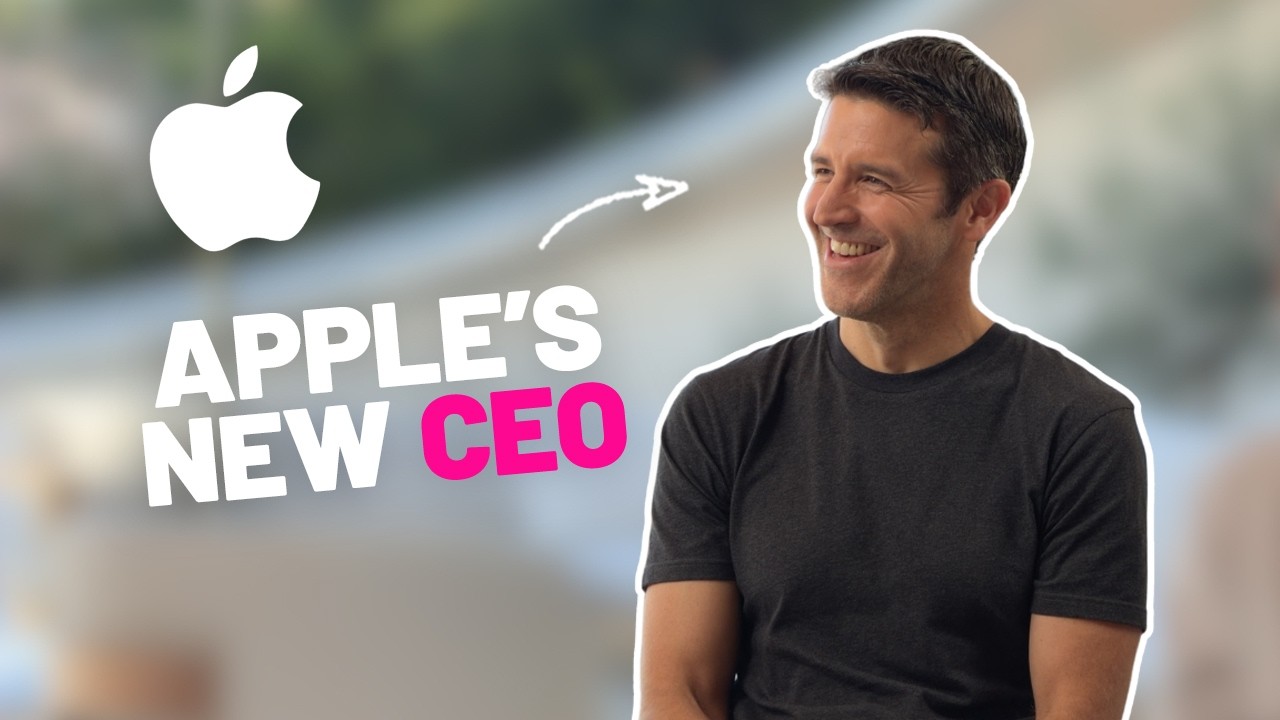
Apple’s first foldable phone is finally coming in the iPhone Duo, and like most other Apple products, the company is famously late entering a new category. Yup, Samsung, Google, Huawei and others have been making foldables for several years, but Apple is adamant that it’s not chasing the Android competition.
While the iPhone Duo has a passport-style design like the Galaxy Z Fold 8, in a lot of ways the phones couldn’t be more different. The Duo completely reimagines iOS 27 for the foldable form factor; it has Apple Pencil support and IP68 durability; and Apple is making a huge push to have lots of apps optimized for the Duo’s big 7.6-inch screen before the phone goes on sale in October.
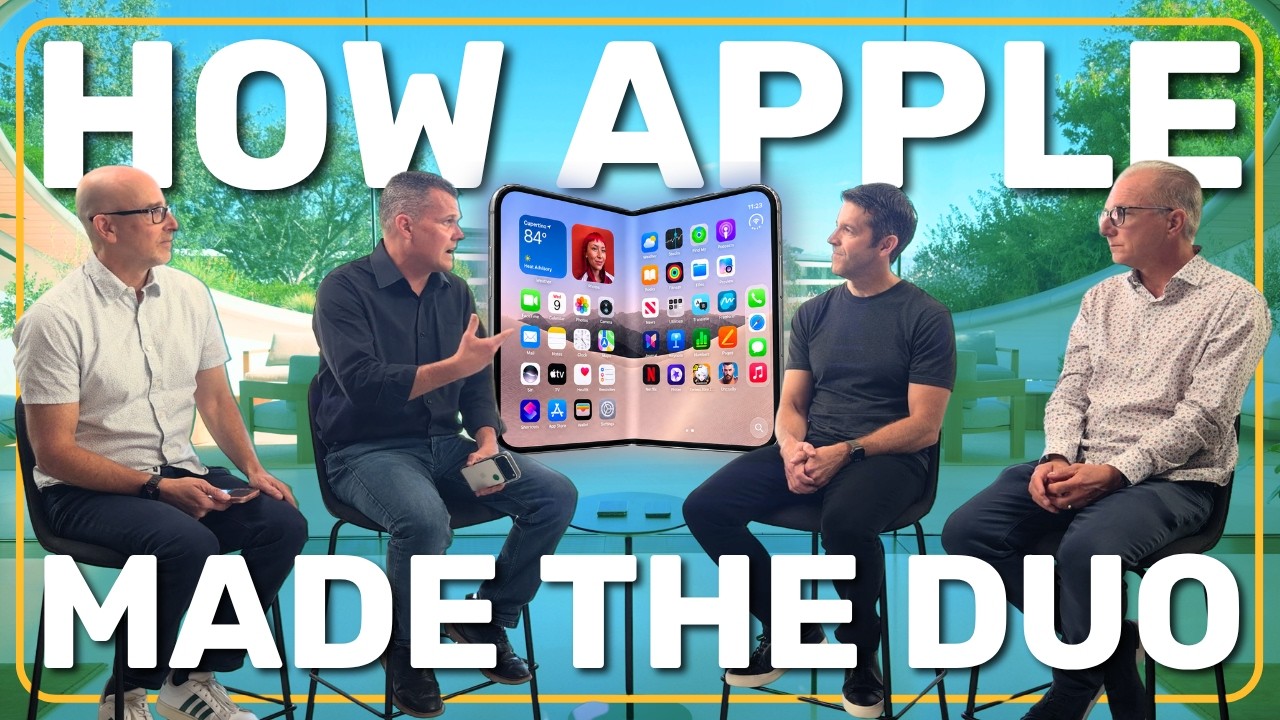
Along with TechRadar’s Lance Ulanoff, I sat down with Apple CEO John Ternus and senior vice president of worldwide marketing Greg ‘Joz’ Joswiak, and they stressed that Apple is making something truly unique.
“I think for us, it's always about when do we feel like we have a product idea that meets our bar for quality and durability but also design?” Ternus said. “What I think is particularly amazing about the Duo is that it's such a good example of hardware and software coming together to make something really special.”
That’s exactly what I wanted to dig into with Ternus and Joz: What really makes the iPhone Duo special in a sea of foldables?
iPhone Duo: The ‘a-ha’ moment for Apple’s CEO

One of the things that struck me most during my hands-on time with the iPhone Duo is that you can barely see the crease. And that’s thanks in large part to Apple’s nano-texture display.
The technology first appeared on the Mac Studio Display but has since migrated to the iPad Pro and MacBook Pro.
This nano-texture finish is designed to reduce glare and reflections, and the matte surface minimizes crease visibility. I also couldn’t feel the crease when using the Duo.

When Ternus saw this technology in action for the first time on Apple’s foldable prototype, he was convinced it was the right direction.
“It was like, ‘yes, that's it.’ ‘This is what I want. And then once we have that, then it's like okay, how do we go make it happen and make it real?’
Ternus shared that Apple came up with a new way of making the nano-texture display so that it’s optimized for a polymer surface instead of glass.
“I think what you've seen out there are all these just kind of cheap feeling plastic surfaces that don't feel good to the touch,” Ternus said. They're kind of wavy wrinkly, and the nano texture just wipes that all out. It's beautifully flat. It feels amazing to touch, and it's incredibly durable.”
For more, check out TechRadar's interview with John Ternus on his reaction to becoming Apple's new CEO
iPhone Duo vs Android foldables

As impressive as Android foldable phones have become over the past few years, especially in terms of sheer thinness and lightness, the Android ecosystem is still pretty fragmented when it comes to apps.
For example, Slack just looks like a blown-up phone app on Android foldables, and pulling up comments on Instagram just covers the content. I don’t get the sense that this is going to be the case with the iPhone Duo.
Apple has been working behind the scenes with developers to optimize their apps for the iPhone Duo’s cover and main displays. This includes Netflix, Slack and Zoom.
“What we saw others doing wasn't particularly inspiring,” said Joz. “Our history has never been to rush into something with something half baked.”
So what does a fully baked iPhone Duo look like?
This includes a redesigned software experience that moves the main controls to the right edge of the screen so that they’re easier to reach. And this is for both displays.
“It turns out to be an incredibly intuitive control system, because it's there under your right thumb when it's closed,” said Ternus. “You open it up, it's there under your right thumb again. So I think that's one of the biggest things with iOS is you're going to have two screens. How do you make sure that it feels continuous?”

I asked explicitly about whether the October 23 release date for the iPhone Duo will help ensure Apple has enough optimized apps for launch. And Joz likened the launch to the original iPad.
“That’s why we went so out of our way with iPad development, both internally and with our third parties,” Joz said. “We didn't want the iPad to feel like a big phone and that's again exactly what Android tablets felt like. And the same thing applies here.”
iPhone + stylus = breaking Apple’s rules?

Steve Jobs famously said that “if you see a stylus, they blew it’ in reference to smartphones. But that was 2007.
So is Apple breaking its own rules by offering Apple Pencil support in the iPhone Duo? Not really. Because it’s an iPhone and iPad in one device.
“I’ve never really thought of it as a rule,” Ternus said. “We started with iPad. There was no Apple Pencil, right? But then there's things you can do with a pencil on that larger screen that are really powerful and capable. And I think we saw that opportunity here.
“You don't need a pencil, but I think some people are going to like it, and it's going to be fun.”
The $2,000 question

With a starting price of $1,999, the iPhone Duo is by far the most expensive iPhone ever, so I wanted to know how Apple is going to justify the premium.
“We're always focused on building cool things that people love, but also are a really good value,” Ternus said. “And (the iPhone Duo) is an incredibly complex and well-engineered device. Yes, it's more expensive than the other phones, but we think it's a great value.”
At the same time, the iPhone 18 Pro and iPhone 18 Pro Max have also gone up in price by $100 each. But Apple insists that the new Pro phones deliver. This includes a new variable aperture camera, faster A20 Pro chip (that’s also in the iPhone Duo), bigger vapor chamber and even longer battery life.
“I look at those products as, ‘Man, how do you really feed an iPhone 17 Pro steroids and take not just an incremental improvement in each of these areas but massive year-on-year improvements,” Jozwiak asks.

Ultimately, though, all eyes will be on the Duo because it’s the shiny new thing. And it’s the experiences that it enables that Apple is hoping will get foldable phone doubters off the fence. For example, the Smart Take camera mode lets you prop up the Duo and is intelligent enough to snap photos when everyone is in position in a group shot — no timer required.
“The beauty of Apple is its hardware, software, and services,” Ternus said. “What I love is when all of these things come together and interact and create an experience that is just bigger than the sum of its parts.”
NEXT: Watch part 2 of our interview with Turnus and Joz on TechRadar.