The iPhone Ultra will easily be the star of the Apple September 9 event, eclipsing the iPhone 18 Pro and iPhone 18 Pro Max. That’s because this device will be Apple’s first foldable phone, launching several years after the Android competition.
Apple hopes to stand out in several ways, including software and apps that are fully optimized for the foldable experience, a display that’s nearly crease free, and the first 2nm chip in a phone. But it’s expected to have some trade-offs, too. Here’s everything you need to know about the iPhone Ultra.
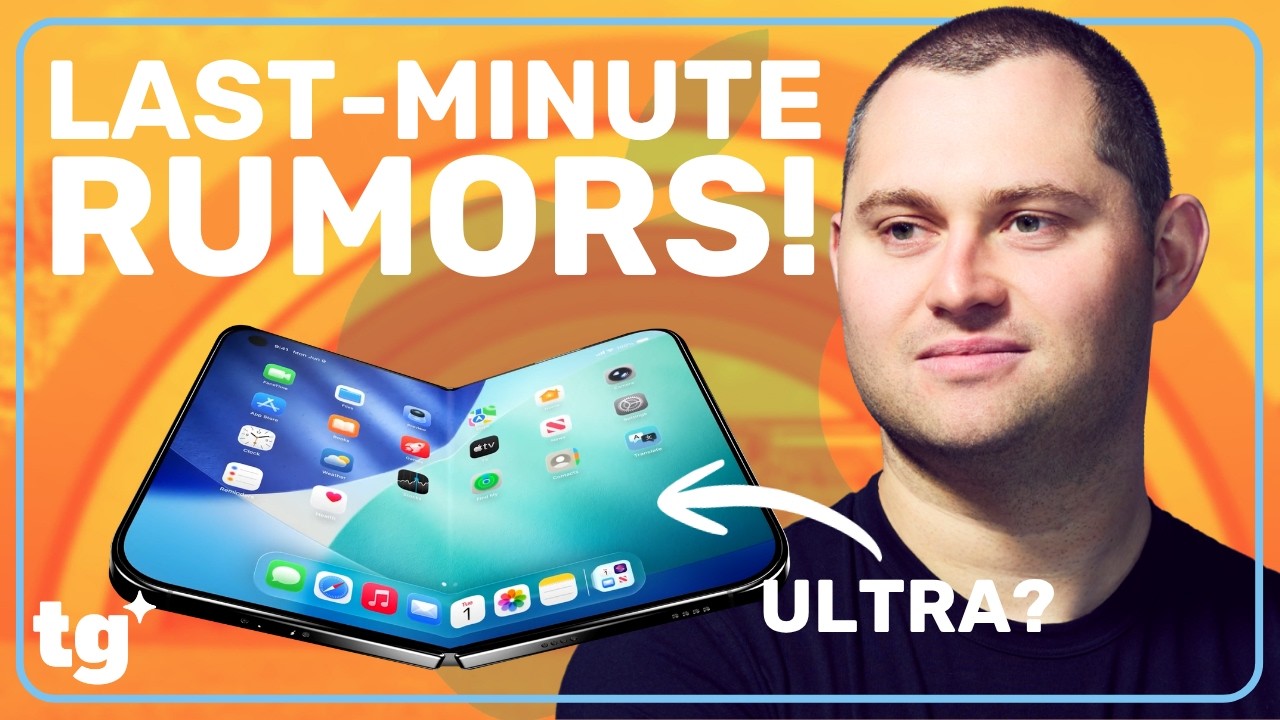
It’s the thinnest iPhone ever

You thought the iPhone Air was thin? That phone measures 5.6mm, while the iPhone Ultra/Fold is expected to be just 4.5mm thin when open. That would make it the thinnest iPhone ever. The foldable could be 9 to 9.5mm when closed.
The Galaxy Z Fold 8 is 4.5mm when open and 9.7mm when closed, so the foldable iPhone could be on par with Samsung’s device.
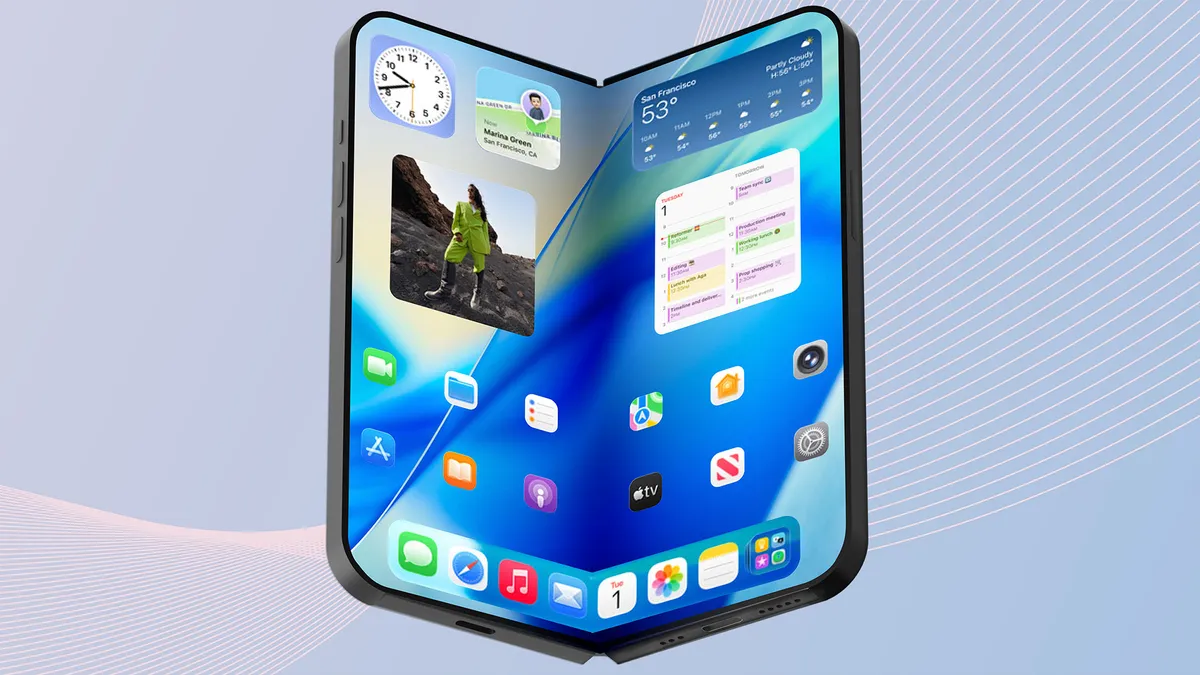
You get a 5.5-inch and 7.8-inch screen

The whole appeal of the iPhone Ultra is that you’ll get a compact device when closed with a wide 5.5-inch display that’s great for using apps, scrolling TikTok and responding to messages.
But when you want a more immersive video and gaming experience you can unfold the phone and get a relatively massive 7.8-inch display. It will have a 4:3 aspect ratio that’s optimized for media, but you’ll be able to flip it around to 3.4 portrait mode for surfing the web and reading.
The crease is nearly invisible

Thanks in part to a Liquid Metal hinge, Apple has reportedly worked very hard to minimize if not eliminate the crease in the middle of the iPhone Ultra display.
As reported by MacRumors, Apple has developed a new material property that makes the crease practically disappear. Apple is also reportedly working with Samsung Display, which collaborated on the Flex Titanium breakthrough on the Fold 8 series to minimize the crease.
The iPhone Ultra design is passport-like but kinda weird

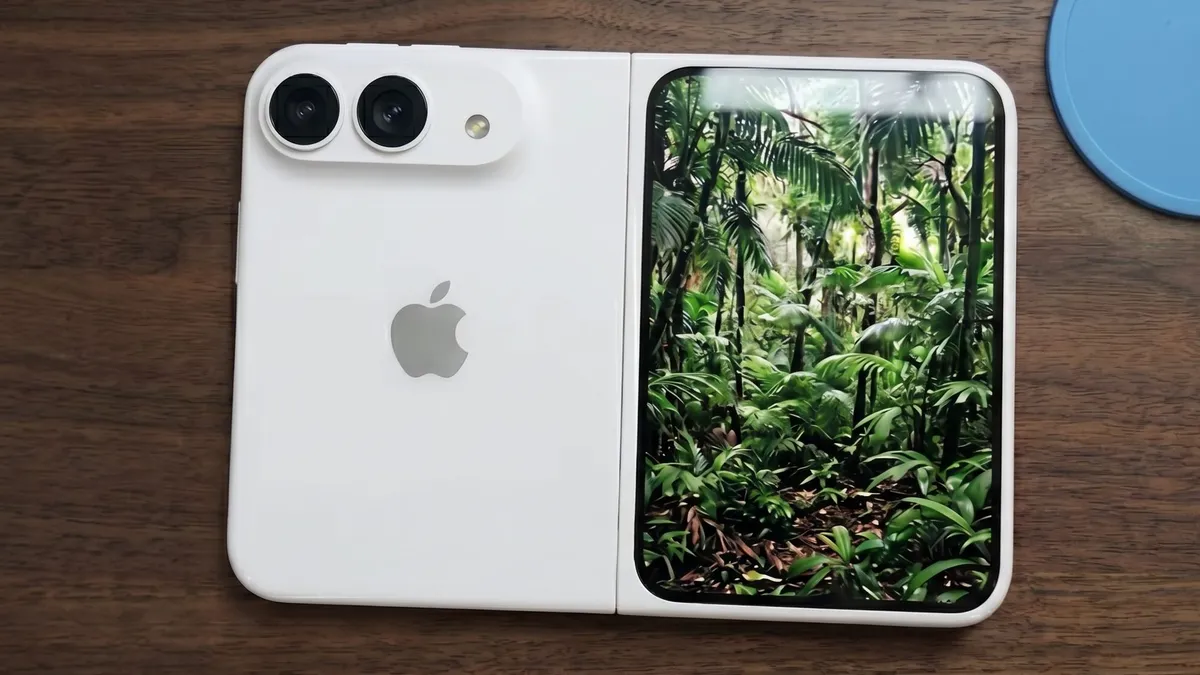
The good news is that the iPhone Ultra should be short and squat and easily slip into a pocket, just like a passport. The bad news is that the look when closed is somewhat odd.
If the leaks are to be believed, the left side of the front will be square and the right side will be rounded off. Also, the front camera might not be centered and instead be located in the top right corner. This asymmetry may irk Apple purists, but we’ll have to see how the final foldable iPhone design looks (and feels).
You get just two rear cameras (and two selfie cams)

Assuming the iPhone Ultra costs over $2,000, there’s a major camera trade-off you need to know about. The foldable is expected to feature just two rear cameras: a wide lens and ultra wide. That means you won’t be getting a telephoto zoom. Early testers of the iPhone Ultra seem to concur that this is a major drawback.
To be fair, the Galaxy Z Fold 8 doesn’t offer an optical zoom either, but there’s something about having just a 10x digital zoom that rubs me the wrong way on such a premium device. Especially since the iPhone 18 Pro Max is tipped for a 6x telephoto.
These are the two iPhone Ultra colors
These iPhone Fold camera protectors give us a look at two of the colors planned for the device: silver and dark blue. pic.twitter.com/KMaMu4JyZEAugust 8, 2026
Initially leakers believed that the iPhone Ultra would come in just silver/white and gray/black. But now based on a parts leak it appears the foldable iPhone could come in indigo instead for the darker color. So basically white and blue.
You’ll get multiple modes and split screen multitasking like iPad mini

The iPhone Ultra is still expected to run iOS 27, but it will offer some key optimizations for Apple’s foldable. The iOS 27 code has already shown that the foldable iPhone will have different modes based on the angle of the display. This would be similar to the Flex Mode on the Galaxy foldable devices.
In addition, apps on the iPhone Ultra will have so-called app adaptability, which means they should be well optimized for the larger display when open. And just like iPadOS, the foldable iPhone should enable you to run two apps side by side.
Touch ID but no Face ID

It looks like there simply won’t be room for the TrueDepth hardware necessary for Face ID on the iPhone Ultra, so Apple is reportedly offering a Touch ID sensor and building it into the side button. This is just like the iPad.
I consider this a bummer, but at least Touch ID is usually consistent and accurate.
It will have Apple’s first 2nm chip

Just like the iPhone 18 Pro lineup, the iPhone Ultra should be powered by the A20 Pro chip. This should be the first-ever chip in a phone using a 2nm manufacturing process, which means Apple can pack more transistors onto the chip.
As a result, the iPhone Ultra should be plenty fast (up to 15 percent faster than the A19 Pro) while also being more efficient (up to 30 percent).
The dual-cell battery should last a long time
While estimates have varied, the latest leaks point to the iPhone Ultra offering a 4,883 mAh split battery. This would be less than the iPhone 18 Pro Max’s rumored 5,567 mAh but comparable to the Fold 8’s 4,800 mAh.
I would expect the iPhone Ultra to last most of the day on a single charge, but we’ll see if it has what it takes to make our best phone battery life list.
It will have MagSafe (we think!)
There's been some debate over whether the iPhone Ultra will have MagSafe support built in, but according to an interview I conducted with Bloomberg's Mark Gurman, the foldable iPhone should indeed have the magnets needed embedded in the design. So, hopefully, you won't have to spring for a case just to get MagSafe support, but I would still suggest getting a case anyway.
The iPhone Ultra price is going to be super high
Foldable phones typically command a premium, but the iPhone Ultra could be the most expensive one yet. Some leakers and analysts say the device will cost at least $2,000 and as much as $2,500.
By comparison, the Galaxy Z Fold 8 costs $1,900 and the Fold 8 Ultra $2,100. The Pixel 11 Pro Fold is also $1,900. Apple will likely try to ease the sting by promoting its Apple Upgrade leasing program.

Follow Tom's Guide on Google News and add us as a preferred source to get our up-to-date news, analysis, and reviews in your feeds.
More from Tom's Guide