






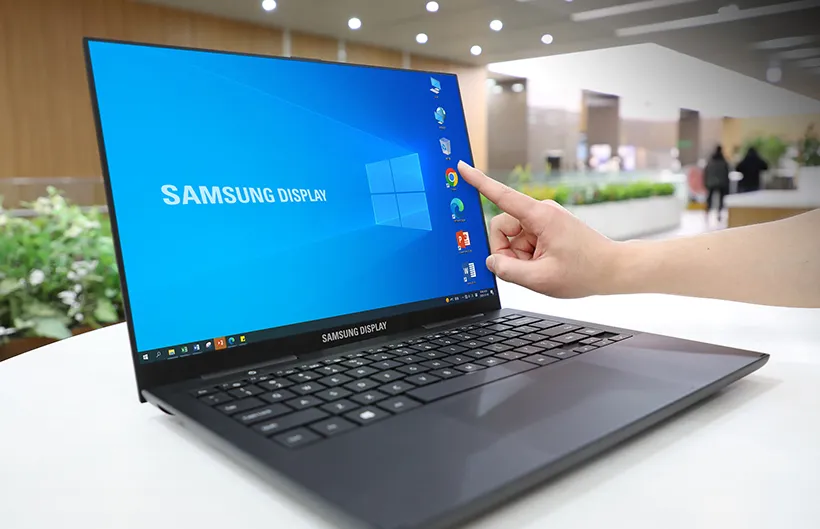
The Samsung Galaxy Book 3 Ultra, tipped for a reveal at Galaxy Unpacked 2023 on February 1, could sport a next-gen OLED display that integrates touchscreen components into the panel itself. This could pave the way for even slimmer and sleeker laptops.
That's because Samsung Display (hat tip to The Verge), the South Korean tech giant's screen-making arm, has announced the world's first "large-area" touch-integrated OLED.
Now touch screen OLED displays are nothing new, but Samsung is using a new tech called On Cell Touch AMOLED (OCTA) to embed touch sensors into the OLED panel itself. A form of this technology can be found in smartphones with OLED touch screens, but it has yet to be scaled up for laptop use.
Normally, adding touch functions to OLED-sporting laptops requires the use of a touch-sensitive film within the overall screen. According to Samsung, the use of such a film can increase a display's thickness by 6% to 11%.
But by using OCTA tech, a laptop's display could be noticeably thinner and lighter. And as the touch film is normally plastic, Samsung also claims OCTA is an environmentally friendly measure.
Expected to come in 13-inch and 16-inch sizes, OCTA panels will also include more conventional performance features as well: a 120Hz refresh rate and 3K resolution will make for sharp and smooth displays. These specs are in line with those rumored for the Galaxy Book 3 Ultra and the new technology goes some way to explaining its reportedly impressive lightweight design.
Given Samsung Display provides panels to other brands, it's likely that OCTA tech could become widespread. And that would hopefully mean some fresher form factors for laptops... looking at you Microsoft Surface Laptop 5; that design needs a refresh.

With the Galaxy Book 3 Ultra rumored to be making an appearance at Samsung’s first Unpacked event of 2023, were we expect to see the Galaxy S23 range, it likely won't be long before we get to see OCTA displays in action.
We'll be bringing you the latest news from the Samsung showcase. But if you want to see it live, check out our guide on how to watch Samsung Galaxy Unpacked 2023 online.
