Solar panels are the best thing I ever bought for my house — but I wish I knew these 7 things first

Whether you're a fan of protecting the environment or not, you may have been wondering whether it's worth installing solar panels on your roof. Energy prices always seem to be rising, and the sun is right there, pumping energy right at us. So why shouldn't you take advantage of that and capture some of that power for your own benefit?
That was my reasoning, which developed after many years of living in apartments that would start baking under the morning sun. It seemed such a shame to let that energy go to waste, and shortly after moving into my house, I had 12 solar panels installed on my roof — plus a backup battery. That was six years ago, and they've powered me through multiple energy crises. I think we're on number three, with everything happening in the Middle East, but I've kinda lost count at this point.
I have no regrets about installing solar, and will happily recommend them to anyone who can actually install them — even if all you can manage is one of the plug-in solar systems that a lot of people seem to be talking about. But there are some things I wish I knew about first, and I'm passing that information on to you.
Battery choice matters

Despite what the salesman kept telling me, I knew for a fact that I didn't want to get solar panels without a backup battery. The battery lets you store your own energy for all those times your solar panels aren't running, like when the sun goes down. As expensive as home batteries are, increasing the cost of my install by around 50%, I certainly wouldn't want to be without it.
What I didn't realize at the time was that not all home batteries are the same. My battery is a very basic one, capable of taking in power from my solar panels and discharging it when needed. But that's about it, since it's about as smart as the battery in your phone. There are batteries out there that function more like smart home appliances, giving homeowners much more control over what their stored power can do.
That includes using batteries to provide power during power outages, exporting during peak times when you get paid more for your power, or taking advantage of cheap overnight power to subsidize your daily use. I definitely like having a small reserve of power, but I still wish I had paid more attention to the kind of battery I could have gotten instead.
Keeping them clean is important

A clean solar panel is a happy solar panel, because it means it can collect more sunlight and generate more electricity for you in the process. But you wouldn't believe how dirty they can get, even if you live in an area that gets quite heavy rainfall, and that means you are going to need to clean them — or pay someone else to do that for you.
Modern panels do have a coating on them that helps the rain wash away anything that's accumulated on your panels. Unfortunately, this coating does not last forever and rain alone stops being enough to keep the panels clean. I had to start worrying about keeping my panels clean after three years, and I could visibly see all the dirt that had accumulated and needed to be washed away.
Your experience will naturally differ depending on where you live. In my case, I've had to contend with the mess made by birds, pollution from the nearby highway and the sheer amount of pollen that coats everything in the vicinity each spring. I know people who've never had to clean their panels, and others who are meticulous at keeping them clean.
So while this isn't something to worry about, you should keep an eye open for signs that a cleaning might be in order. Does it make a major difference to power generation? I honestly haven't looked that hard, but they're no longer coated in a layer of who-knows-what, so it keeps me happy.
Solar panels do work in winter, but nowhere near as well

I will caveat this point early and note that the amount of use you'll get out of solar panels in the winter is wholly dependent on where you live. If you live somewhere with a lot of clear skies and sunlight during the winter months, you're going to be much better off than me.
I have to suffer through a ceiling of gray clouds and rain for 3-4 months of the year, as well as much shorter days, so the amount of solar energy I collect from mid-November to late February is quite low relative to spring and summer. So while solar panels do generate energy without direct sunlight, your climate can restrict how much you'll actually produce during winter.
At the time of writing, I have managed to accumulate an estimated £42.53 ($57.49) worth of savings in April so far. Meanwhile, the total amount I saved for January and February combined was £46.45 ($62.79). Those figures are calculated by taking into account the money I saved by using solar power instead of importing energy from the grid, plus the money I earn from exporting any excess back to the same grid.
Make the most out of your export

One of the most important things for any solar install is the ability to export your excess. Unless you have your own battery farm, which is unlikely, there will be some excess power going out to the grid throughout the year. You mustn't let that power go to waste, and if you're able, you should ensure that you get paid for any excess you export to the grid.
This process is called net metering, or net billing, and the specifics of this will depend on where you live. Some states offer a one-to-one retail credit, which means your exported power has the same value as what you import. Others pay slightly less, and how much you get paid is determined by different factors, such as time of day. Other states don't have any state-set rules about solar exports, and anything you do get is entirely down to the individual electric company.
The rules and regulations about this are quite complicated, so make sure to check what the deal is in your state so you can make the most of it. And if you know the rules, you could financially benefit from it as I did back in 2022. Thanks to a very generous energy plan with a high export rate, I managed to export my electric bill to pay for an entire summer's worth of energy.
Don't forget about birds

I'll admit, I've never had an issue with birds living in or around my solar panels, despite not having any protective measures against them. The most trouble I've ever had is from pigeons pooping on the panels, but since my area has a lot of farmland, they seem to prefer loitering around the crops rather than nesting on my roof.
But my experience is not universal, and had the birds decided my panels were the perfect shelter, I could have had a serious problem on my hands. So make sure to get some anti-bird measures installed alongside your panels, otherwise you could potentially have to deal with a serious issue and no easy way to fix it.
Make sure your meter gets upgraded

I got my solar panels installed during the early days of the COVID-19 pandemic, and that means some aspects of the install didn't happen as quickly as they should — including the upgrade of my electric meter. I was supposed to get a smart meter that was designed to account for electricity running in and out of my home.
Instead, I had to wait months for that, and my electric meter ended up spinning backwards — to the point where my electric company rejected my meter readings for being too low. Electric meters are not designed to go backwards, and it meant my electric company had to guess how much power I was actually using during that time.
Needless to say, when you get a solar install, you should make sure the electric meter is upgraded at the same time — otherwise, you just end up with a bunch of problems.
Get as many panels as you can

The most costly part of any solar installation is the actual installation itself. Solar panels aren't all that expensive anymore, and what you're paying for is all the resources and manpower needed to get onto your roof and hook everything up. So, if you're going to all that trouble (and expense) you should take full advantage of it while you can.
Sure, covering your entire roof with solar panels might seem like overkill, but as long as your roof and the local electric grid can handle them, why shouldn't you? Even a few extra watts of power a day can add up over the decades-long lifespan of a solar array. But if you ever decide you want to upgrade your system a few years down the line, you're going to pay significantly more than you would have done if you'd just installed everything in one go.
My roof has eight solar panels on the front and four on the back, which means once the sun moves over the house in the later hours of the day, the amount of power they generate almost halves despite no change in weather. In my case, the awkward construction of the building would have made installing those extra panels too difficult to bother with — especially with my neighbors going nuts at every little piece of construction. But it does show how much of an impact not having a full roof of solar can have.
Bottom line
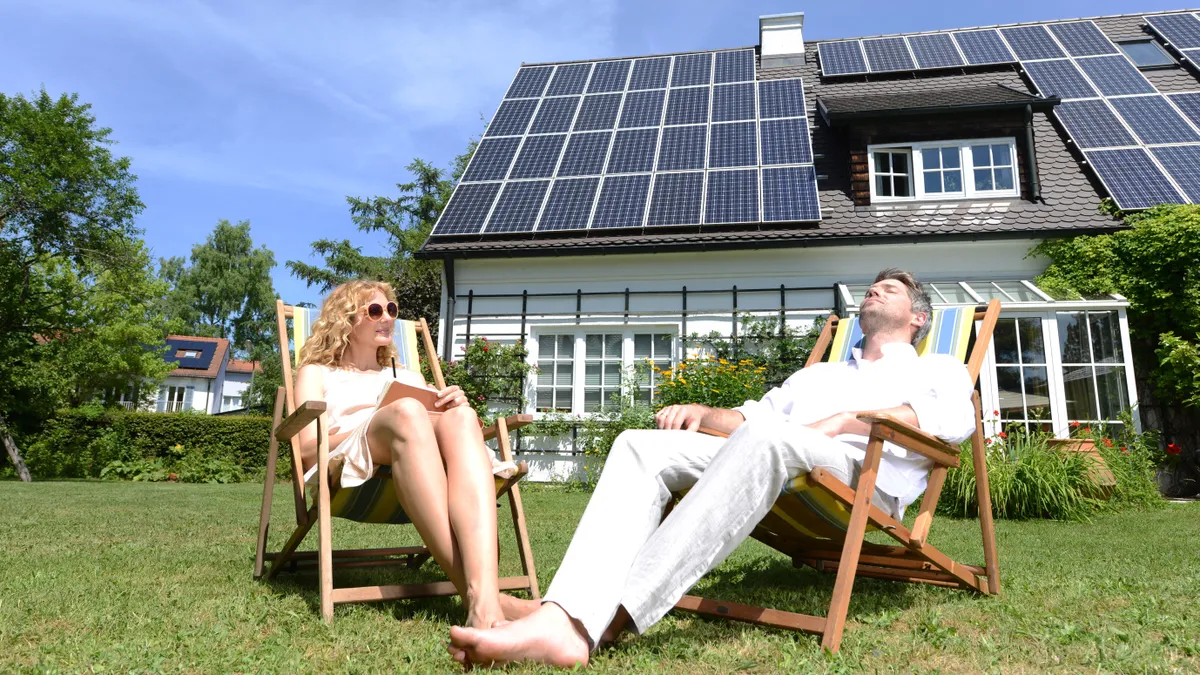
I love having solar panels on my roof, and not just because it means I can waste time checking how much they're generating at any given moment. The cost of energy has jumped around a lot over the past few years, but no matter what happens, I know that my power bill is nowhere near as much as it could be thanks to the 12 panels on my roof.
If you want some quantifiable results, my solar management app estimates I have saved £1,961 (around $2,649) since the start of 2023. There's still a way to go before the panels pay for themselves, but combined with the fact U.K. energy prices were at an all-time high between 2020 and 2022, I'm pretty happy with the investment. I just wish I had done things a little differently, because I'm always wondering about how much better things could have turned out.

Follow Tom's Guide on Google News and add us as a preferred source to get our up-to-date news, analysis, and reviews in your feeds. Subscribe to Tom's Guide on YouTube and follow us on TikTok.
More from Tom's Guide