







Winter precipitation and freezing temperatures compact the soil in our gardens, leaving less room for air and making it a poor environment for growth.
When temperatures dip, water in the ground freezes and expands; as it thaws, this process, combined with surface pressure, causes soil particles to settle more densely, decreasing soil porosity (the space available for air and water to move).
As a result, the ground’s surface layer becomes thick and hard — a condition known as hardpan, which restricts oxygen, water, and root growth. Soil becomes far less productive, and water pools on top of the hard surface.
All this means your spring gardening should begin with aerating compacted soil, allowing water and air to move freely so plants can thrive.
Here’s how to spot compacted soil and the simple steps you can take to fix it before planting.
1. How to detect compacted soil

When you first walk around your garden after winter, it can be an unpleasant sight. Hard, crusty patches, pooling water, and scraggly plants and roots are all indications that winter conditions have indeed compacted the soil. Another way to check whether your soil is compacted is the screwdriver test. In several spots, push a screwdriver into the ground.
If you can’t push it 4–6 inches without resistance or significant pressure, the soil is in fact compacted. This simple test gives you a quick, practical sense of how tightly packed your soil has become below the surface. Ideally, healthy soil should offer only light resistance and allow the tool to slide in with minimal effort.
If it doesn’t, it’s a sign that air spaces have been compressed and root growth may be restricted.
2. How to fix compacted soil
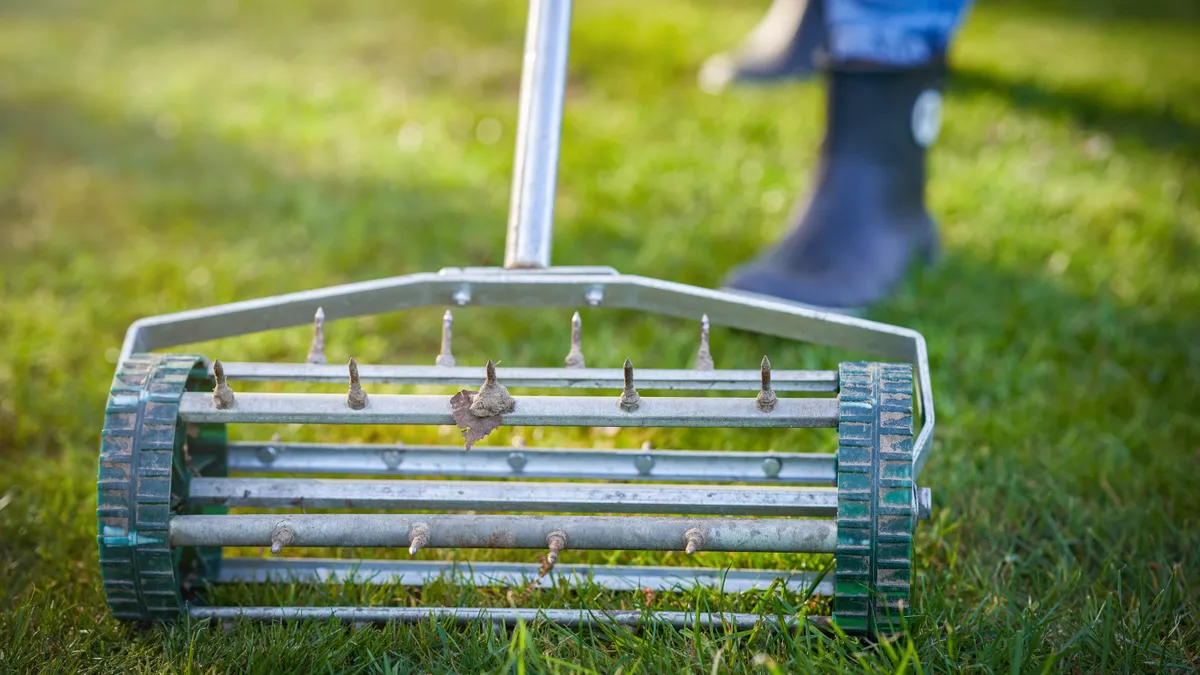
Fortunately, compacted soil is easy to fix. All you need to do is break up the soil beneath the surface layer to allow air and water to move. How you do that will depend on the extent of the compacted soil.
1-2 days before you begin, water the soil so it damp but not waterlogged. Dampening the soil will allow for deeper penetration.
For smaller areas of compacted soil, you can use a garden fork to poke holes in the soil. With larger areas you can use a lawn aerator or a plugger. An aerator has tines (spike-like prongs) to poke holes in the soil, while a plugger removes plugs of soil.
The tines are better for improving drainage and helping nutrients reach roots, while hollow cores in the plugger reduce compaction further by removing plugs of soil.

Follow Tom's Guide on Google News and add us as a preferred source to get our up-to-date news, analysis, and reviews in your feeds. Make sure to click the Follow button!
