A viral quote attributed to Jeff Bezos has been spreading across social media, sparking outrage among people already worried about the environmental impact of artificial intelligence.
The quote claimed that water should be prioritized for AI systems over human needs and appeared to suggest that future AI infrastructure was more important than the people affected by it.
It was shocking, not to mention dystopian. And it was exactly the kind of thing critics fear tech billionaires might actually believe. But here's the kicker: Jeff Bezos never said it.
A fact-check by The Quint found that the viral quote was fabricated and does not appear in footage from Bezos' appearance at VivaTech 2026 in Paris. Despite that, the claim spread widely across social media.
What Bezos actually said
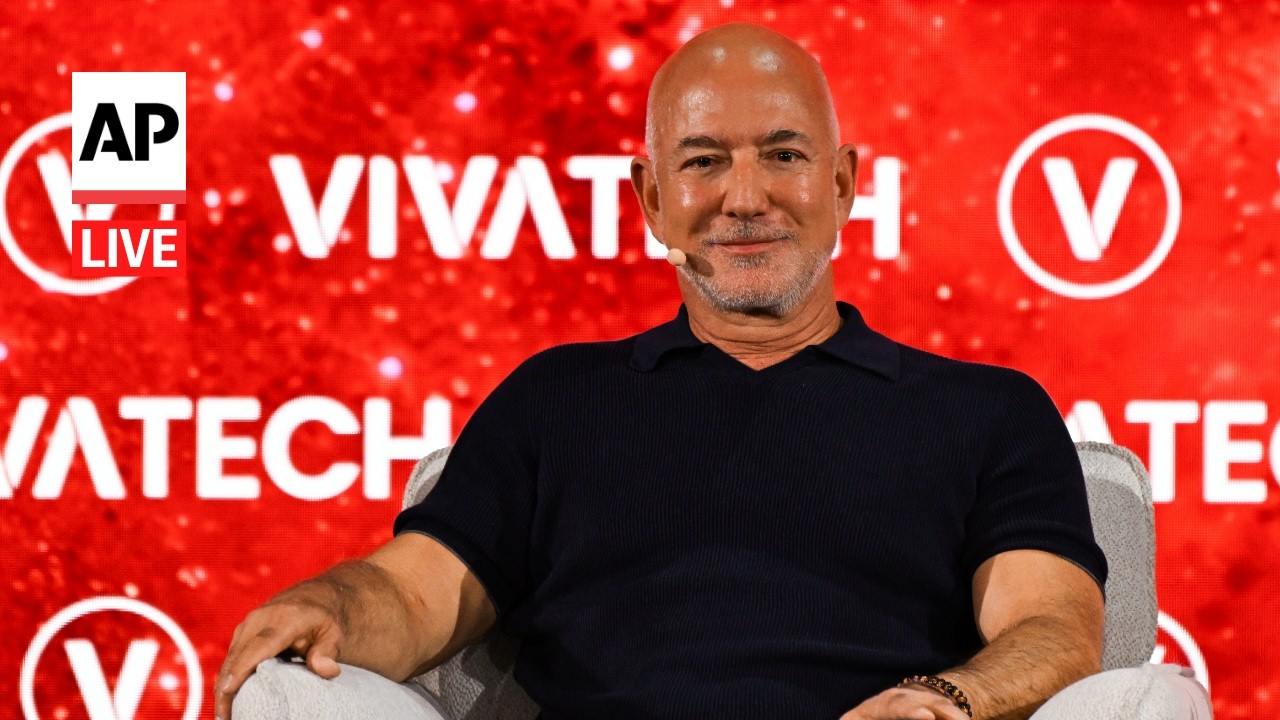
- Blue Origin's long-term vision — Bezos focused heavily on his space company, discussing rockets, lunar missions, and plans for sustained human activity beyond Earth.
- A 'Moon-first' strategy — He described the Moon as the next major step for exploration and development before larger ambitions deeper into the solar system.
- Space-based industry — Bezos argued that heavy industry and polluting manufacturing could eventually be moved off Earth and into space.
- Protecting Earth — He described Earth as a unique "garden planet" and suggested that using space resources, including materials from asteroids, could help preserve the environment.
- Advanced computing and innovation — He discussed how breakthroughs in computing, manufacturing, and automation could enable future space development.
- Artificial General Intelligence (AGI) — Bezos referenced efforts to develop more capable AI systems that could accelerate scientific discovery, innovation, and manufacturing.
- AI and jobs — He acknowledged concerns about AI replacing workers but argued that technological revolutions historically create new kinds of jobs and opportunities rather than eliminating work entirely.
- Responsible AI development — Bezos said AI should be treated as a powerful tool, with efforts focused on preventing harmful uses while still allowing innovation to continue.
The fake quote appears to have spread following comments Bezos made about artificial intelligence during VivaTech 2026. Yet, No comments about prioritizing AI over humans was ever made. At no point in the session did Bezos say that water, energy, or other resources should be diverted from people to AI systems.
During the event, Bezos discussed AI's potential impact on the workforce and argued that artificial intelligence could ultimately create labor shortages rather than widespread unemployment. He also addressed concerns about the resources required to power AI systems, including water consumption.
His actual comments centered on putting AI water usage into a broader context rather than arguing that AI should take priority over human needs. That's a position some people may disagree with. But it is very different from claiming that communities should sacrifice access to water so AI data centers can continue expanding. And then, somewhere between those two ideas, a fictional quote was born.
Why people believed it
The most interesting part of this story is that many people immediately accepted the quote to be real. Because the fabricated statement tapped into a growing anxiety surrounding artificial intelligence and the massive infrastructure required to support it, people believed it.
Companies including Amazon, Google, Microsoft, Meta and OpenAI are investing billions of dollars into new data centers. Those facilities require enormous amounts of electricity and, in many cases, large quantities of water for cooling.
Communities across the United States and around the world have raised concerns about how these facilities could affect local resources. Environmental groups have also questioned the long-term sustainability of AI's rapid expansion. Against that backdrop, a quote suggesting that a tech billionaire would prioritize AI over people didn't seem impossible to many readers. In other words, the misinformation succeeded because it fit an existing narrative.
Bottom line
False information often spreads fastest when it contains just enough truth to feel plausible. AI data centers really do consume water, and communities really are debating whether new facilities should be approved. And tech leaders really are making increasingly bold claims about the future of artificial intelligence. But we all know the dangers of misinformation.
When a fabricated quote combines realistic elements, it can become difficult to distinguish fact from fiction, especially when it appears in a screenshot that looks authentic.
Ironically, this story reveals less about Jeff Bezos than it does about public perception of the AI industry. Although the quote itself was fake, the concerns that made it believable are very real.
As AI infrastructure continues expanding and debates about energy, water, and environmental impact become more heated, stories like this will likely become more common.
At Tom's Guide, we'll continue separating fact from fiction, breaking down viral AI claims, and helping readers understand what's really happening behind the headlines.
Follow Amanda Caswell and stay ahead of the AI curve 
Follow Tom's Guide on Google News and add us as a preferred source to get our up-to-date news, analysis, and reviews in your feeds. Subscribe to Tom's Guide on YouTube and follow us on TikTok. Finally, you can visit our dedicated Tom's Guide Savings Squad hub for expert help on getting the best products for less.
More from Tom's Guide