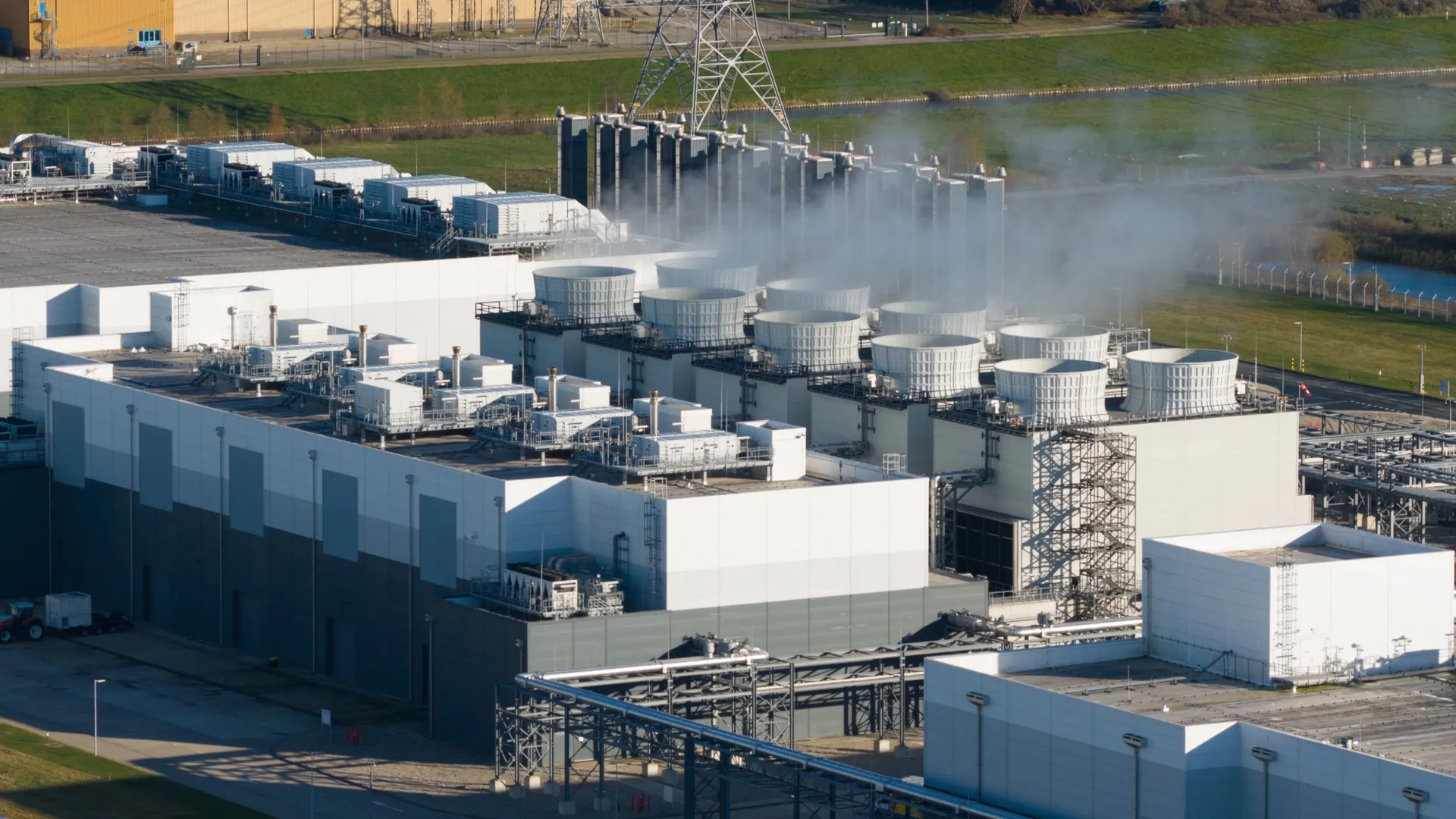
For years, AI has felt strangely invisible because we never see "the cloud." But a controversial new project in rural Utah is forcing people to confront what AI actually looks like in the real world — and the scale is staggering.
Known as the Stratos Project, the proposed AI data and energy campus in Hansel Valley, Utah has quickly become one of the most divisive infrastructure projects in America. Supporters say it could help the United States win the global AI race. Critics say it could permanently transform the surrounding environment in ways the country has never seen before.
At the center of the controversy is the uncomfortable reality that AI requires an enormous amount of physical infrastructure. And increasingly, people are beginning to notice.
The eye-popping scale

The scale sounds almost unreal. The proposed campus reportedly spans around 40,000 acres in Box Elder County, Utah, an area larger than many major cities. Some estimates compare the total footprint to roughly 2,000 Walmart stores combined. Others note the project boundary is more than twice the size of Manhattan.
But, beyond the physical size is the electricity demand. Developers say the facility could eventually require up to 9 gigawatts of power. For perspective, Utah’s current statewide electricity demand typically peaks around 4 to 5 gigawatts. That means a single AI-focused campus could theoretically consume more power than the entire state currently uses.
To support that level of energy demand, developers plan to build large natural gas power plants directly on site instead of relying solely on the public electrical grid. This concerns environmental groups as it could dramatically increase carbon emissions across the region while creating massive amounts of waste heat in the valley.
Residents fear Utah is becoming a test site for the AI era

Hansel Valley is remote, dry and sparsely populated. Scientists and residents have described the area as a natural “bowl” where heat can become trapped overnight.
The data complex is reportedly a 16 gigawatt thermal load project, which is the “equivalent of about 23 atom bombs worth of energy dumped into this local environment every single day," Robert Davies, a physics professor at Utah State University told The Salt Lake Tribune.
The professor predicts that Hansel Valley temperatures could rise by 5 degrees Fahrenheit during the day and up to 28 degrees at night.
Critics fear the combination of large-scale power generation, industrial development and rising temperatures could accelerate desertification and worsen air quality in surrounding communities.
Some researchers have warned about potential “heat island” effects while others worry the development could contribute to long-term dust problems similar to growing concerns around the shrinking Great Salt Lake.
But for many residents, the biggest concern isn’t heat

It’s water. Some estimates suggest the project’s power systems could require billions of gallons of water annually depending on the cooling systems ultimately used.
Developers say they plan to rely on air-cooled systems and saline groundwater unsuitable for farming or drinking. Many locals remain unconvinced.
At recent public meetings, protesters reportedly chanted:
“People over profit”
“You can’t drink data”
More than 1,000 residents attended demonstrations surrounding the project’s approval process earlier this month.
The backlash has become so intense that local groups are now pushing for a public referendum to overturn the approval entirely.
Why AI suddenly needs so much power
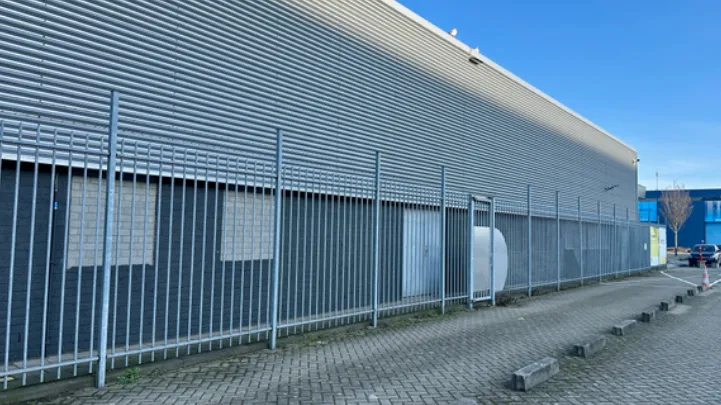
The Stratos Project may sound extreme, but industry experts say it represents a much larger shift happening across the technology world. AI systems require enormous amounts of computing power to train and operate.
Every chatbot response, AI-generated image, video model or voice assistant request relies on physical servers running inside data centers packed with advanced chips that consume huge amounts of electricity and generate significant heat.
As companies race to build more powerful AI systems, infrastructure demand is exploding. That’s why major tech companies are now investing heavily in hyperscale data centers, nuclear energy discussions, dedicated power infrastructure, water-efficient cooling systems and AI-specific energy partnerships.
In many ways, the AI boom is beginning to resemble earlier industrial revolutions, except this time, the factories are data centers.
The takeaway
The AI arms race is becoming physical. Supporters of the Utah project argue the infrastructure is necessary. Investor Kevin O'Leary has framed the development as part of a larger “AI arms race,” arguing the United States risks falling behind global competitors without massive domestic compute capacity.
Utah officials supporting the project have similarly pointed to national security, economic growth and America’s future role in AI development. But opponents say local communities are being asked to absorb the environmental consequences of a rapidly accelerating AI economy.
That tension is becoming increasingly common across the country as more large-scale AI facilities are proposed in rural areas with access to land, energy and water resources.
But, this isn't just a story in Utah. It’s becoming a story about the true physical cost of AI. For most people, AI still feels abstract, something that lives inside apps, browsers and chat windows. But projects like Stratos are changing that perception fast. In fact, it may physically reshape the American landscape itself.

Follow Tom's Guide on Google News and add us as a preferred source to get our up-to-date news, analysis, and reviews in your feeds. Subscribe to Tom's Guide on YouTube and follow us on TikTok.
More from Tom’s Guide
- I tried the ‘Goldfish Prompt’ with ChatGPT — and it instantly stopped my overthinking
- I asked ChatGPT to apply Lewis Howes’ ‘Greatness’ mindset to my life — and it completely changed how I approach work
- I gave ChatGPT permission to disagree with me with this prompt — and its responses became dramatically better