"Meet Mira. She generates 30 million weekly views across TikTok and Instagram. Last week, an energy drink company paid $6,500 to sponsor her latest post. Her 22-year-old creator just rented a studio in Austin and bought a Tesla in cash. Here's the exact prompt and software stack he used to build a $70,000-a-month empire."
If that sounds familiar, it's because your social feeds are undoubtedly full of posts like it. They all follow the same formula of an ordinary person, an extraordinary income and just enough technical detail to make the whole thing sound believable.
There's just one problem: almost none of it is real. Welcome to the age of AI-generated success fiction.
Before you accept the story at face value, ask yourself a few simple questions. Who is Mira? Where's the TikTok account with 30 million weekly views? Which energy drink company paid $6,500? How does the author know someone rented a studio in Austin? And where are the receipts or even a link to verify any of it?
But you're unlikely going to find answers to your questions, because these posts are not entirely true. The fake overnight-wealth threads are spreading like wildfire across X and TikTok. Some have even made it to LinkedIn.
The specificity trick
𝐒𝐇𝐄 𝐃𝐎𝐄𝐒𝐍'𝐓 𝐄𝐗𝐈𝐒𝐓. 𝐁𝐔𝐓 𝐇𝐄𝐑𝐄'𝐒 𝐓𝐇𝐄 $410,000 𝐒𝐇𝐄 𝐁𝐑𝐎𝐔𝐆𝐇𝐓 𝐈𝐍 𝐀𝐍𝐘𝐖𝐀𝐘𝐌𝐢𝐫𝐚 𝐢𝐬 "22." Her 10-second dance clips pull in over 30 million views a week. Energy drink brands and phone case companies pay $6,500 a post. The 20-year-old who… https://t.co/zM4OJBHIm7 pic.twitter.com/MrHxDXPAxwJuly 27, 2026
Today's AI-generated success stories are convincing because AI is still vague enough for them to feel realistic — if only you have the right prompts. Not to mention, they don't claim someone made "a lot of money," instead, they are hyper-specific, claiming $34,850 in MRR. The odd number feels measured, which oddly, makes it seem so real.
The posts name real tools: Midjourney, Zapier, ElevenLabs, Nano Banana 2 and other popular tools I've personally written about here at Tom's Guide. Many of these posts even specify camera setups and lighting gear. They offer week-by-week growth timelines and conversion rates broken out by funnel stage. What could be fake about that, right?
Well, that is what makes them dangerous. The human brain has a well-documented cognitive shortcut: we equate specificity with authenticity. When someone gives you an exact dollar figure, an exact software stack and an exact timeline, you instinctively assume that actual reporting and verification happened somewhere upstream.
We've already seen how potent this dynamic can be outside of social media hustle culture. In January, a viral Reddit post alleging systematic fraud by a food delivery company reached the site's front page, collected 87,000 upvotes, and crossed over to X where it accumulated 36.8 million impressions. Platformer's Casey Newton contacted the supposed whistleblower, who promptly produced a fake employee badge and an 18-page internal document, all generated by AI.
The dashboard factory
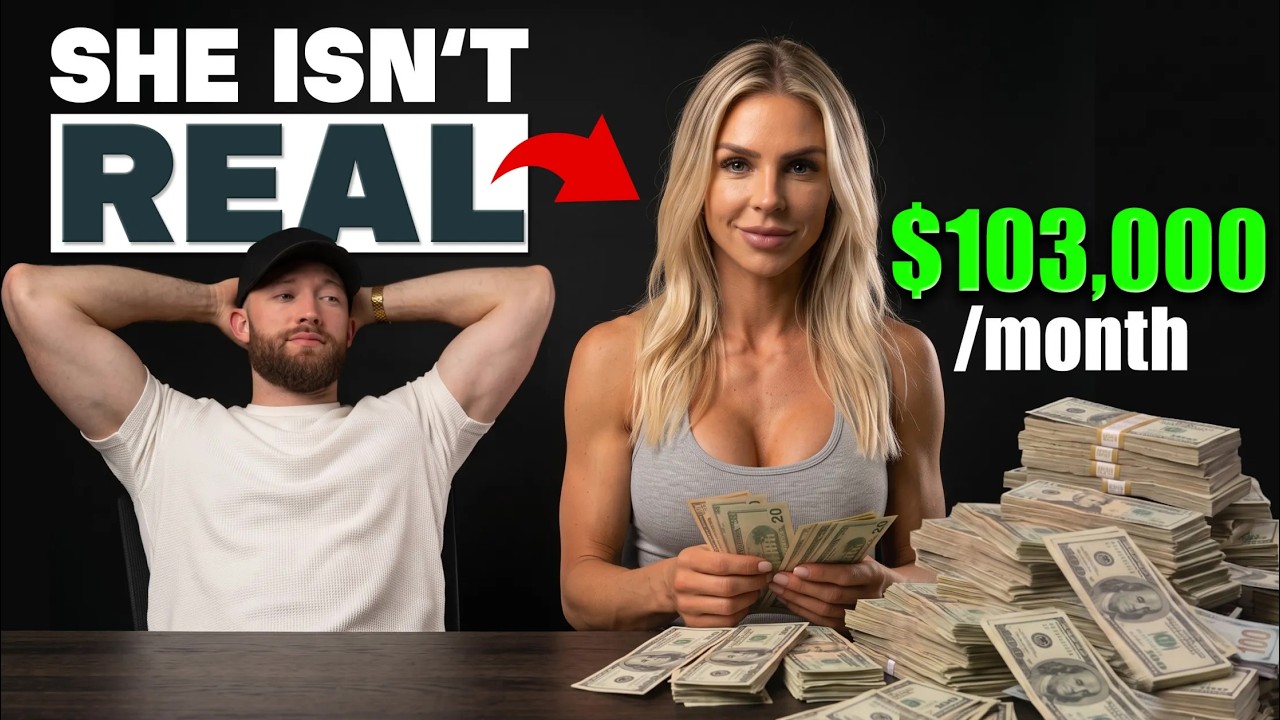
If the text of these posts is the hook, the revenue screenshot these content creator flash across the screen is the real closer. It has become the universal proof-of-concept for the online entrepreneur class because a single image can say, without further argument, I am making money easily and you are not. It is also trivially easy to fake.
There are two standard methods, and neither requires any technical know-how. The first is to open a real Stripe dashboard even a brand-new one showing $0 in revenue, press F12 to launch Chrome DevTools, and edit the HTML to display any number you want. The whole operation takes under a minute.
The second is even simpler, because an entire cottage industry now exists to do the work for you. ScreenCharm's Fake MRR Chart Generator lets users input a starting MRR, an ending MRR, select a growth curve — "Hockey Stick," "Exponential," "Plateau" and download a perfect Stripe-style PNG.
These are not underground tools. Kyle Gawley, ScreenCharm's creator, posted on X that the fake MRR page is one of his top-performing products, with traffic arriving from Google searches for "fake stripe dashboard."
Competitors abound: Hypefury and Gravity both offer their own versions. The problem is so well-known that it's openly discussed on Indie Hackers, where one commenter summarized the state of play: "The new grift is to fake being a rich entrepreneur to sell a course."
But the devil is in the details, as they say. Real businesses have failed payments, refunds and churn; a dashboard claiming $70,000 in monthly volume with 0 percent failed payments and perfectly rounded secondary metrics is almost certainly fabricated. If the chart looks like a smooth exponential ramp, it was drawn by AI. And, manipulated screenshots almost always crop out the browser URL bar, the date range selector and the account name. They show the graph and the big number, but little else.
The most sophisticated fakers have adapted to skepticism by posting screen recordings of themselves refreshing the browser, supposedly proving the data is live and not edited with Inspect Element. Oh, but this is the real smoke and mirrors!
Chrome's Local Overrides feature, a built-in developer tool documented on Google's own site, lets users serve modified local files in place of network resources. The browser loads the faked page from disk, making that refresh change nothing.
In the real world of SaaS acquisitions, none of these lies survive first contact with due diligence. Professional buyers require read-only API access to the seller's Stripe account and reconcile the data against bank deposits. Services like VerifyMRR exist specifically to connect via OAuth and parse live subscription data that the seller cannot manipulate.
If an influencer is selling a course on the strength of their revenue but refuses to provide anything beyond a cropped PNG, the refusal is itself the answer.
The prompt assembly line

One point I need to make is that the content creators making these posts are, in fact, running structured prompts that function as creative briefs.
Most begin the same way, which is typically by giving the AI a personality. The prompt tells it to behave like a cynical but wildly successful founder. It's never "an experienced entrepreneur built a successful software company." It's "a 19-year-old college dropout" or "a stay-at-home mom" making tens of thousands of dollars a month after a few weekends of work. The bigger the contrast, the more irresistible the story becomes.
The posts often include specific timelines, software stacks and growth metrics, with each sentence broken into its own line to make the thread easier to skim on a phone.
Then comes the call to action. These posts often end with some variation of: "I turned this entire system into a free Notion template. Like, repost and reply 'SEND' and I'll DM it to you." When I tried it and sent a DM or made a comment other than those "call to action" words, I didn't get a response. I also never got the "free template" that mavgpt promotes.
That is a growth hack. Every reply tells the platform the post is worth showing to more people, pushing it higher in the algorithm. The promised "free template" is simply the bait that turns readers into participants, helping spread the post even further.
Follow the Incentives
Strip away the AI veneer and the business model underneath is ancient. These posts are engagement-farming operations. They are engineered to trigger one very specific thought in the reader's mind: If this random 22-year-old made $400,000 with AI over the weekend, why can't I?
That spike of panic is the product. It drives bookmarks, comments and reposts. The algorithm rewards the engagement, pushing the thread to a wider audience, which builds the author's following, which the author then monetizes by selling courses, newsletters, paid communities or consulting.
As I sifted through these types of profiles, the writing styles are identical across supposedly different founders. The profile photos for the supposed founders show telltale signs of AI generation.
The regulatory apparatus is starting to catch up, slowly. In September 2024, the FTC announced a crackdown on deceptive AI claims, taking action against companies that told consumers to "start a million-dollar business today" using AI while providing zero evidence that any customer had actually done so.
The broader numbers are staggering: the FTC reported that Americans lost $2.1 billion to social media scams in 2025 — an eightfold increase since 2020. Investment scams, which include programs promising to teach people how to make money online, accounted for more than half of those losses.
The new dream machine

There is a certain irony in the fact that the most successful application of generative AI in the creator economy is not building products but fabricating the appearance of having built them.
A friend of mine a decade ago said, "Do you notice how nobody ever seems to have a bad day on social media?" That still holds true. Social media sold the dream life. Today, the dream has been repackaged to look like a few good prompts and Claude Fable (or similar) is all you need to be a millionaire by the end of the month.
The rented sports car that influencers pretend is one they own, has been replaced by a rented business identity. The aesthetic has changed completely, but underlying grift has not changed whatsoever.
Bottom line
Creating a convincing fake success story used to require at least some effort like a real-ish website and an actual product. Now the entire package can be assembled in seconds by AI. The barrier to entry for fraud has been lowered to nearly zero, and the platforms rewarding engagement have no reliable mechanism for distinguishing between genuine entrepreneurial success and its perfect simulation.
The next time an influencer claims they're making $70,000 a month while they sleep, remember that screenshots are cheap. In the age of AI, credibility comes from verifiable evidence.

Follow Tom's Guide on Google News and add us as a preferred source to get our up-to-date news, analysis, and reviews in your feeds. Subscribe to Tom's Guide on YouTube and follow us on TikTok. Finally, you can visit our dedicated Tom's Guide Savings Squad hub for expert help on getting the best products for less.
More from Tom's Guide