 Club Benefits





You are now subscribed
Your newsletter sign-up was successful
Want to add more newsletters?

Daily (Mon-Sun)
Tom's Guide Daily
Sign up to get the latest updates on all of your favorite content! From cutting-edge tech news and the hottest streaming buzz to unbeatable deals on the best products and in-depth reviews, we’ve got you covered.

Weekly on Thursday
Tom's AI Guide
Be AI savvy with your weekly newsletter summing up all the biggest AI news you need to know. Plus, analysis from our AI editor and tips on how to use the latest AI tools!

Weekly on Friday
Tom's iGuide
Unlock the vast world of Apple news straight to your inbox. With coverage on everything from exciting product launches to essential software updates, this is your go-to source for the latest updates on all the best Apple content.

Weekly on Monday
Tom's Streaming Guide
Our weekly newsletter is expertly crafted to immerse you in the world of streaming. Stay updated on the latest releases and our top recommendations across your favorite streaming platforms.
Join the club
Get full access to premium articles, exclusive features and a growing list of member rewards.
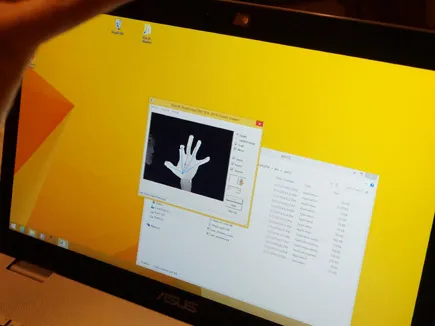
Your next laptop could capture realistic 3D images of your face, respond to gestures with great accuracy or even mimic your expressions, thanks to a new generation of depth-sensing webcams due out later this year. Intel's Perceptual Computing group has been working with hardware partners to integrate the new cameras into notebook computers while adding additional back-facing "world cameras" to tablets that will do detailed 3D captures of environments.

MORE: Best 3D Printers 2014
In a brief demo, Intel Senior Vice President Mooly Eden and showed us how the new camera and SDK can accurately capture a human face and then place it onto a variety of 3D models. A member of his team launched a face capture app and stared directly into the camera then turned his head slightly to the right and then the left as the software directed him.

Eden explained that it's not necessary to get a 360 degree view of one's head to do an accurate facial capture and that simply capturing the sides of the face up to each ear is sufficient. After the initial face capture, the software prompted the engineer to manualy select a few key points on his face such as his eyes, nose and mouth.
With his face captured, the Intel engineer was able to select the body of a knight and watch as the software rendered his head onto it. He then chose a super hero body and the software changed the model. Another Intel rep showed us 3D printed models of his head on Michael Jordan's body. In another brief demo, the engineer showed how a character on screen mimicked his facial gestures in real-time.
Intel hasn't announced pricing or availability for the new RealSense camera and SDK. However, users will see the inward and "world" facing cameras appearing on their laptops by the end of 2014 with tablets soon to follow.
Follow Avram Piltch @Geekinchief and on Google+. Follow us @TomsGuide, on Facebookand on Google+.
