Most of us know the names and location of the major muscles, and what role they play. No one’s giving me points for knowing the whereabouts of my pectorals or quadriceps, but when my editor tasked me with doing the psoas march every day for a week, my first thought was, “Well, I know what marching is, so I’m halfway there, and the psoas is the muscle that’s… down there… in the back… somewhere. It does… stuff.”
I was very loosely correct. But I had no idea how much “stuff” it does and how little attention it gets. The psoas really matters.
What is the psoas? And where is it?
The psoas is a long (about 16 inches in adults) ribbon-shaped muscle that extends from either side of your lower spine and down through the pelvis, attaching at the top of each femur. As you would imagine, any muscle that’s 16 inches long has to be doing a lot of work. Your psoas muscles, which are hip flexors, are involved in standing, walking, running, jumping, and, if you must, dancing. They are also vital for maintaining an upright posture. Since you asked, it’s pronounced “so-as” and the word comes from an Ancient Greek word meaning “muscle of the loins”, which, for my money, is easily misunderstood.

Here on the Tom's Guide fitness desk, we're all about making 2026 your healthiest, and happiest year yet! To help, we'll be bringing you a week of motivational content to help you Get Fit with Tom's Guide.
Psoas pain can develop from overuse (it is not unusual among runners and cyclists) or chronic underuse. Prolonged sitting at a desk or poor posture, for example, can lead to a tightening of the muscle, pulling the pelvis forward and excessively curving the lower back. An injury to the psoas can cause pain in the lower back, groin, glutes or all three areas. It can be difficult to treat and slow to heal. And, of course, if you have weak or injured psoas muscles, other muscles in the area will compensate (that’s just what they do), which can lead to more injuries. In short, we need to pay attention to the psoas muscles. The psoas march is one sure way to strengthen them.
What is the psoas march?
This move, which you can do standing or lying down, works the hip flexors. Your psoas muscles and iliacus muscles are often grouped together (they share a tendon) as the iliopsoas, the body’s strongest and deepest hip flexor group. The psoas march is relatively simple to perform, but, as ever, good form is everything. For this one, all you need is a resistance band; you can perform the move without one, but it will not be as effective.
How do I do it?
For the standing version:
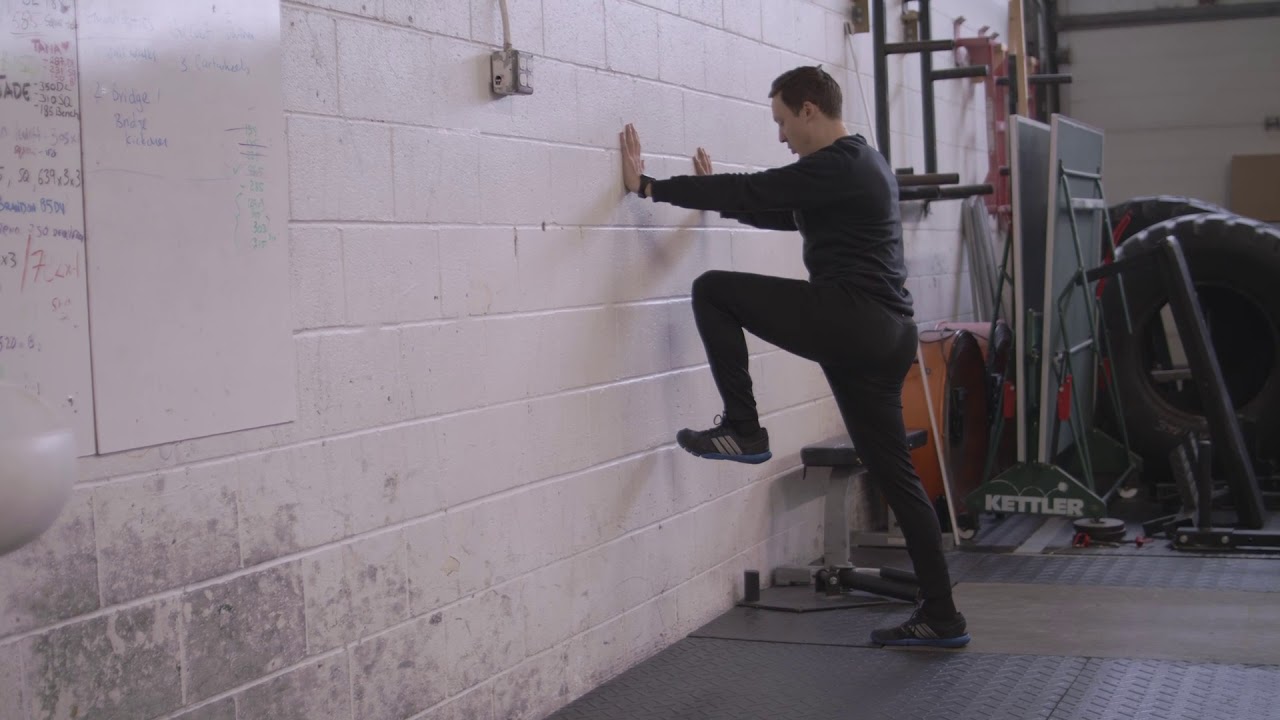
- Loop a resistance band around both feet.
- Raise one foot off the ground until your thigh is perpendicular to your torso and your knee forms a 90-degree angle. Hold this position for a few seconds, then lower with control.
- Repeat the move on the other leg.
- Do three sets of 10 on each leg.
For the supine (lying version):
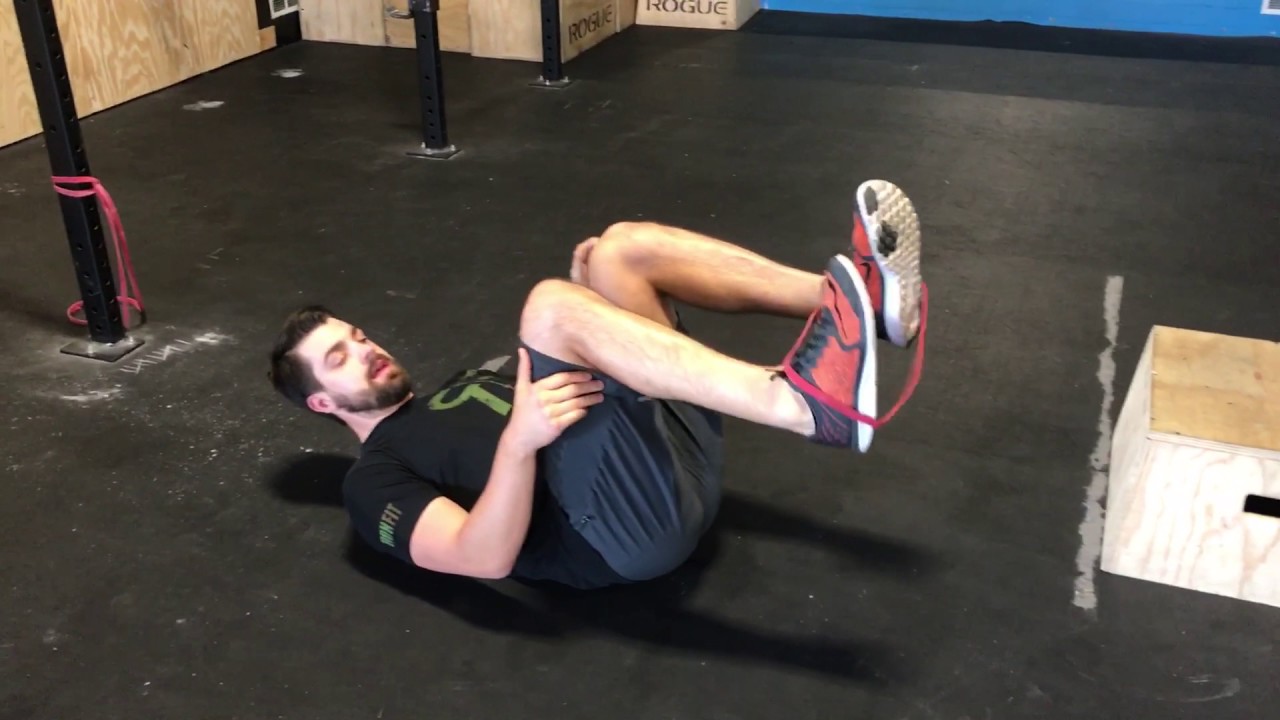
- Loop a resistance band around both feet.
- Lie on your back (I suggest you use a yoga mat)
- Raise both legs to form 90-degree angles with your knees.
- Use your abdominals to press your lower back into the mat
- With control, straighten your right leg towards the ground, keeping the 90-degree angle in your left leg.
- Return your right leg to the start position and repeat the move with your left leg.
- Again, do three sets of 10 on each leg.
I did the psoas march for a week and learned quite a lot
In the interests of scientific rigor, I tried both versions of this move and far preferred the standing march. For one, it felt more like a dignified march, but I also felt a greater focus on my hip flexors. When in the supine position, half my focus was on ensuring my abdominals were working to keep my lower back pressed into the floor. Also, I looked like a big bug trying to roll onto its stomach and scuttle to safety.
It’s called a right angle for a reason
On the first day, I did three sets of 10 on each leg and felt the move deep in my hip flexors (I could not say I felt it in the psoas specifically, but the move is designed to target that muscle, so I was content with that). I felt a decent burn afterwards, but I wasn't convinced my form was correct, and the resistance band kept sliding forward on my raised foot. So, the following day, I slowed down and paid close attention to the angle of my knee. It is vital to maintain the 90-degree angle as you raise the leg, lower it, and bring it under your body. You will also need to hold your foot steady so that it, too, creates a 90-degree angle, in this case with your shin. This will focus the move and help to keep the band in place. At the top of the move, your thigh should be pointing straight ahead, and at the bottom, it should point straight down. When I did this and moved with control, I felt a distinct lightness in my stride after the three sets. Feel free to do the move standing close to a wall, so you can reach out a hand for balance.
It’s a great warm-up move before a run
By the end of the week, I was doing three sets of 20 on each leg. On two of those days, I did the move before heading out for a run, and found it was an effective way to warm up my muscles. A mystery injury has curtailed my running, but whatever the source turns out to be, warming up properly will surely help when I’m back putting in decent miles. Please don’t let me know I should have been doing this all along. The sad truth is that for a lot of runners, bending to tie their shoelaces is considered warming up. I’m no longer one of those deluded people, and the psoas march will assuredly be a part of my pre-run prep. But even if you are not a runner, you might enjoy, say, standing up with confidence — I can highly recommend the psoas march.
More from Tom's Guide

- I’m a personal trainer who works with seniors — these are the 4 balance exercises I wish everyone would do before they turn 60, to build strength and stability
- I’m a personal trainer who works with seniors — these 3 ‘dynamic balance’ exercises are crucial for preventing falls
- If you can do this many bicep curls after 60, your upper body strength is considered 'elite'