Like most people, my evening routine used to resemble scrolling on my phone in bed at the expense of getting the quality sleep I need. Tired, wired and averaging six hours of sleep a night, I needed to take drastic action.
I felt as though modern life was working against me, and the blue glare from my screens was keeping me artificially stimulated long after it was time for bed. Caffeine and sugar propelled me through the day but left we wide awake at 3 a.m.
So, inspired by the Amish and their healthy relationship with their circadian rhythm (our body's 24 hour internal clock), I decided to rise and sleep with the sun in an attempt to fix my poor sleep habits.
I expected that I might get more sleep, but what happened to my focus and energy levels caught me completely off guard. Here's my story...
Key takeaways: At a glance
- Our circadian rhythm is our body's internal clock, primarily regulating our sleep-wake cycle.
- The rising and setting of the sun acts as a circadian cue, triggering the production of the key sleep hormones we need to fall asleep and wake up.
- For me, modern life and artificial light has resulted in a disconnect between the solar day and my circadian rhythm. This has led to poor sleep.
- To get more sleep and improve my energy levels, I took inspiration from the Amish to sleep and rise with the sun for 14 days.
- The result? I slept longer after just night one. After two weeks, my cognitive fog lifted and my focus returned.
What is your circadian rhythm and what role does in play in sleep?

Your circadian rhythm is your body’s internal clock. It’s governed by the sun and regulates your sleep-wake cycle. It also regulates other functions, including hormone production, temperature and metabolism.
“Circadian means ‘around the day,’ and for humans and almost every other living thing on earth, it's aligned with the sun and controls two of our most fundamental states of being — sleep and wake,” explains Dr. Alex Dimitriu, a doctor double-board certified in Psychiatry and Sleep Medicine.
As it gets later in the day, we build up more adenosine, which accumulates and makes us sleepy over time
Dr. Alex Dimitriu
“At the core of the circadian system is sleep and wake,” says Dr. Dimitriu. "Sleepiness is reset by sleep, and builds up the more hours you are awake.”
The sleep-wake cycle is made up of two parts. First comes sleep pressure (your homeostatic sleep drive). It builds from the moment you open your eyes in the morning. As does a chemical called adenosine.
“As it gets later in the day, we build up more adenosine, which accumulates and makes us sleepy over time,” says Dr. Dimitriu.
He then adds that the second part of the sleep-wake cycle is aligned with daylight and melatonin, which, alongside adenosine, delivers a one-two punch of tiredness, making it easier to fall asleep.
“The system is designed so that when these two signals overlap — so you are sleepy, and it is dark outside — you enter and stay asleep,” explains Dr. Dimitriu.
The catalyst: Why I turned the lights off in my life
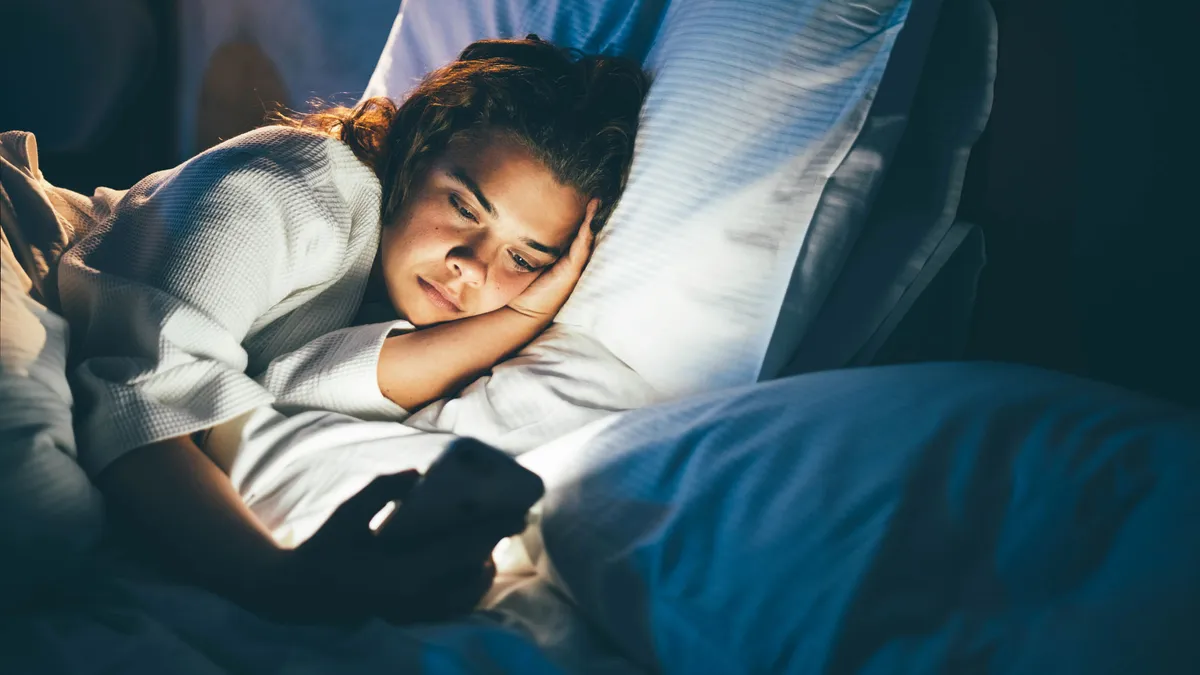
I write about sleep for a living, yet my own relationship with sleep is complex. An erratic sleep schedule, endless to-do lists and age-related hormonal fluctuations (I’m 40+) means I usually get in the region of six hours of broken rest per night.
And, no, I’m not one of those rare humans who manage to thrive on less than seven hours of sleep. I exist in a cognitive fog, my emotions sit close to the surface and I often find myself wide awake at 3 a.m. in a mild panic.
Ironically, the idea to shun artificial light in order to claw back my sleep quality could be described as a lightbulb moment. It was during a camping trip that I mulled over the fact that I always slept better in the great outdoors.
It was then that I realised that I was slowly suffocating my circadian rhythm with artificial light and tech
These camping trips tend to follow a familiar pattern; a busy day of outdoor activities — hiking, surfing, swimming — followed by a gradual wind down, perhaps a short walk, before getting into bed soon after the sun sets. I climb onto my air mattress and sleep like a log.

During my most recent trip, I clocked up an unprecedented 8h 47m of sleep, 1h 55m of which was spent in deep sleep (most adults aged between 25 and 64 require between 45-90 minutes of deep sleep per night, which suggests my body was trying to repay a portion of the mountain of sleep debt I’ve accumulated over the past decade).
For the first time in weeks, I woke up feeling restored. I had (unintentionally) corroborated a 2013 study that explored how following a natural light cycle could shift your circadian rhythm forward, resulting in more sleep.
It was then that I realised I was slowly suffocating my circadian rhythm with artificial light and tech back home.
Lightbulbs have really changed our relationship to the sun, and screens and devices have made it even worse
Dr. Alex Dimitriu, double-board certified in Psychiatry and Sleep Medicine
"Bright lights, late meals, and highly stimulating activities can make it harder for the body to register that it's time for sleep," explains Dr. Alex Dimitriu, a doctor double-board certified in Psychiatry and Sleep Medicine. "Lightbulbs have changed our relationship to the sun, and screens and devices have made it worse.
"Bluish high efficiency LED lights do the same — they trick the circadian system into thinking it's daytime when it's night," he continues. "People need to be in dark dim sunset colors to sync their circadian systems, and align them for sleep."
With most modern homes packed with tech that actively prevents them from sleeping, could it ever be possible to apply the simplicity of a rustic camping trip — where I sleep and wake with the sun — to my busy daily life? I decided to try...
Sleeping like the Amish
In her quest to explore what life was like when humans had a closer relationship with natural light, health and science journalist Linda Geddes visited an Old Order Amish community in rural Pennsylvania. There connection to the electric grid is forbidden and their days are largely spent toiling the land and tending to the home.
It was here, while researching her book Chasing the Sun, that Geddes noticed how certain aspects of Amish life leant itself to quality sleep. Physical activity, a circadian rhythm closely aligned with the sun, and plenty of natural daylight.
In contrast, my life as a desk-bound journalist means I spend a large portion of my day hunched over a laptop under the glare of bright LED office lights. Instead of fresh air, I’m blasted by recycled air and survive on a staple diet of oven chips.
Sleeping and waking with the sun

When Geddes stayed with an Amish family, she noted how their attention isn’t absorbed by electrical gadgets. Their evenings weren’t punctuated by bright electrical lights, either.
Instead, they use a single, large, stand-mounted propane gaslight that they move between the kitchen and living space, where the family congregates. If anyone needs to use the bathroom, they take a battery powered LED lantern, a torch or oil lamp.
“Even so, once the sun goes down, most Amish households are far darker than the average American house,” writes Geddes.
As a result, a sleep schedule that closely aligns with the sun — around 9 p.m. until 4.45 a.m. — is standard, rising without an alarm before dawn.
Daily labor

Adenosine, a chemical that builds throughout the day and helps promote sleep, is a byproduct of physical activity. So sedentary lifestyles can impact sleep pressure, our biological urge for sleep.
Sleep pressure is a pillar of our circadian rhythm, so when we move less throughout the day, the delicate balance of our circadian rhythm — which regulates our sleep-wake cycles — is disrupted.
For the Amish community, who work, walk (for the Old Order, cars are forbidden), farm and do, this isn't an issue as they are constantly moving.
The way many of us live today is almost the opposite of what our internal clock expects
Dr. Shelby Harris, Behavioral Sleep Medicine Specialist
"The way many of us live today is almost the opposite of what our internal clock expects," Dr. Shelby Harris, a licenced Clinical Psychologist and Behavioral Sleep Medicine Specialist, tells me.
"We spend most of the day indoors, often under relatively dim lighting, and then at night we're surrounded by bright lights, TVs, laptops, and our phones. That evening light tells the brain to stay alert when it should be winding down."
Daylight exposure

While modern life has left many of us disconnected from the solar day and at the mercy of Seasonal Affective Disorder (SAD), a type of depression tied to a lack of natural sunlight, Geddes points out that the Amish population has the lowest prevalence of SAD of any Caucasian population.
And that could be down to the amount of daylight they're exposed to. According to Geddes, Amish people are exposed to an average daytime illuminance of 4,000 lux during the summer, compared to the 587 lux that Brits are exposed to.
In other words, our waking hours are approximately seven times gloomier than those of the Amish
Linda Geddes, Author of Chasing the Sun
In Winter, that drops to approximately 1,500 lux and 210 lux respectively, which, again, leads to a dysregulation of our circadian rhythm. "In other words, our waking hours are approximately seven times gloomier than those of the Amish," writes Geddes.
My experiment: What happened when I slept and rose like the Amish
I'm not about to disconnect my home from the National Grid, nor can I swing two weeks off work to grow my own food.
But there are aspects of Amish life that I can take inspiration from in order to improve my sleep — and that's sleeping and (hopefully) rising with the sun.
Instead of using artificial light to prop up a later bed time, I decide to spend two weeks going to bed as the sun goes down, just like I do when camping. Two weeks should give me enough time to settle into some sort of routine.

The night I start my experiment, the sunset takes me by surprise. Is it 10.15 p.m. already? I’ve accidentally left it until the light is practically non-existent before getting ready for bed.
But, like I would when I go camping, I muddle through with the little light there is and manage to get myself ready for bed.
I leave my phone downstairs out of reach, turn off my sunrise alarm (I’m just hoping that I wake up in time to get the kids ready for school) and climb into bed.
Normally, I would appreciate reading in bed (or, more accurately, scrolling on my phone) for a while in order to wind down after a busy day.
However turning on a light goes against the whole point of this exercise, so I lie in the darkness and wait for sleep to take me.
I sleep for longer from night one

The speedy bedtime routine (and earlier bedtime) means it takes me longer than normal to fall asleep. When I do, I’m aware I’m sleeping lightly as I’m worried about sleeping in and the kids being late for school.
Despite worrying, I wake naturally at 06:49, which is a little later than I would normally wake but still within the realms of my usual routine. My sleep tracker tells me I’ve clocked up 8h and 18 minutes of sleep and didn’t wake up in the night.
I question how accurate that is as I felt like I kept checking the time all night. Still, for me, 8h and 18 minutes of sleep is pretty incredible.
Waking up eventually stops being a struggle

Worrying about not setting an alarm is starting to impact my sleep. So I set my sunrise alarm clock for 6 a.m. as a safety net and hope that I don't need it.
I start my experiment on a Thursday and, when my sunrise alarm starts chirping away on Monday morning, I'm still dead to the world. I initially feel disappointed that I'm not waking naturally with the sun at 5 a.m.
But then I remind myself that I've been getting less sleep than I need for years, so paying off all that sleep debt won't happen within a few days.
However, as the experiment goes on and my alarm goes off, I begin to feel ready for it. For the first time in months, I'm waking with energy.
There are even occasions when I wake before my alarm.
When that happens I try to get out of bed straight away and enjoy my first cup of tea in the garden before anyone else wakes up.

While I would normally have spent that time on my phone in bed, I've instead been checking the progress of my dahlias and soaking up the early morning rays.
This, says Dr. Harris, is one of the most impactful ways I can anchor my circadian rhythm: "One of the biggest things is getting outside soon after you wake up. Even 15 to 30 minutes of morning light helps reinforce your body's schedule and makes it easier to fall asleep that night."
My cognitive fog is lifting and my focus is returning

Over time, the double whammy of sleep deprivation and underlying stress has taken a toll on my cognitive function. I've become forgetful, there are times I can struggle to focus, and I rarely allow myself the luxury of finishing a thought.
After a week of sleeping and rising(ish) with the sun, I begin to feel the cognitive fog lift.
More sleep, that is circadian aligned, has multiple benefits, physical and mental
Dr. Alex Dimitriu
For the first time in a long time, I feel creative again — ideas come to me and I allow myself the time to mull them over. I'm focusing on one task at a time and enjoying immersing myself in them, whether it's work, cooking or DIY.
This, says Dr. Dimitriu, is entirely expected: "Sleeping closer to sunset and waking closer to sunrise, is what we have been doing naturally for millennia, and it also helps establish deeper, and longer periods of sleep.
"More sleep, that is circadian aligned, has multiple benefits, physical and mental. Mood stability improves, anxiety is reduced, and there is more room to think before you react," he continues.
"People become more patient. Attention and focus, as well as memory and recall — the ability to learn, are also improved."
How to protect your circadian rhythm during the darker months

While attempting to align my circadian rhythm with the sun, I've been aware that summer is the easiest time to do this. After all, a sunset and sunrise time in the region of 10 p.m. and 5 a.m. isn't a million miles from my optimal routine.
Which leads me to wonder, how can I anchor my circadian rhythm around the sun during the winter months when the days are shorter and the sunlight is weaker?
"Winter definitely makes it harder because we're naturally exposed to less sunlight, especially in the morning," acknowledges Dr. Harris.
"My advice is to make the most of whatever daylight you do have. If you can step outside for a morning walk, that light is still much stronger than what you get indoors."
Keeping a consistent wake time... can go a long way in keeping your body clock on track
Dr. Shelby Harris
For those who notice that their mood and energy levels are impacted during winter, Dr. Harris recommends a light therapy box, which emulates natural sunlight for improved health.
"More than anything, try not to let your routine drift," concludes Dr. Harris. "Keeping a consistent wake time, getting some movement during the day, and limiting bright light late at night can go a long way in keeping your body clock on track, even when the days are shorter."
Tech to help regulate your circadian rhythm