Samsung and Sony make some of the best TVs money can buy. Their 2025 portfolios include superb OLED and Mini-LED TVs while both brands are positioning themselves for the future with the development of RGB Mini-LED technology.
Yes, it’s a great time to be a prospective Samsung or Sony TV-owner, and the future looks rosy, too. But for the last couple of years, I’ve had a front row seat for Hisense and TCL's rapid advancement.
These competitive brands are making inroads in an all-important category: affordable TVs. If Samsung and Sony are to compete in this space, 2026 is a good time to start.
The Hisense and TCL advantage
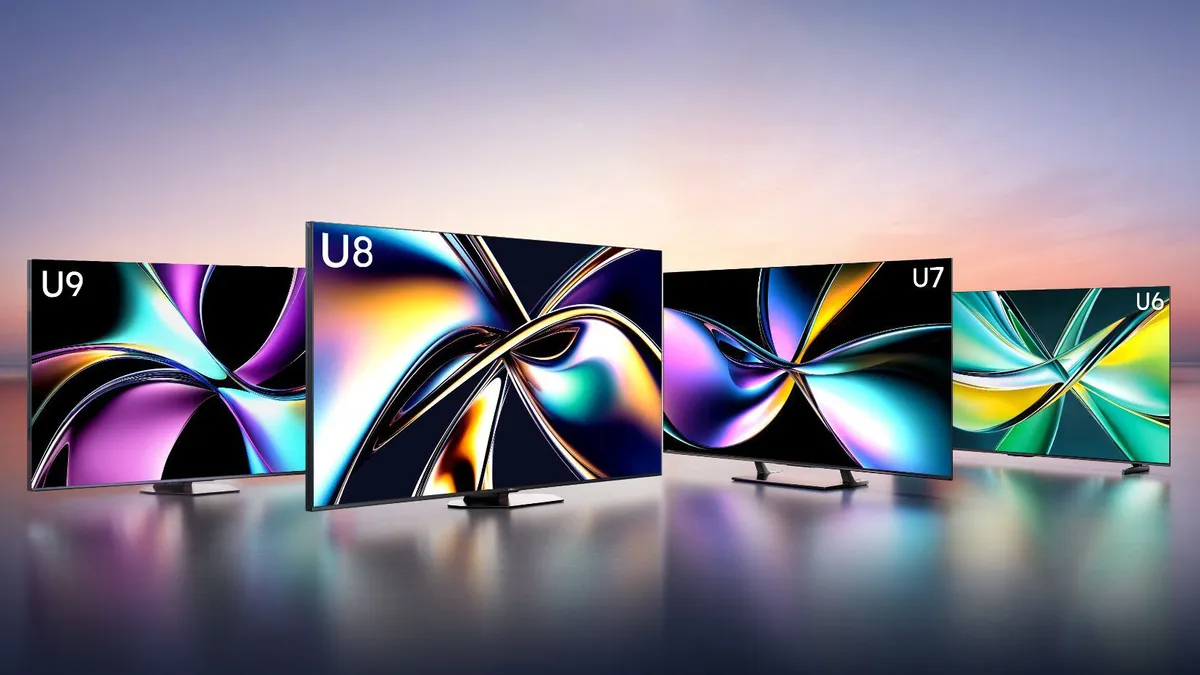
To be clear, it’s not that Samsung and Sony’s affordable, mid-range models aren’t worth buying. It’s just that, in recent years, similarly priced sets from Hisense and TCL tend to offer more bang for the buck.
In fact, when a major sales event rolls around — Prime Day, Black Friday or Cyber Monday — I find myself recommending entry-level and mid-range TVs from Hisense and TCL more often than I recommend comparable sets from Samsung and Sony. The primary reason for this has to do with display hardware.
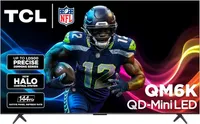
On the display front, Hisense and TCL have been aggressively pushing Mini-LED backlighting into mid-range and even entry-level models. The TCL QM6K is a prime example of this. As an entry-level model, this TV currently hovers in the $500 to $600 price range for a 55-inch model, but has fallen as low as $450 during sales events. We gave the QM6K a four-star rating, commending it for — among other things — its Mini-LED backlighting.
Hisense also offers an affordable Mini-LED TV in the U65QF. The 55-inch U65QF is currently just $399 at Best Buy — that’s a price that would have been unheard of for a Mini-LED TV just a few years ago.
For comparison, Samsung’s most affordable Mini-LED TV this year, the QN70F, is currently $699 for a 55-inch model. The Samsung TVs whose price aligns the closest to these competing sets — the Samsung Q7F and Q8F — don’t come with Mini-LEDs, and their 55-inch models cost $399 and $599 respectively.
Sony’s most affordable Mini-LED of 2025, the Sony Bravia 5, is even pricier. Right now, you can get a 55-inch Bravia 5 on sale for $899 at Best Buy. From a price standpoint, the Sony TV that most closely competes with TCL QM6K is the Bravia 2 II. It costs $499 and doesn’t tap Mini-LEDs.
This raises a question: Just how important is Mini-LED backlighting, anyway? Well, it’s pretty important — even in its cheapest, most rudimentary form.

Mini-LED displays typically allow for brighter highlights and better overall contrast.
The smaller LED size and relatively tighter dimming zones associated with Mini-LED displays typically allow for brighter highlights and better overall contrast than direct-LED or edge-lit displays, especially those without local dimming.
In a vacuum, I’d rather have the QM6K’s basic Mini-LED display than the direct-LED display that arrives with the Bravia 2 II. While I haven’t formally tested the latter, I’ve been around the business long enough to know that local dimming — a feature that the Bravia 2 II doesn’t offer — is quite important to overall picture quality.
It’s worth noting, however, that display technology isn’t the only thing that contributes to picture quality. For some shoppers, Samsung and Sony might be a better fit.
The Samsung and Sony advantage
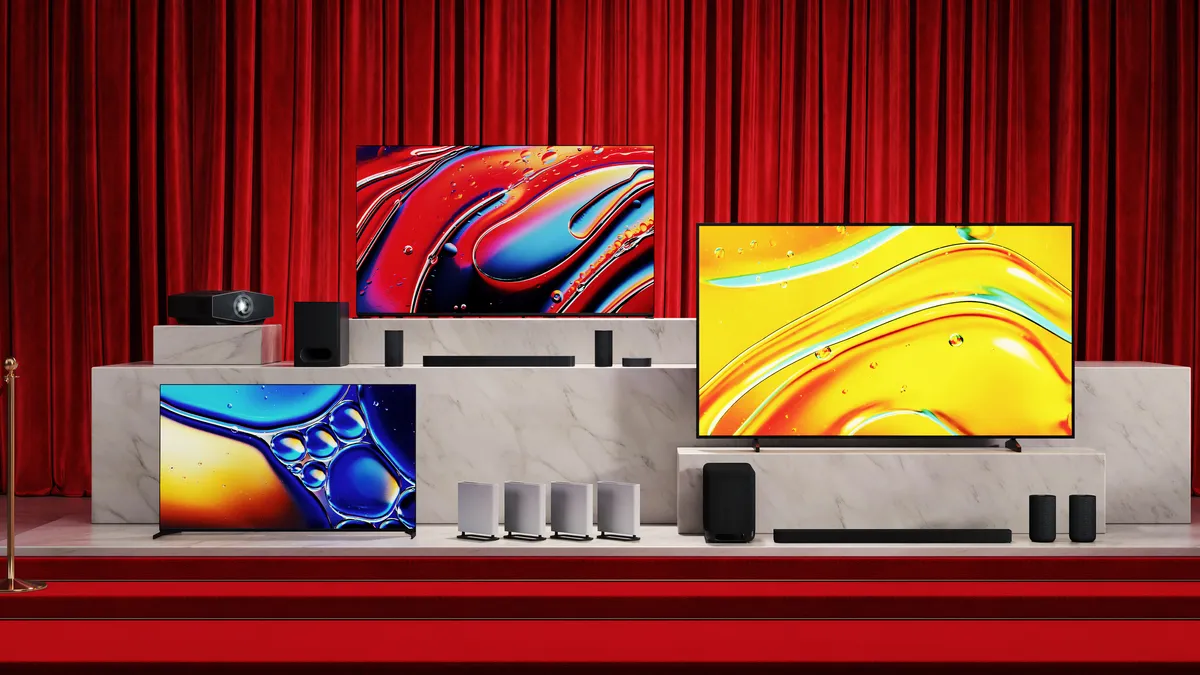
Samsung and Sony make polished, well-engineered TVs with excellent attention to detail. When it comes to the little things — physical design, menu software and picture processing — Samsung and Sony are among the best. Hisense and TCL, while very respectable, can’t quite compete around these margins unless you compare one of their higher-end TVs to lower-end sets from competing brands.
For my money, picture processing represents the largest gap between affordable TVs from Samsung and Sony and those of Hisense and TCL. When it comes to models like the Samsung Q7F and the Sony Bravia 2 II, their superb picture processing somewhat makes up for their lack of Mini-LEDs with local dimming.
Hisense and TCL also don’t sell incredible, award-winning OLED TVs, while Samsung and Sony make some of the best OLED TVs on the market. Not only that, but Samsung is one of the few brands making affordable OLED TVs, too, like the entry-level S84F, one of the most popular TVs during Black Friday.
Of course, some of this is just a matter of perspective. It would be just as valid for me to pen an op-ed proclaiming that Hisense and TCL ought to toss their hat into the OLED ring.
Hisense, Samsung, Sony and TCL: 2026 outlook
If Samsung and Sony decide that their business outlooks are more promising without releasing pure, entry-level Mini-LED TVs that can compete with the likes of Hisense and TCL, we’re probably looking at another year like this one; Hisense and TCL will continue to push Mini-LEDs further down in price while Samsung and Sony save their Mini-LED offerings for their upper-mid-range tier.
If that’s how the market pans out, I will once again spend Prime Day, Black Friday and Cyber Monday extolling the virtue of affordable Mini-LEDs. The affordable TV landscape will once again be overtaken by budget-friendly sets from Hisense and TCL, while Samsung and Sony will own their fair share of the higher-performance landscape.
In that scenario, your TV-buying decision-making will be the same in 2026: Do you want to spend more on a Samsung/Sony LED TV with superior picture processing or save money on a Hisense/TCL TV with Mini-LEDs?

Follow Tom's Guide on Google News and add us as a preferred source to get our up-to-date news, analysis, and reviews in your feeds.
More from Tom's Guide
- I test TVs for a living — and Hisense needs to improve its TVs in one way before I recommend them
- Samsung just dropped the first ever Micro RGB TV — and it's a total game changer
- I'm a TV expert and this is the one picture mode you should avoid at all costs