The TCL QM8L is an all-new, Mini-LED TV that leverages Super Quantum Dot (SQD) display technology for brighter, bolder color. According to our test results, the QM8L's picture is, indeed, quite punchy, and the QM8L rounds out its impressive performance with a thorough collection of features.
The TCL QM7L is the brand's mid-range Mini-LED TV for 2026. Like its step-up sibling, the QM7L also leverages SQD technology, and while it's not as impressive-looking as the QM8L, it's much more affordable.
If you're in the market for a bright, high-performance Mini-LED TV this year, the choice may come down to one of these two TCL TVs. Here's how they compare — from performance to features and price.
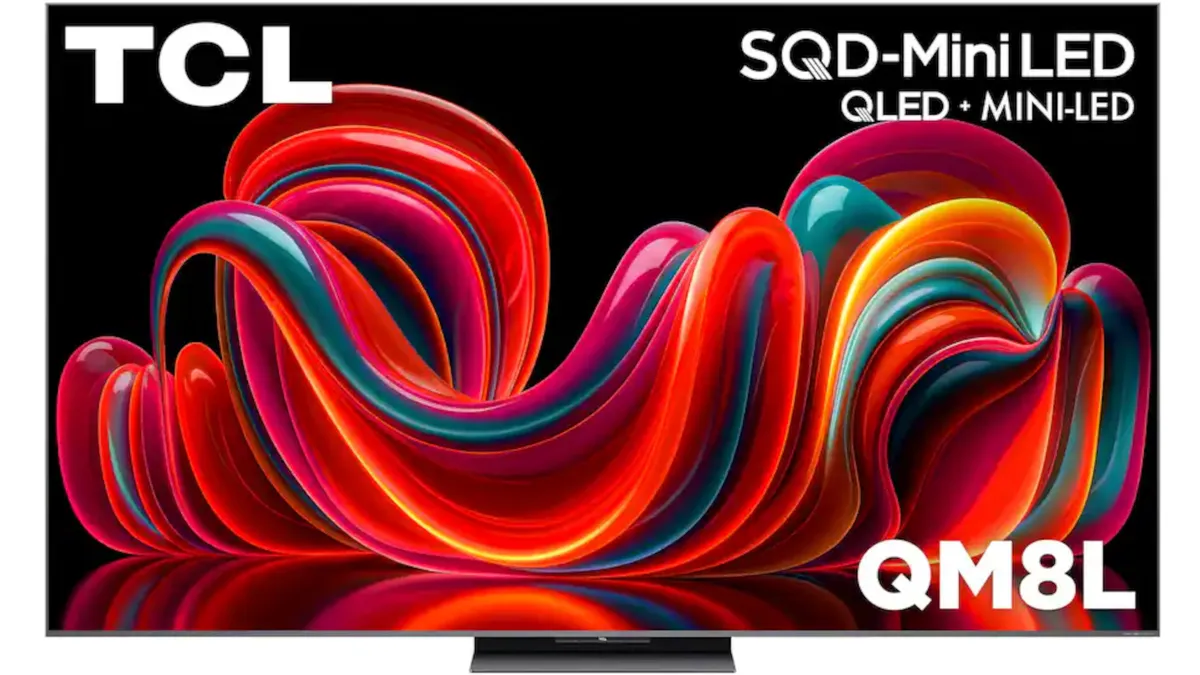
The QM8L is a flagship-level TV that leverages TCL's newest display technology to enhance its color and overall brightness. Its performance is reflective of its higher price tag, and the QM8L also comes with a ton of features, too.

The QM7L is TCL's mid-range Mini-LED TV for 2026, and like the QM8L, it delivers an exceptionally bright, color picture for its class. The QM8L is a better-performing TV all around, but the QM7L's friendlier price tag make it a better pick for most people.
TCL QM8L vs QM7L: Specs compared
| Header Cell - Column 0 | TCL QM8L |
TCL QM7L |
|---|---|---|
Sizes |
65", 75", 85", 98" |
55", 65", 75", 85", 98" |
Ports |
4x HDMI 2.1 |
2x HDMI 2.1, 2x HDMI 2.0 |
Resolution |
3,840 x 2,160p |
3,840 x 2,160p |
Refresh rate |
144Hz |
144Hz |
HDR |
Dolby Vision, HDR10+, HDR10, HLG |
Dolby Vision, HDR10+, HDR10, HLG |
Smart TV software |
Google TV |
Google TV |
ATSC 3.0 support? |
Yes |
Yes |
Processor |
TSR AI Pro Processor |
TSR AI Pro Processor |
When it comes to their respective spec sheets, there are two significant differences worth unpacking: size availability and HDMI functionality.
While the QM8L is available in four sizes ranging from 65 to 98 inches, the QM7L is available five sizes between 55 and 98 inches. If you're in the market for something smaller than a 65-inch screen, the QM7L has you covered.
On the other hand, although both sets arrive with the standard set of four total HDMI inputs, only two of the QM7L's inputs offer HDMI 2.1 compatibility. Folks who spend up on the QM8L will enjoy a full suite of HDMI 2.1-compatible inputs.
With four high-bandwidth ports, the QM8L offers a bit more flexibility, as they all support 4K content at 120Hz (and up to 144Hz with VRR). Fortunately, the QM7L's dedicated eARC input doesn't overlap with one of its high-bandwidth inputs.
The QM7L's additional, 55-inch screen will matter more to people shopping for that screen size than its lack of two additional HDMI 2.1 inputs, but the QM8L's added flexibility here is more likely to affect a wider swath of people shopping in this price range.
Winner: TCL QM8L
TCL QM8L vs QM7L: Design
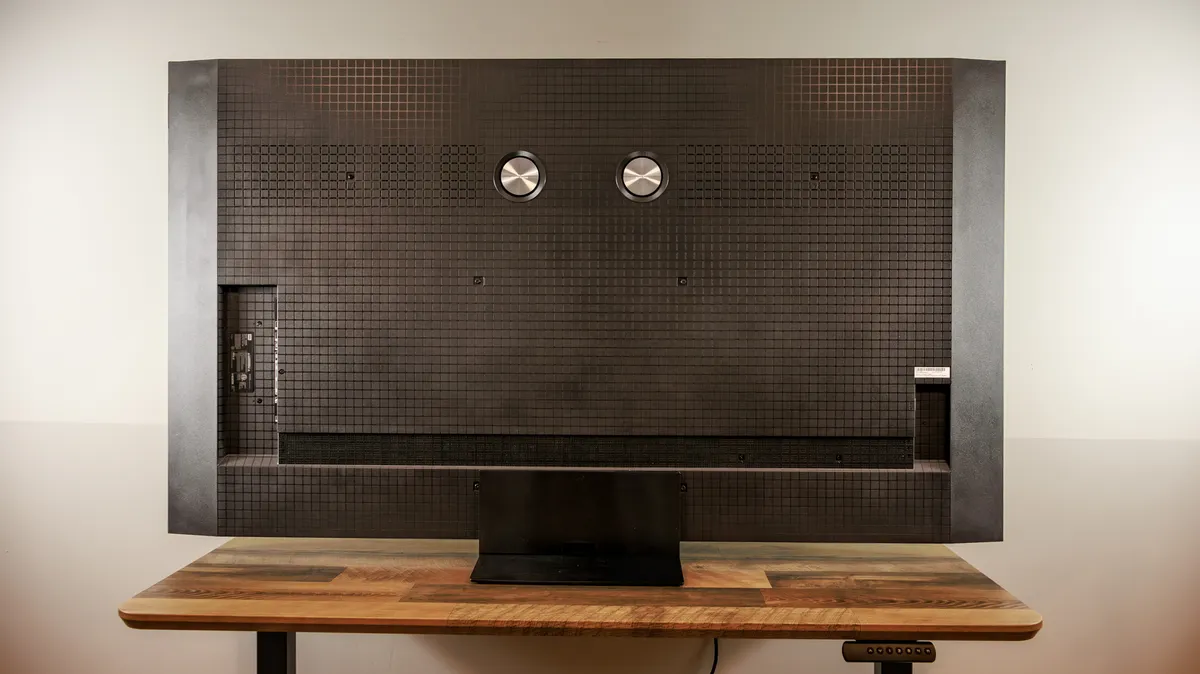
Due to the nature of its relatively complex display hardware, the TCL QM8L (seen above) is bulkier than many high-end LED TVs. That said, its design is quite refined despite the added bulk.
The QM8L's panel sits on top of heavy, pedestal-style stand that sits below the center of the screen. While the stand design introduces slightly more wobble than what you'll typically experience with a pair of wide-set feet, the placement of the pedestal lets people to place the QM8L on a narrower piece of furniture if they so choose.

As you can see from the photo above, the QM7L is nearly identical in its design approach. Its panel also bulges out around the middle, and it features a similar, pedestal-style stand.
The stands on both sets can be attached in two height configurations. This is particularly convenient for people with tall soundbars.
Additionally, both TVs ship with nearly identical, conveniently backlit remote controls. The QM8L's remote has a brightness rocker on its side.
Given the similarities, this category is too close to call. The QM8L and QM7L aren't as slim and premium-feeling as other TVs in their price range, but both of these sets are among the best-designed TCL TVs I've seen this year.
Winner: Draw
TCL QM8L vs QM7L: Performance

Before we dig deeper into how these TVs look, let's compare their test results. (Both TVs were in their respective Filmmaker picture modes when these tests were taken.)
| Header Cell - Column 0 | TCL QM8L |
TCL QM7L |
|---|---|---|
SDR Brightness (10%, in nits) |
229 |
196 |
Delta-E (lower is better) |
3.7 |
2.6 |
HDR Brightness (10%, in nits) |
3,719 |
2,270 |
UHDA-P3 Gamut Coverage |
97.97% |
97.64% |
Rec.2020 Gamut Coverage |
90.34% |
90.28% |
Input latency (milliseconds) |
9.5 |
9.4 |
The story of these TVs is rather simple. They're two of the first TVs to feature TCL's souped-up, quantum dot-based technology, Super Quantum Dot. Both the QM8L and QM7L deliver a wider array of color than previous TCL QLEDs thanks to a new color filter and a major reworking of the brand's picture processing algorithms.
However, according to our test results, the QM8L carries a significant advantage over the QM7L: peak brightness.
The QM8L is capable of driving way more brightness to small, concentrated areas of the picture, resulting in a punchier, more-cinematic look during certain content mastered in HDR. Additionally, its full-screen brightness in both SDR and HDR is slightly higher than that of the QM7L.

The QM8L carries a significant advantage over the QM7L: peak brightness.
Somewhat surprisingly, the QM8L's added brightness doesn't make that big of a difference when it comes to color. You might notice better saturation of dark, low-luminance color on the QM8L, but for the most part, the QM7L does an excellent job of keeping up here.
In many viewing conditions, the real difference-maker is the QM8L's first-rate array of Mini-LEDs. Both the QM7L and QM8L do a terrific job of limiting haloing, but the QM8L is a step above the QM7L in this regard.
Everything else — color accuracy, input latency and upscaling — is very close. But if you're looking for the best-possible performance, the QM8L's added brightness and superior backlight control will be appealing to you.
Winner: TCL QM8L
TCL QM8L vs QM7L: Smart platform and features
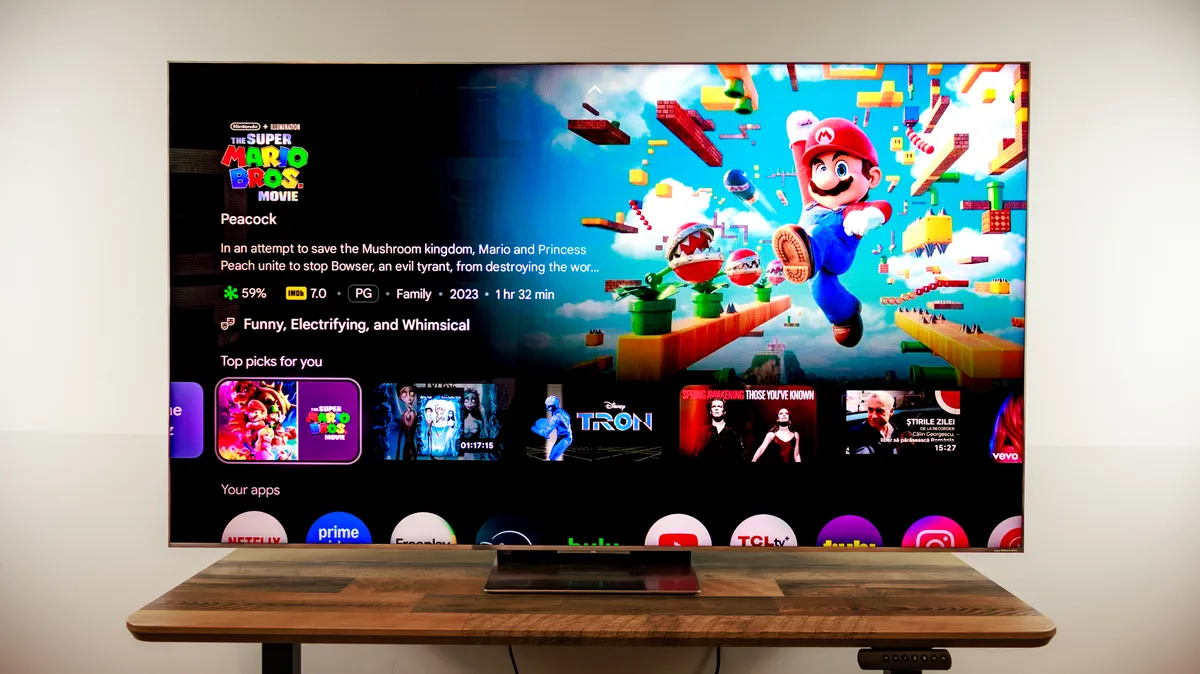
Both TVs are built around the Google TV streaming platform, and they perform similarly. Google TV is one of my preferred streaming platforms (just behind Roku), as it's easy to navigate and supports nearly every streaming service and app you'd want on a smart TV.
The QM8L and QM7L both come with a similar set gaming features, too. These include Variable Refresh Rate (VRR) and AMD FreeSync Premium Pro (for smooth, artifact-free gaming), as well as TCL's Game Bar, a quick-access menu that lets users access the key gaming features instantly.
Each set supports 4K gaming at 120Hz, the highest 4K spec among current-generation consoles like Xbox Series X and PlayStation 5. With a gaming PC linked up, both TVs support 4K games at 144Hz, too.
As a reminder, the QM7L comes with just two HDMI 2.1-compatible inputs. In order to access those gaming enhancements, you've got to use one of those ports. The QM8L, on the other hand, comes with four.
That said, we've already settled this when comparing specs. In almost every other way that matters to the average viewer, the QM8L and QM7L roll with a similar set of features.
Winner: Draw
TCL QM8L vs QM7L: outlook

| Header Cell - Column 0 | TCL QM8L |
TCL QM7L |
|---|---|---|
Specs (25) |
23 |
22 |
Design (25) |
22 |
22 |
Performance (25) |
23 |
22 |
Features (25) |
23 |
23 |
Total Score (100) |
91 |
89 |
In our full review of each TV, the QM8L received a four-star rating and the QM7L earned a slightly higher, four-and-a-half-star rating. As you can see, however, the tally above has the QM8L at two points higher than its mid-range sibling. So, what gives?
Well, it all comes down to value. Right now, the 65-inch TCL QM8L is $1,399 at Best Buy. That's a fantastic sale price, considering that this model launched at $2,499.
But the 65-inch QM7L is just $1,199 at Best Buy at the time of publishing (down from its original price of $1,499). That's $200 bucks cheaper than the QM8L. Plus, the QM7L is available in a 55-inch model, which is a popular screen size for people who shop in the QM7L's mid-tier price range. For this reason, it has wider appeal.
While the QM8L delivers a brighter, better-looking picture overall, I suspect that most shoppers would be almost as impressed by the QM7L — and walk away with an extra $200 in their pocket, too.

Follow Tom's Guide on Google News and add us as a preferred source to get our up-to-date news, analysis, and reviews in your feeds. Subscribe to Tom's Guide on YouTube and follow us on TikTok.
More from Tom's Guide